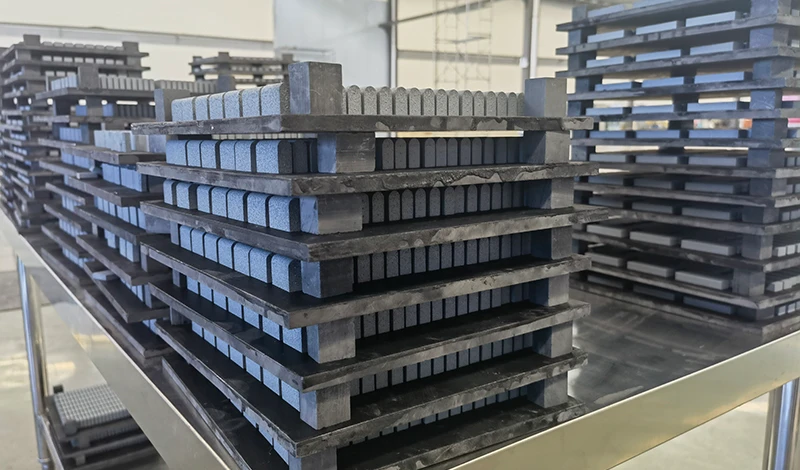
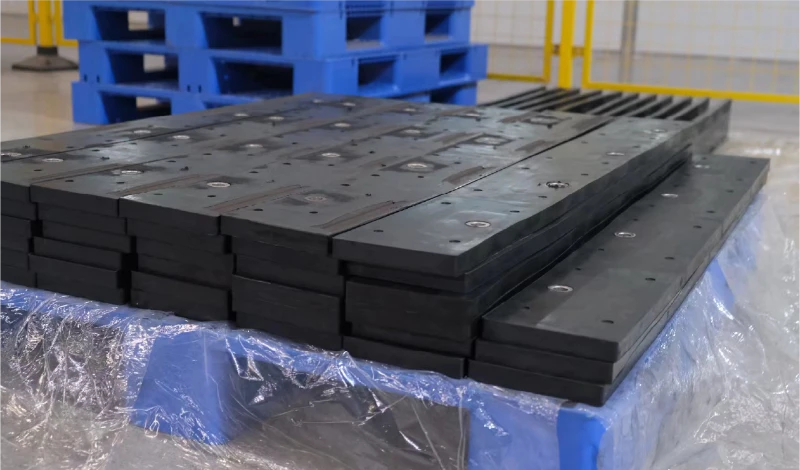
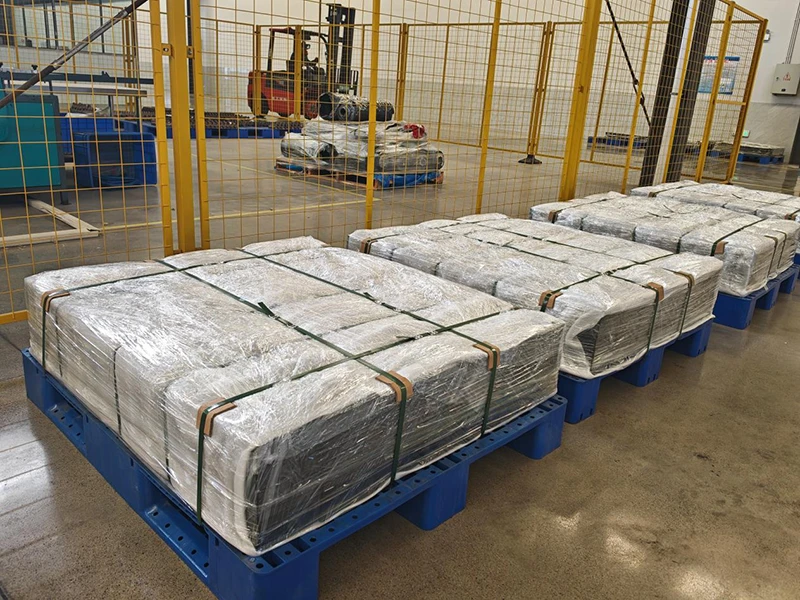
Two numbers decide whether a custom flex blade fits the machine: the hole pattern on the mounting, and the tolerance the drawing allows. Everything else can be discussed after the quotation; those two cannot be guessed. SENTHAI holds dimensional tolerance to plus or minus 0.02 mm on snow plow components where the drawing requires it, and the mounting pattern is confirmed before production.
This guide sets out what a manufacturer needs in order to quote accurately, how to express the tolerances that matter, and how a sampling and approval flow should run so the first production batch is not the first test.
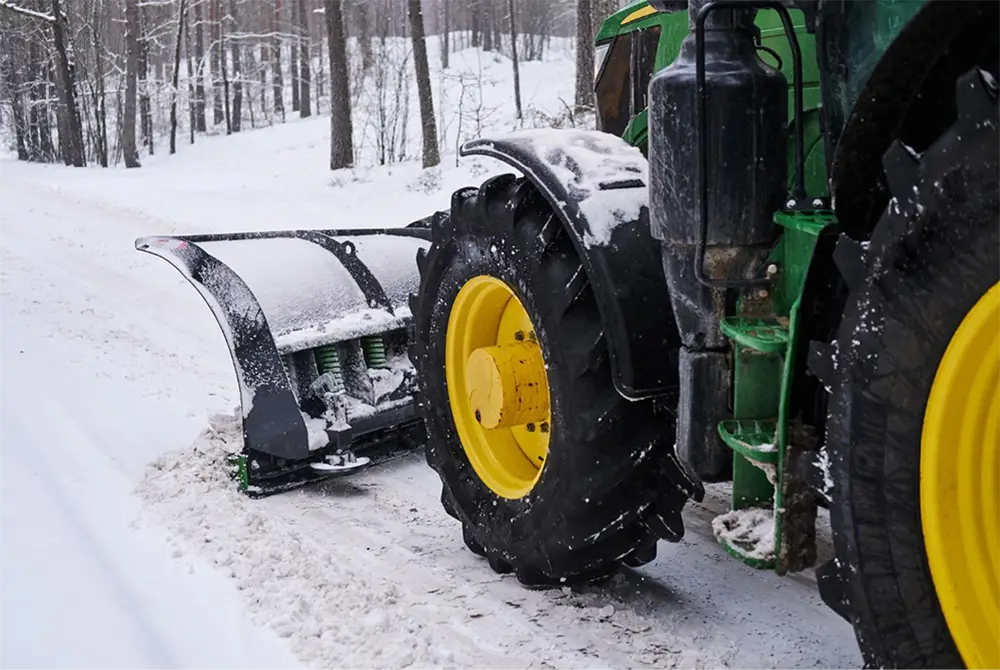
Information required before quoting custom JOMA style blades
A quotation that can be produced without further questions needs seven things, and none of them takes long to assemble. The most valuable is the mounting pattern, because a custom blade is defined by what it attaches to rather than by what it resembles.
- Mounting pattern: hole diameter, centre-to-centre spacing, end offset, or the original machine drawings.
- Segment dimensions: length, width and thickness, with the number of segments or the total blade width.
- Rubber requirement: compound preference and hardness, or the service conditions that decide it.
- Carbide requirement: insert grade, geometry and layout, or the failure mode the blade has to survive.
- Quantity and repeat expectation: single order, seasonal requirement or ongoing programme.
- Delivery market and route: this sets the documentation and freight assumptions.
- Photographs of the mount and the worn part, which resolve ambiguity faster than description.
Where no drawing exists, a measured sketch with the critical dimensions marked is sufficient. The measurement method that produces reliable numbers is the same one used for replacement ordering, and the pattern library behind it is described in the guide to custom JOMA style snow plow blades.
Drawing and tolerance conventions
A drawing is useful when it says which dimensions are critical and which are not. Mark hole positions, segment thickness and the seating faces as controlled dimensions, because those decide whether the blade bolts on and whether it wears evenly. Flatness and edge straightness matter for surface following, and general dimensions such as overall width can follow a looser class.
| Feature | Why it matters | Control level |
|---|---|---|
| Hole positions and diameters | Decides fitment; errors cannot be corrected in the field | Tightest |
| Segment thickness | Sets wear allowance and how the row seats | Tight |
| Seating face flatness | Controls load distribution across the segments | Tight |
| Overall length and width | Coverage and overhang | General |
| Insert positions along the wear face | Cutting line continuity and wear balance | Tight when specified |
Units belong on the drawing rather than in the covering message, and mixed units are the most common cause of a first-article rejection. Where a published pattern applies, municipal drawings usually reference an AASHTO or DIN dimension rather than repeating every measurement, which is why naming the standard shortens the review.
Segment pattern and hole layout
Segment pattern is a design decision, not only a drawing exercise. Length controls the number of joints, thickness controls the wear allowance, and hole layout controls how load moves from the segment into the moldboard. A pattern that uses one length across the width is easier to stock; a mixed pattern can cover a width exactly and place shorter segments where the surface is most consistent.
Two details are worth agreeing before production. Confirm whether the holes are formed to a countersunk, recessed or plain pattern, because the fastener head has to sit below the wear face. And confirm the end offset from the segment end to the first hole, because that dimension sets the alignment of the cutting line across the row. Both are cheap to specify now and expensive to correct later.
Rubber compound and hardness choices
The rubber base is what makes a flex blade behave differently from a rigid plate, and its hardness is the dial. A harder compound holds the segment in position more firmly and resists deflection, which suits routes where the surface is consistent and the priority is a clean cut. A softer compound deflects further, which suits broken pavement, gravel and any route where surface protection matters more than penetration.
Compound choice also interacts with temperature. Rubber stiffens as it cools, so a blade specified for a mild-winter market and one specified for a deep-cold market should not automatically use the same formulation. The right way to settle it is to describe the service conditions, including the lowest sustained temperatures and the surface types, and let the manufacturer propose a compound with the evidence behind it. Testing and material claims should be traceable to published methods from ASTM International, and the site’s quality control framework describes how incoming material is checked against the agreed specification.
Carbide grade and insert options
Carbide specification follows the route’s failure mode. Where inserts wear gradually, a wear-resistant micro-grain grade holds the cutting profile longer; where they chip or break out, a tougher grade and better support do more than additional hardness. The choice between trapezoid and bullnose insert geometries follows the same logic, since the profile decides how load arrives at the carbide.
For a custom blade, the useful input from a buyer is the observed failure rather than a grade name. A photograph of a worn segment and a note on how it failed gives a manufacturer enough to propose a grade and geometry combination, and the retention method should be specified alongside it rather than assumed. The options available in the standard range are described in the guide to carbide snow plow inserts.
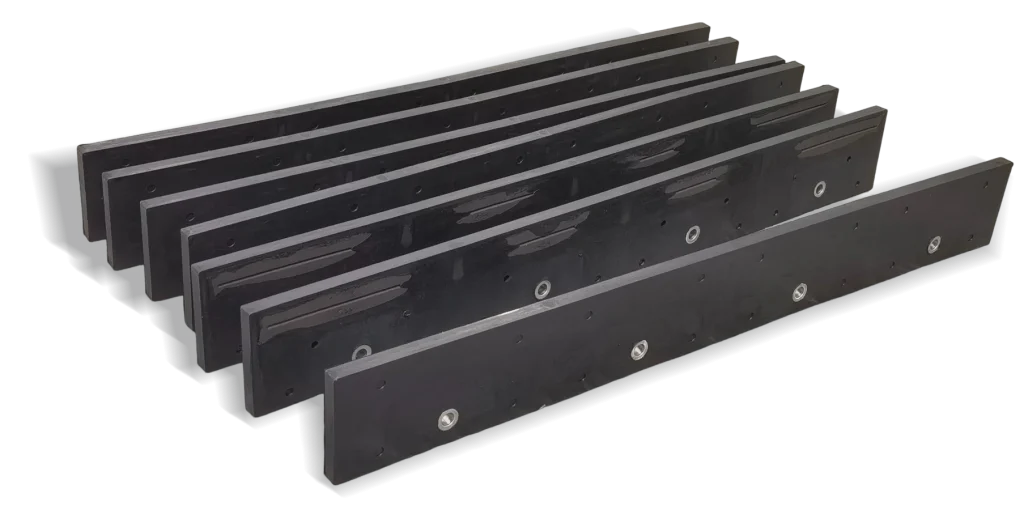
Sampling and approval flow
Approval should be a defined step rather than a formality. The flow that prevents surprises runs in four stages: the specification is confirmed against the drawing, a sample or first article is produced, the sample is checked dimensionally and fitted to the machine or fixture, and the approved sample becomes the reference for the batch.
- Confirm the specification sheet and mark which dimensions are critical.
- Produce a first article and supply its dimensional record with the sample.
- Fit the sample and check hole alignment, seating and cutting-line continuity.
- Record any change agreed during fitting and issue a revised drawing revision number.
- Release the batch against the approved revision, with the sample retained as reference.
The revision number is the part that gets skipped. Without it, a change agreed by message during fitting is not carried into production, and the batch arrives matching the drawing rather than the approved part.
Production lead time factors
Lead time is quoted per order because it depends on four factors rather than on a catalogue figure. New tooling for a hole pattern or segment length is the largest, since it has to be made and verified before the first piece. Sample rounds add time in proportion to how many are needed before approval. Material availability affects orders that specify particular rubber or carbide grades. And freight, especially in the weeks before a winter season, adds transit variability that a manufacturer cannot compress.
International orders carry a documentation dimension as well. Classification, origin and the paperwork that accompanies a shipment are governed by the rules of the importing market, and the reference material published by agencies such as US Customs and Border Protection is the starting point for buyers in the United States. Where a distributor is importing for resale, the same documents support the wholesale programme described in wholesale snow plow blades for distributors. Material and process standards behind the specification are published by ASTM International and SAE International, the equipment context comes from the Association of Equipment Manufacturers, and the research base for wear-part performance is collected by the Transportation Research Board.
The conclusion is that custom flex blade work is a specification exercise before it is a manufacturing one. Send the mounting pattern and the critical dimensions, express tolerances where they matter, describe the service rather than naming a material, and insist on a first article with a revision number before the batch runs. SENTHAI builds custom rubber-flex and carbide wear parts to drawing in Rayong, Thailand, with fitment confirmed against the mount and lot-level traceability on production batches.
FAQ
What do I need to send to get a custom flex blade quoted?
Send the mounting pattern, the segment dimensions, the rubber and carbide requirements, the quantity and the delivery market. A drawing or a measured pattern plus photographs of the mount is enough to confirm fitment; if there is no drawing, a measured sketch with the critical dimensions marked serves the same purpose. Anything left out becomes an assumption in the quotation.
How are tolerances specified on a custom blade drawing?
Specify the critical dimensions and leave the rest to the general tolerance. Hole positions, segment thickness and the seating faces are what decide fitment and wear, so they carry the tightest tolerance; flatness and edge straightness follow. SENTHAI holds dimensional tolerance to plus or minus 0.02 mm on snow plow components where the drawing requires it. Where a dimension is not marked, the general tolerance class on the drawing applies, so state which class you work to.
Is a sample always produced before a custom batch?
For a new pattern it is the safest route, because fitment failures are far cheaper to correct on one piece than on a batch. A sample allows the mounting to be checked against the machine and the insert layout to be seen in place. Where the pattern is an exact repeat of an earlier order, the batch can run against the approved drawing instead.
What affects the lead time on a custom flex blade order?
Tooling for a new hole pattern or segment length, the number of sample rounds before approval, material availability for the rubber and carbide grades specified, and the shipping lane and season peak. Lead time is quoted per order from those factors rather than from a standard figure, so sending the full specification early is what shortens it. State the delivery window you actually need at the enquiry stage, because a peak-season order placed late cannot be compressed by either side.
Send the drawing or the measured pattern, the mounting photographs and the service conditions. The SENTHAI engineering desk will confirm the specification, propose the segment and carbide configuration, and quote with a first-article step built in.