An underbody edge comes back to the workshop after a few weeks with the carbide chipped along the outer third and the centre insert still sharp. The blade gets blamed, then the grade, then the supplier. In most cases the position is the thing that was never specified: an underbody mount pushes the edge down with far more pressure than a front blade does, and the outer third is where a route with gravel shoulders puts that pressure to work.
Mounting position decides the load path, the speed and the access a crew has for maintenance, so it is the first decision in the specification rather than the last. This guide works through the three positions, the failure each one invites, and the cutting edge each one should carry.
How mounting position changes wear and load
The position of the edge on the machine changes three things at once: where the load goes, how fast the edge meets the surface, and how hard it is to change. Each of those shifts the failure mode the fleet will actually experience.
A front blade transfers its load into the front axle and the plow frame, and it meets the surface at road speed, so impact energy is high and the edge is exposed to whatever the surface has lost. An underbody edge pushes up into the chassis between the axles, works at lower speed and higher vertical pressure, and is asked to grade as much as to clear. A wing takes a side load from the material it is moving, so the edge is loaded laterally in a way that neither of the other positions experiences.
The practical consequence is that the same edge part number behaves differently in each position. A grade that is right for a front blade on chip seal may be wrong under the truck on the same route, because the dominant wear mechanism has changed from abrasion to pressure and impact. Position belongs in the purchase specification next to the length and the bolt pattern, not in the installation instructions.
Front blades on high-speed routes
Front blades are the general-purpose position, and on high-speed routes they are the ones that carry the abrasion load. Speed raises both the material removed per hour and the energy of every strike, so the edge needs abrasion resistance at the contact face and enough carrier stiffness to hold its shape under a full plow load at speed.
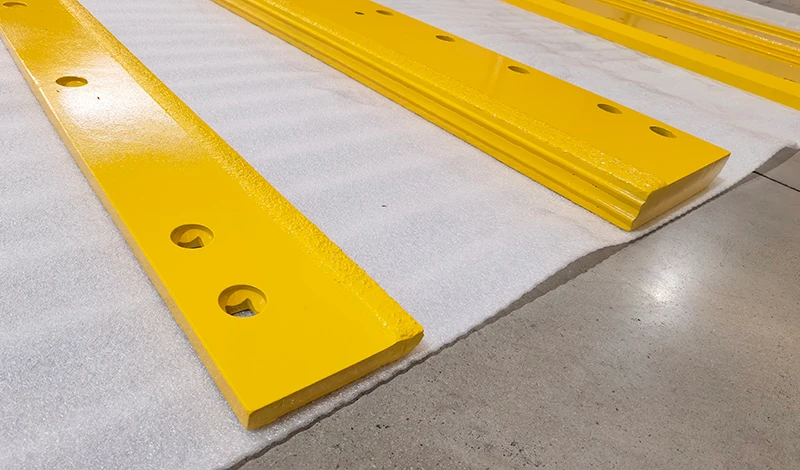
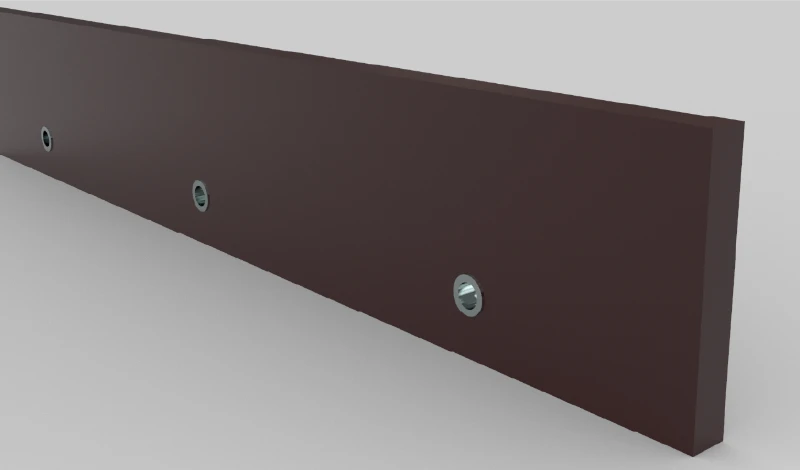
Two specification details matter more here than anywhere else. The first is grade intent: an abrasion-led carbide grade for clean asphalt and chip seal, with the insert spacing matched to how abrasive the surface is. The second is hardware: recessed bolt holes keep heads below the wear plane so the road surface does not shave them, which is the difference between an edge that stays fixed for a season and one that works loose section by section.
Front blades are also the easiest position to inspect and change. A roadside changeout on a front mount is a short job with good access, while the same work on an underbody edge generally needs a pit, a lift or a workshop slot. Where a fleet cannot lose a truck, that access difference can outweigh a modest gap in wear life.
Underbody blades for compaction and ice
Underbody edges buy down-pressure, not ground speed.
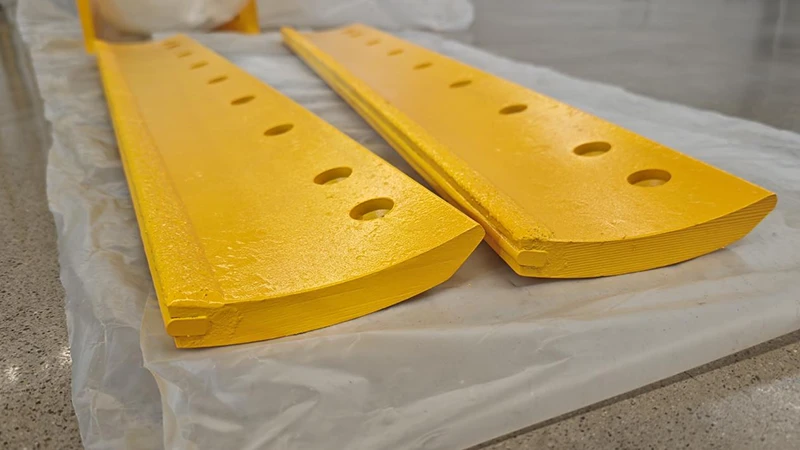
An underbody plow blade mounts between the axles to scrape hardpack and ice with high vertical pressure at lower speed, so geometry, carrier flatness and the mounting bevel matter more than maximum abrasion resistance.
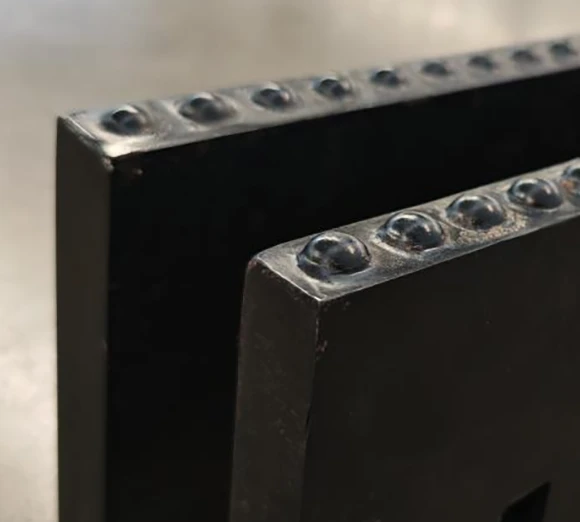
The reason is the load path. An underbody mount pushes the edge into the surface using the chassis rather than the front axle, which is what lets a truck break up compacted snow and smooth a rough surface without a heavier plow hanging off the front. The trade is that the same pressure exposes any weakness in the assembly: a carrier that is not flat shows up as uneven wear along the length, a grade chosen for hardness rather than toughness chips when the edge meets gravel, and an insert that was not bonded consistently can come loose under repeated shock.
The setup discipline that follows is specific to this position. Down-pressure has a working range: too little and the edge skips across the top of the ice, too much and the carbide is ground into the surface for no additional benefit. Shoe height and the bevel that matches the mount both affect how the blade sits, and the machine’s own mounting geometry decides what the edge can be asked to do. Where an underbody edge fails early, the useful questions are the order of diagnosis: was the grade matched to a route that includes gravel, was the carrier flat to drawing before welding, and was the insert retention checked at the intervals the supplier’s inspection plan specifies.
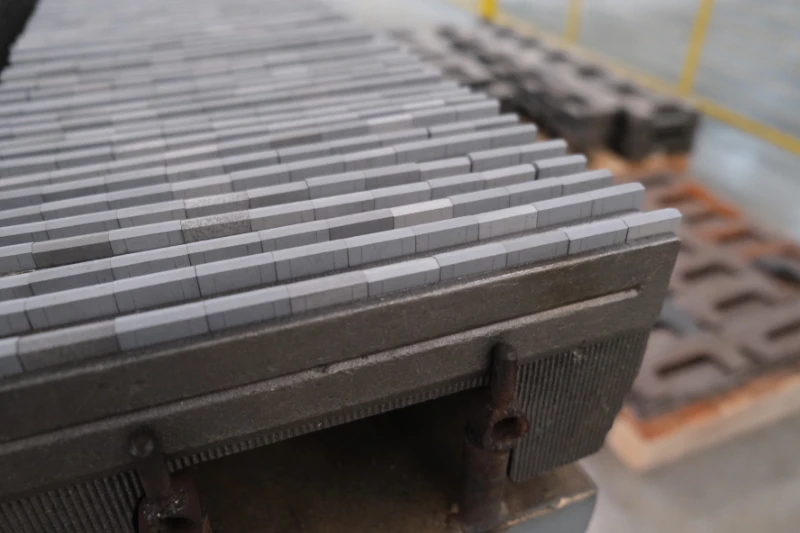
Underbody edges are also the classic retrofit for fleets that need compaction work without a second plow truck, and standard segment lengths let a damaged section be replaced without changing the whole assembly. SENTHAI manufactures edges for trucks, graders, loaders and skid steers to a measured mounting pattern, and the packed ice family covers the routes where the edge has to bite rather than scrape (packed ice carbide kit).
Wing and side blades on wide surfaces
Wing blades exist to widen the cleared path without widening the truck, and they carry a load profile that neither of the other positions shares. The edge is pushed sideways as well as forward, so it is loaded in a direction the mounting was not primarily designed for, and that side load decides wear and hardware life.
Wide surfaces are the natural application: airport aprons and taxiways, highway shoulders, large parking areas and long straight arterials where a single pass is worth more than a tight turning circle. Airport winter operations add their own constraints, because clearing has to return friction and hold runway availability rather than simply move snow, and the operational guidance published by the Federal Aviation Administration is the reference for how those programmes are structured.
The specification questions for a wing edge are narrower than for a front blade: carrier section and bolt pattern matched to the wing frame, hardware sized for lateral load, and an edge material that tolerates being dragged sideways rather than pushed straight along the surface.
Combining positions on one carrier
Most fleets run a combination, and the combination is where specification discipline pays off. A single truck with a front blade and an underbody edge can clear a route in one pass on a hardpack section that would otherwise take two, but the second edge changes the load on the machine and the sequence in which the crew works.
The constraints are mechanical rather than commercial. Front-axle capacity and ballast set a limit on what the front position can carry; the underbody mount has its own structural limits; and the machine’s electrical and hydraulic capacity has to run both systems. Manufacturers publish the mounting and fitment limits for their vehicles, and equipment manufacturers are a useful starting point for machine-level constraints (Association of Equipment Manufacturers).
The operational question is sequence: whether the underbody edge works after the front blade has cleared the bulk of the snow, or runs all the time and adds drag to every kilometre. Fleets that track fuel and hours per route usually find one sequence suits the route better, and the difference is worth measuring rather than assuming.
Cutting edge selection per position
Once the positions are decided, the edge specification follows from them. The table below sets out the dominant demand in each position, the edge that answers it, and the failure a mismatch produces, which is the pattern most fleets recognise after one bad season.
| Position | Load path and speed | Edge that fits | Failure if mismatched |
|---|---|---|---|
| Front | Front axle and plow frame, road speed | Carbide edge, abrasion-led grade | Fast wear and shaved bolt heads |
| Underbody | Chassis, between axles, low speed, high pressure | Tough carbide or packed ice layout | Chipping on gravel and uneven wear |
| Wing and side | Side load into the wing frame, variable speed | Tough edge with lateral-rated hardware | Loose hardware and carrier tearing |
| Front and underbody combined | Two load paths on one machine | Families specified separately per position | One grade fitted where two are needed |
The four families published in the snow plow blade range map onto these positions rather than replacing the position decision: carbide, rubber-flex, replaceable inserts and an aggressive packed ice kit each answer a different load pattern.
Maintenance implications per position
Access is the maintenance variable that fleets most often leave out of the buying decision, and it is the one that decides how quickly a worn edge is actually replaced. A front edge can be inspected in a yard and changed at the roadside; an underbody edge usually needs a pit, a lift or a workshop slot, and a wing edge needs the frame and its hardware checked at the same time as the blade.
The consequence is a different inspection rhythm per position. Front edges can be checked visually at every shift change and measured weekly. Underbody edges are better checked at planned workshop intervals, where carrier flatness, insert retention and hardware torque can be confirmed in one visit rather than discovered in the field. Wing edges need the mounting hardware included in the check, because a loose wing edge damages more than itself.
Spares follow the same logic: a front edge on a high-speed route needs a spare available during the season, while an underbody edge is usually replaced in a planned slot. State transport departments publish how agencies organise that planning at scale (Massachusetts Department of Transportation), the test methods behind hardness and wear claims are the published standards work of ASTM International, and refractory metal producers such as Plansee document what drives tungsten carbide wear at the microstructure level.
Cost per position, per season
Cost per position is not the same calculation in each case, because the labour content of a changeout differs far more than the price of the edge does. A front edge change is a short job with good access; an underbody edge change consumes workshop time. That is why a cheaper underbody edge can be the more expensive choice once a season of changeouts is counted.
Build the comparison position by position: edge cost including freight, changeout labour and access time, changeouts the position produced last season, and the lane kilometres it covered. Where a position is used only occasionally, include the cost of holding a spare, because a spare that sits unused all winter is still capital on the shelf.
Finally, match the warranty conversation to the position. Coverage is typically written against defects in materials and workmanship for a defined period, with impact damage and wear beyond the design point excluded, and a claim usually depends on identifying the batch. SENTHAI publishes its scope and claim steps on the warranty and shipping page, and the production controls behind the batch reference are described in the factory tour. Keep carton labels with the receiving paperwork so a claim can be made from evidence rather than memory.
FAQ
What is a plow blade called?
The consumable part that touches the road is a cutting edge or wear edge, and it bolts to the moldboard that throws the snow. Position names change the vocabulary further: a front blade sits ahead of the truck, an underbody blade or scraper sits between the axles, and a wing blade hangs at the side. When you order a replacement, use the position plus the mounting pattern rather than the loose term blade.
Should a snow plow blade touch the ground?
The cutting edge has to reach the surface to scrape it, but it should not be pressed into it beyond what the machine and the surface allow. Most front plows use shoes or skids to set a working height and protect both the edge and the pavement. Down-pressure that is too high grinds carbide into the road for no extra cleaning benefit and shortens carrier life.
What plow setup suits a half-ton truck?
Fit the blade to the front-axle capacity and the route rather than to a size that looks right. A half-ton truck generally works with a lighter straight blade or a light utility blade, and the mounting and ballast guidance from the vehicle and plow manufacturers decides the limit. Check the plow manufacturer’s fitment list for the specific truck before ordering an edge for it.
Can a box blade be used to plow snow?
It can move snow, but it is a grading attachment rather than a snow edge. On gravel the scarifiers and the box will work, and the result is usually acceptable at low speed. On paved surfaces the same geometry digs in and damages the surface, so for asphalt and concrete a straight or flex snow edge with a controlled attack angle is the better tool.
Tell the SENTHAI engineering desk which position each truck runs, what surface the route carries and how the edge is changed, and you will get a recommended edge, carrier and hardware set for each mounting point.