
Global market trends for tungsten carbide wear parts in 2026 are less about a single price chart and more about two clocks that rarely move together: capital equipment orders and replacement consumption on machines already in the field. Fleets that defer truck or plow purchases still grind edges, inserts, and studs every storm season.
(Last modified date: November 12, 2026)
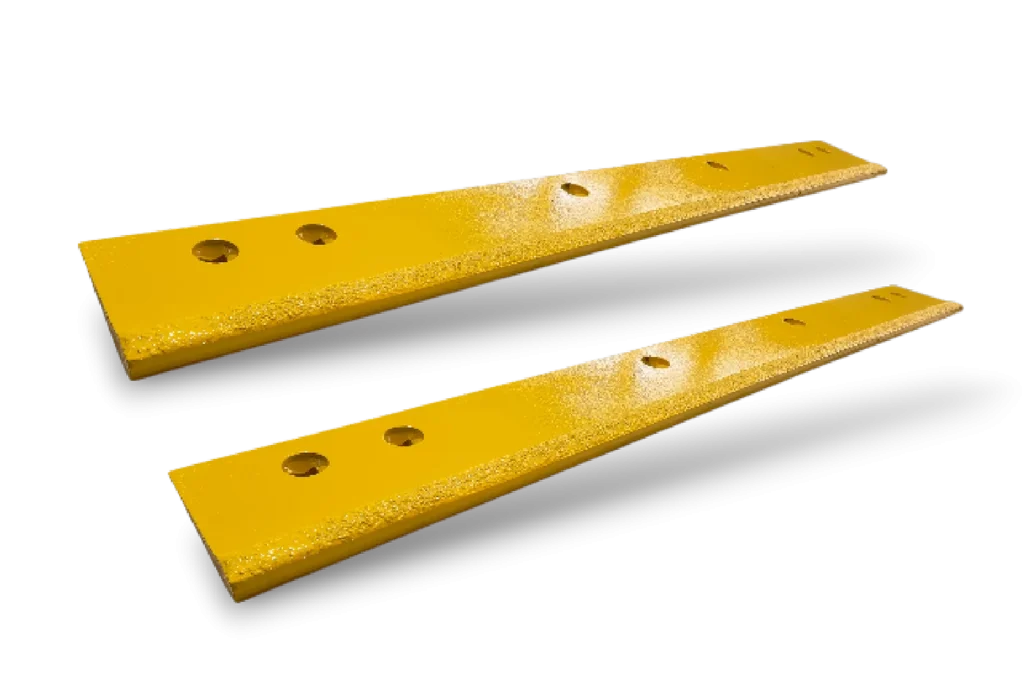
This article separates end-market demand, regional supply patterns, and substitution pressure so buyers can plan quantity from their own operating hours—not from a headline growth rate. Use it alongside the product view of a carbide snow plow blade, the insert specs on carbide inserts, and distributor programmes on the wholesale snow plow blades page.
2026 trends at a glance
- Replacement demand carries volume. Edges, inserts and studs are consumed every season even when new equipment orders slow.
- Raw material is the swing factor. Tungsten and cobalt supply decisions move powder prices more than wear-parts demand does; see why carbide prices rise.
- Buyers are diversifying supply regions and asking for origin statements on tungsten feedstock.
- Substitution is selective. Steel or overlays replace carbide only where impact, not abrasion, dominates.
- Documentation is becoming part of the price. Lot traceability and grade statements are increasingly written into tenders.
Lead time for custom parts is a separate question covered in custom tungsten carbide wear parts lead time. Distributors planning stock can start from the wholesale snow plow blades programme.
End markets that drive demand
Four end markets account for most tungsten carbide wear part consumption, and each one behaves differently.
Road maintenance consumes edges, shoes, studs and sweeper components, with demand following the number of treatment events and the kilometres covered. Mining and quarrying consume wear liners, crusher parts and drilling components, following ore tonnage rather than metal price. Construction and earthmoving consume bucket edges, grader blades and cutting edges, following site activity. Agriculture and forestry consume mulcher teeth, plough parts and handling wear surfaces, following the working area and the feedstock.
The distinction that matters for planning is whether the consumption is proportional to output or to operating hours. Mining and construction demand tracks output, so it can fall quickly when activity slows. Road maintenance and agriculture track hours and area, which are more stable, so their consumption continues through a soft year even if the capital budget behind them tightens.
Infrastructure and mining cycles
Infrastructure and mining supply different parts of the demand picture, and the timing differs as well.
Public infrastructure work reaches a wear part supplier through the fleet that carries it out, and the route is long: a programme is funded, tendered, mobilised and then worked, with the consumable consumption arriving in the working phase rather than at announcement. Mining reaches a supplier more directly, because production tonnes translate into wear on equipment more quickly, but it is also more exposed to price cycles in the commodities being mined.
Both cycles are worth tracking as direction rather than as quantity. Public spending figures published by national statistics and trade sources, and mining production data published by geological surveys and industry bodies, tell a supplier which way the demand is moving. The quantity still comes from the customers the supplier actually has.
Tungsten carbide wear parts market: replacement demand is the volume
Replacement demand sets the volume in this market.
New equipment sales decide how many machines exist, and the consumables those machines use decide how much carbide moves. A year of weak machine sales still produces a full season of edge, insert and stud wear, which is why the two cycles should be planned separately.
The practical consequence is that a wear parts supplier’s planning horizon is longer and flatter than an equipment manufacturer’s. A fleet that defers machine replacement keeps its existing fleet working longer, which raises consumption per machine and partly offsets the lost equipment sale. Where a fleet does replace machines, consumption can fall without any change in the market, because a new machine with a better cutting system removes less material per kilometre or wears its edges more slowly.
For a buyer, the same logic applies in reverse. The quantity to plan is the consumption per machine multiplied by the machines in service, and the market forecast only tests whether that number is plausible.
Regional supply patterns
Supply is regional in its processing rather than in its raw material, and that shapes what a buyer can actually source.
Mining is concentrated in a small number of countries, while conversion, powder production and hardmetal manufacturing are spread more widely, including capacity in Europe, Asia and North America. That distribution means a buyer can often source the finished part from a region different from the one producing the concentrate, which reduces exposure to a single trade route without changing the material.
Two consequences follow. Prices for the same specification can differ between regions for reasons that have nothing to do with the material, including energy cost, duty treatment and freight. And a supplier’s country of manufacture is not a proxy for where its raw material originated, which is a question that has to be asked directly if it matters to the buyer’s own compliance position.
Substitution trends
Substitution moves slowly in this industry, and it appears in new designs rather than in retrofits.
The alternatives that compete with carbide for wear duty include hardened and alloy steels, weld overlay surfaces, composite materials and ceramic elements. Each occupies a duty band rather than replacing carbide outright: steel and overlay win where impact dominates and cost per unit matters most; carbide wins where abrasive wear and dimensional stability matter; ceramic elements appear in specific high-abrasion positions where their brittleness can be managed by design.
Where substitution does accelerate, it is usually driven by a design change rather than by a price movement. A machine redesigned to use an overlay surface will not switch back to inserts when the material price falls, because the tooling and the maintenance procedure have changed with it. For a supplier, that argues for tracking design changes in the end equipment rather than only price ratios.
Implications for sourcing strategy
The strategy that works in this market is narrow, and it is built around consumption rather than around price forecasts.
- Plan the quantity from consumption per machine and the installed base, not from a market growth figure.
- Keep the specification fixed so that a reorder is comparable and a price change can be attributed to the market rather than to the part.
- Qualify a second source against the drawing, so that a regional disruption is a reallocation rather than a project.
- Separate replacement demand from new-build demand in the plan, because they respond to different signals with different delays.
Comparing the two demand drivers
The two demand drivers can be compared on the variables that decide a plan.
| Variable | New equipment demand | Replacement wear parts demand |
|---|---|---|
| What it follows | Capital budgets and financing conditions | Operating hours, kilometres and area worked |
| Delay before it reaches a supplier | Long, through tender and mobilisation | Short, within the same season |
| Sensitivity to a slowdown | High, orders can be deferred | Lower, machines in service keep consuming |
| Planning input | Market direction and fleet investment data | The customer’s own operating record |
Data limitations
Data in this market has four limitations that a plan should acknowledge.
The first is definition: reports use different boundaries for wear parts, sometimes including cutting tools and sometimes treating them as a separate category. The second is aggregation: a global figure blends regions whose demand drivers differ. The third is lag. The fourth is the difference between volume and value, because a year with more tonnes and lower grades can show growth in volume and a decline in value, or the reverse.
A defensible plan uses published data for direction and its own consumption record for quantity, and states which of the two is doing the work. Trade and market statistics for the sector are published by the United States International Trade Commission, general industrial indicators through the Federal Reserve Economic Data service, and global development context by the World Bank.
Price questions buyers ask
Two questions recur in procurement conversations, and both need a precise answer rather than a number.
The first is what a pound of tungsten carbide is worth. A per-pound figure prices a material market, and a finished wear part is priced on grade, geometry, tolerance, quantity and the documentation that travels with it. Converting one into the other requires the conversion cost and the machining, which is why a material quotation cannot be used directly in a parts negotiation.
The second is whether there is a shortage. Shortage and delay are different problems. Concentrated processing capacity can delay a delivery while supply remains adequate in aggregate, and delay is the constraint that most buyers meet in practice. The response to delay is earlier ordering and a qualified second source, and stockpiling a consumable against a delay usually costs more than the delay.
What a sourcing strategy should lock
Four items are worth fixing in writing before the season, because each one removes a class of disruption.
| Item | What to write down |
|---|---|
| Specification | Drawing, grade, tolerance and the inspection that will be applied |
| Quantity basis | Consumption per machine and the installed base the plan covers |
| Delivery | Lead time for the order size, the delivery term and who carries risk in transit |
| Continuity | Second source qualified against the same drawing, and the documentation each delivery carries |
Working with a supplier programme
A supply programme converts a series of market decisions into a single annual arrangement, which is usually where the cost is saved.
The arrangement that works for a distributor combines a committed quantity with a call-off schedule, a fixed specification, and agreed documentation for each delivery. That structure removes the reordering decision from the middle of the season and replaces it with a schedule, which is the practical way to absorb a market delay without holding excess stock. Programme structures of this kind, including the delivery and risk conventions used in the contract, are defined by the International Chamber of Commerce, and material industry context is published by the International Tungsten Industry Association.
Hardness is only one screening value. Grade selection must also account for impact, thermal cycling, corrosion exposure, support geometry, joining quality, and the cost of an insert-loss failure.
FAQ
What drives global market trends for tungsten carbide wear parts in 2026?
Replacement demand on the installed base—operating hours, lane-kilometres, and tonnes processed—usually sets volume. New equipment sales change the fleet size later, so weak capital years can still deliver a full consumables season.
How should buyers separate price noise from real supply risk?
Lock the drawing and grade first, then compare quotes on identical specs. Track regional manufacturing capacity and raw-material origin statements separately from spot price anecdotes; confirm lead time on each quotation.
When does substitution away from carbide actually happen?
Usually when equipment is redesigned for overlay, hardened steel, or ceramic elements—not when a single season’s price moves. Retrofits are slower than new designs, so watch OEM design changes as well as material indexes.
What should a 2026 sourcing plan lock in writing?
Consumption per machine, a frozen specification, a qualified second source against the same drawing, and lot documents (grade, density, furnace window). Leave MOQ and production schedule to the quotation.
Planning 2026 edge and insert volumes? Share your machine count, typical storm hours, and current grade. SENTHAI will return a consumption-linked option set with origin and lot documentation—schedule confirmed when we quote, not as a blanket lead time.