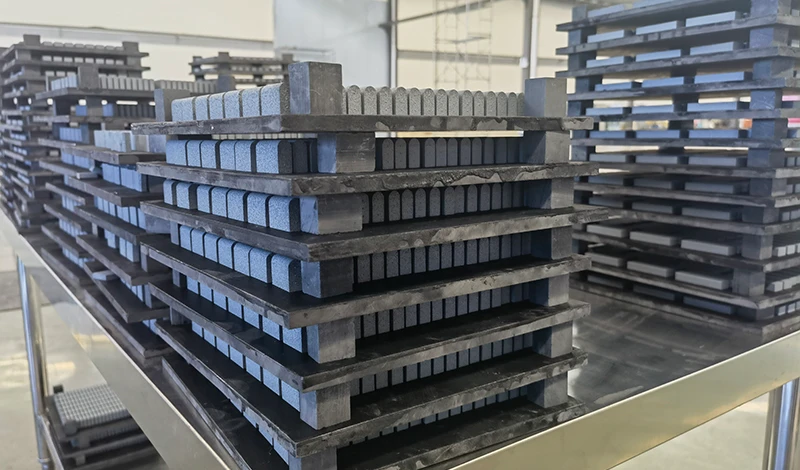
Two blades at the end of a season, both with worn cutting material. One has a straight mounting line and sound seats, and reworking it costs less than replacing it while delivering a comparable season. The other has taken an impact, its mounting line has moved, and reworking it produces a blade that wears unevenly and fails earlier than the one it replaced. The difference between them is a straight-edge check, and it takes a minute.
This comparison sets out what rework can and cannot deliver, the body conditions that rule it out, what re-brazing involves, how the warranty position changes, and how to compare the two options on a basis that reflects service rather than price.
What rework can and cannot deliver
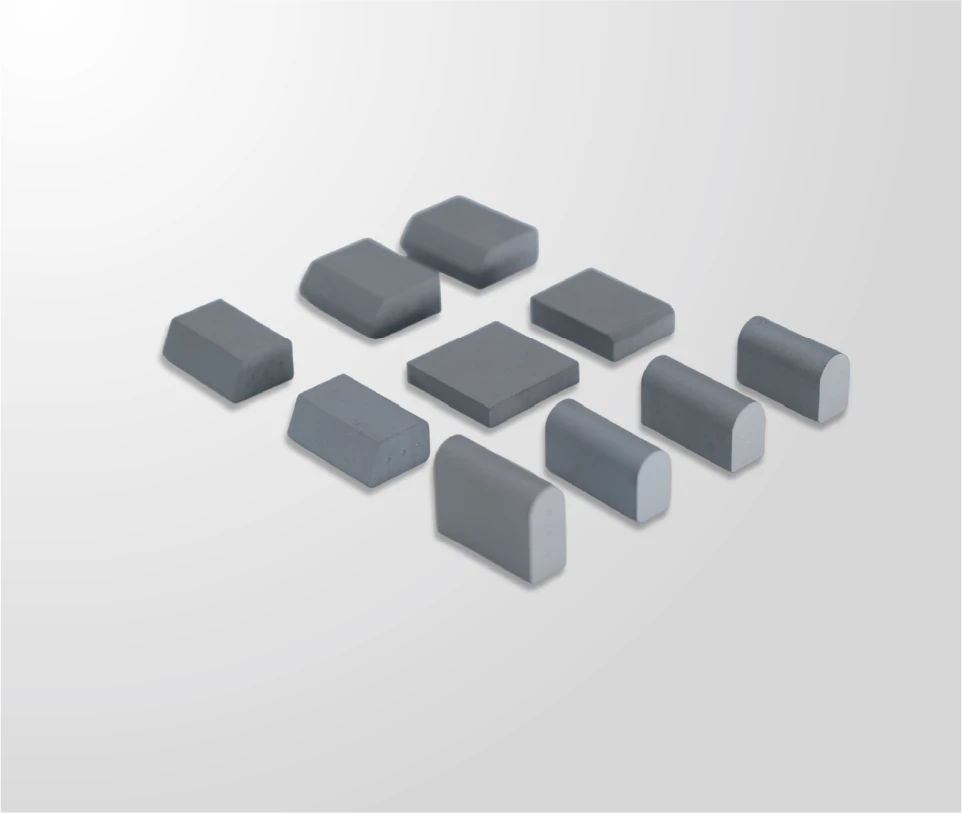
Rework replaces cutting material and joints on an existing body. What it delivers is therefore the service of a body that has already been through a season, with new cutting material on top of it.
That is a genuine offer where the body is sound, and it is worth being precise about what sound means: the mounting line straight along its length, the fixing pattern intact, and the seats or pockets able to support new material evenly. Where those hold, the reworked blade’s service is limited by the remaining life of the body rather than by the new material, and on most machines a straight body outlasts two or three sets of inserts.
Why the comparison is not part price against part price
Comparing a rework price with a new blade price describes only the parts and labour involved, and it leaves out the variable that decides the answer: how much service each option delivers. A rework that costs half as much and delivers half a season has not saved anything, and a rework that costs more than expected but delivers a full season is still the better outcome.
The right comparison is cost per metre of cutting edge over the service delivered. Rework consumes material and workshop labour and reuses the body; replacement consumes the body as well. Which is cheaper depends on how much body life is left, which is a measurement rather than an assumption, and the process that produces it is set out on the end-of-season assessment page.
Refurbished plow blades: what can be reworked safely
Cutting material on a sound body is reworkable.
The list of safe rework is shorter than suppliers of rework services sometimes suggest, and it is defined by the body rather than by the cutting material.
Worn or missing inserts can be replaced, a worn edge section can be renewed, and a failed joint can be re-established, all provided the seat and the surrounding steel are sound. What cannot be recovered is anything that changes the geometry the body presents to the machine, because the new material will inherit that geometry rather than correct it.
That distinction explains why the practical test is a straight-edge check on the mounting line and an inspection of the fixing pattern before anything else is considered. Those two checks decide whether the blade is a rework candidate, and everything after them is a matter of what to fit.
Base plate condition requirements
Four conditions define whether a base plate can carry rework, and each is a measurement or a direct observation rather than a judgement.
The mounting line must be straight along its full length when checked on a flat surface. The fixing holes must be round and within their original tolerance, since an elongated hole will not locate the blade however good the cutting material is. The seats or pockets must be able to support the new material evenly, without fretting deep enough to change the contact. And the plate must not have been repaired in the same area before, because a second repair in a compromised load path does not hold.
Where any of the four fails, the rework cost is being spent on a blade that will fail again, and the failure will be attributed to the new material rather than to the body. Hardness and material specifications for the plate itself are published by ASTM International and ISO.
Insert re-brazing considerations
Re-brazing is the rework operation with the most process content and the most scope for a poor outcome, and the sequence below is the one that produces a joint comparable to the original.
- Remove the failed or worn insert and take the seat back to sound steel rather than to the previous joint line.
- Clean the seat and the new insert, since contamination prevents the filler from wetting the surface.
- Re-establish the joint with controlled heating and a specified filler, rather than locally with a torch.
- Inspect the joint to the same criteria the original edge was inspected against, and record the result.
The third item is where rework quality is decided. A joint made with an uncontrolled heat source produces a result that looks complete from outside and behaves differently in service, and the failures that follow are usually attributed to the material. Brazing practice and joint inspection are described by the American Welding Society, and the failure signatures of a poor joint are set out on the insert loss page.
Warranty implications
Rework changes the position on the reworked section, and the table below sets out how.
| Element | New blade | Reworked blade |
|---|---|---|
| Coverage on the cutting material | Manufacturer’s terms from delivery | Reworking party’s terms from the rework date |
| Coverage on the body | Included as part of the assembly | Depends on the condition it was found in |
| Evidence needed for a claim | Batch reference and service record | The same, plus the rework record and its inspection result |
| Most likely dispute | Whether the failure was service or supply | Whether the cause was the rework or the body |
The fourth row is the one worth preparing for. A reworked blade that fails has two possible causes, and the record of the body condition at the time of rework is what separates them.
Cost comparison per metre
The comparison per metre uses four inputs: the rework cost, the new blade cost, the service each option is expected to deliver, and the residual value of the body in each case. Expressing both options as a cost per metre of edge over the service delivered makes them comparable even where the units and quantities differ.
Two properties of that comparison are worth stating. The expected service for a reworked blade is bounded by the body, not by the material, so it is usually shorter than for a new one and never longer. And the comparison is sensitive to the body’s remaining life in a way that makes it worth measuring rather than estimating, since a small error there changes the answer.
When refurbishment is a false economy
Four conditions make rework the more expensive option despite a lower price.
- A mounting line that has moved, which loads the new material unevenly from the first shift.
- Elongated or distorted fixing holes, which mean the blade will not stay located.
- Seats that have fretted to the point where the new material cannot be supported evenly.
- A previous repair in the same area, where the load path is already compromised.
The cost of reworking in those cases is not only the rework price; it is the rework price plus the earlier replacement plus the disruption of a mid-season change. That total is what makes replacement the cheaper option, and it is why the body check comes before the price comparison.
Documentation for auditors
A fleet that reworks blades needs a record that stands up to an audit and to a warranty question.
- The condition of the body at the time of rework, including the straight-edge and hole checks.
- The material fitted, with its batch reference.
- The joint inspection result, against the same criteria used for new material.
- The date of rework and the service interval expected from the result.
The second and third items are what make a later claim possible. A reworked blade whose material cannot be identified and whose joint was never inspected leaves the fleet arguing about causes it has no record of. Corrosion considerations for the reworked surfaces are described by NACE International, and fleet-level maintenance practice by the Transportation Research Board.
SENTHAI manufactures carbide and rubber-flex plow edges, wear plates and inserts in Rayong, Thailand, and produces replacement material to the pattern and profile a sound body requires, which is what makes a rework viable rather than a compromise. Blades that need their body condition assessed before a rework decision can be raised through the contact page.
FAQ
Is refurbishing a plow blade worth it?
It is worth it where the body is sound: a straight mounting line, an intact fixing pattern and seats that will accept new cutting material. Where the body has moved, rework costs more than it returns, and the second failure usually arrives earlier than the first.
What can be reworked safely on a used blade?
Cutting material and joints on a sound body. Worn inserts, a worn edge section and a damaged insert can be replaced or re-bonded, provided the seat and the surrounding steel are sound. Structural deformation, elongated holes and previous repairs in the same area are outside what rework can correct.
Does refurbishment affect the warranty?
It changes who carries the risk on the reworked section. The manufacturer’s coverage on the rest of the assembly is unaffected, while the reworked area is the reworking party’s work. That is a reason to record what was fitted and when, not a reason to avoid rework.
Are refurbished blades as good as new ones?
They are as good as the body they were built on. A reworked blade on a sound, straight base plate delivers service comparable to a new one; the same cutting material on a body that has moved delivers less, because the load path is no longer what the design assumes.
How do you compare rework and replacement on cost?
Per metre of cutting edge over the service each option delivers, not per part. Rework consumes material and labour and reuses the body; replacement consumes the body as well. The comparison turns on how much service the body has left rather than on the price of either option.
Send the body condition, the material currently fitted and the service the blade delivered. The SENTHAI engineering desk will confirm whether the body will carry new material and what it should be.