Three outcomes are available for every blade at the end of a season, and the assessment exists to place each one in the right category rather than to reach a single verdict. A blade with usable steel and worn inserts is a refurbishment; a blade above its minimum dimension but below its remaining-life threshold is a reuse candidate for a lighter route; and a blade whose body has moved is scrap regardless of how much insert material is left on it.
This comparison organises the decision around those three outcomes and the criteria that separate them. It covers the condition categories, how remaining life is estimated, what refurbishment and replacement actually cost in structural terms, and what has to be recorded so the following season’s budget is built from evidence.
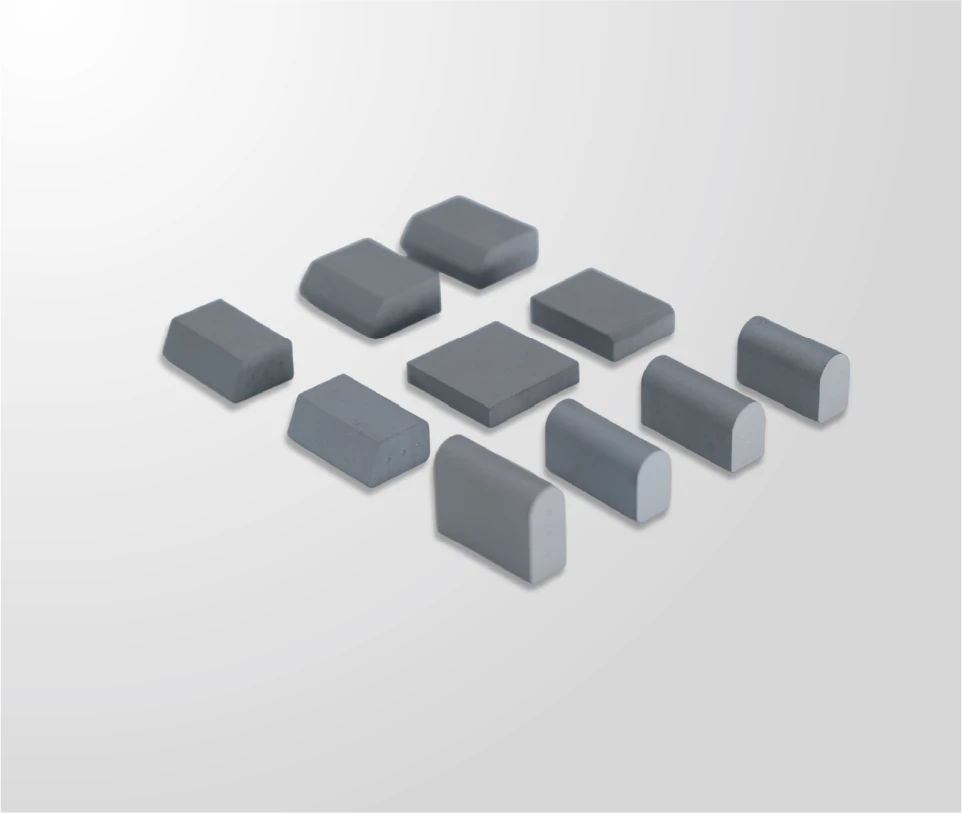
End of season blade assessment: the three outcomes
Assess the steel before the carbide.
The assessment is decided by the condition of the blade body, and the carbide or edge material is the last thing considered. A body that is straight, whose mounting pattern is intact and whose seats or pockets are sound can accept new cutting material and deliver another season.
A body that has moved cannot, however much cutting material is left on it, because it will load the new edge unevenly and produce a failure that gets attributed to the material.
That order is why the assessment starts with a straight-edge check on the mounting line and an inspection of the fixing pattern, both of which take minutes. Where those two fail, the blade is in the scrap category and the rest of the criteria do not apply.
Condition categories and criteria
The table below sets out the three categories and the conditions that place a blade in each.
| Outcome | Conditions | What follows |
|---|---|---|
| Refurbish | Mounting line straight, pattern intact, seats sound, cutting material worn or partly lost | New inserts or a new edge fitted to the existing body |
| Reuse | Above minimum dimension, body sound, remaining life shorter than a full season | Assigned to a lighter route or held as a spare |
| Scrap | Bowed or twisted mounting line, elongated holes, fretted seats, previous repair in the same area | Removed from the fleet rather than re-edged |
The middle category is the one fleets use least and benefit from most. An edge with less than a season’s life left is not a candidate for another full season on the route that consumed it, and it is often exactly right for a shorter route or for a machine that works fewer events.
Remaining life estimation
Remaining life comes from two figures: the wear rate the edge has demonstrated, and the minimum dimension the design allows. The rate is measured across the season at marked positions, and the minimum comes from the drawing or the machine’s documentation. The difference between them, divided by the rate, gives the work the edge has left.
Two cautions apply to the estimate. The rate is only meaningful if it was measured at the same positions and in the same units throughout, which is why the measurement routine matters more than the arithmetic. And the estimate describes the route the edge has been working, so an edge reassigned to a different surface will have a different rate. The measurement method behind the rate is described on the blade wear measurement page.
Cost of refurbishment versus replacement
The comparison is structural rather than financial in the first instance, because the two options consume different things. The table below sets out what each outcome requires and what it returns.
| Element | Refurbishment | Replacement |
|---|---|---|
| What is consumed | Cutting material and workshop labour | Cutting material, body and handling |
| What is reused | The body, its pattern and its seats | Nothing from the previous assembly |
| Risk carried | Any residual condition in the body | None beyond normal wear |
| Best suited to | Sound bodies with a usable pattern | Bodies that have moved or been repaired |
The third row is the one that decides the comparison in practice. Refurbishment carries the risk that the body has a condition the inspection did not identify, and where that risk is high — a blade with a history of impact, or one that has been repaired — replacement is the cheaper option even when the parts cost more.
Records that support the decision
The assessment is only as good as the records behind it, and four items make it repeatable. The measurement at fitment and the measurement at the end of the season, at the same marked positions. The event count or route work the edge has done between them. Any incident reported during the season, particularly an impact. And the batch reference of the cutting material, which matters if a refurbished edge later fails in a way that could be a material question.
The fourth item is the one that links the assessment to the claim procedure. A refurbished blade that fails early is a different case from a new one, and the record of what was fitted and when is what allows the distinction to be made. What that documentation needs to show when a claim is made is described on the insert loss page.
Storage of reusable edges
A reusable edge that is stored badly becomes a scrap edge by the following season. Three conditions do most of the damage: standing water or a damp floor under the blade, sustained load across a flexible section, and direct sunlight on a rubber or polymer base.
The storage requirements are the same as for a new blade, and the edge should be labelled with what the assessment found — the remaining dimension and the route it was released from. An unlabelled reusable edge is indistinguishable from a scrap one by the time anyone looks at it again, which is how usable material ends up in the skip.
Scrap and recycling practice
Scrapping a blade is a materials decision as well as a disposal one. Steel bodies, carbide inserts and any rubber or polymer components have different recycling routes, and separating them at the point of disposal is easier than separating a mixed pile later.
Two practices are worth adopting for their own sake. Recording the reason an edge was scrapped, so the fleet can see how much of its scrap comes from body damage rather than wear, and keeping carbide separate, since it is a material with a recovery value that is lost when it is mixed into general scrap.
Feeding results into next season’s budget
The assessment produces three figures that belong in the next budget rather than in a report. The number of edges scrapped by reason, which separates wear from damage. The number refurbished, which is the fleet’s demand for cutting material. And the wear rate per route, which is what the consumption assumption should be built on.
Those three together replace the estimate that would otherwise be used. A fleet that knows its scrap is majority wear will budget for cutting material; one that finds a large share of body damage has a case for looking at the machines rather than at the blades.
What makes an edge unrecoverable
Four conditions place a blade beyond economic refurbishment, and each is a body condition rather than a wear condition.
- A mounting line that has moved along its length, which no amount of cutting material will correct.
- Fixing holes elongated across several positions, which means the pattern no longer locates the edge.
- Seats or pockets fretted to the point where an insert cannot be supported evenly.
- A previous repair in the same area, where the load path is already compromised and the second repair is unlikely to hold.
Recognising these early is what stops a fleet re-edging a blade that will fail again. The failure modes that produce these conditions are described on the blade failure modes page, and the stock side of the same decision is covered on the inventory planning page.
Running the assessment in a workshop day
The assessment is best done as a single workshop session after the season, with the blades laid out and the records to hand. The order is short: measure the body first and place anything with a moved mounting line in the scrap pile, then check the pattern and the seats, then read the season’s measurements against the minimum dimension to decide between refurbish and reuse.
Doing it in one session matters because the two decisions interact. The number of blades moving to refurbishment is the order for cutting material, and it cannot be placed until the scrap pile is final. Material specifications for the steel and carbide involved are published through ASTM International and ISO, corrosion considerations by NACE International, and fleet practice by the Transportation Research Board and the National Association of Counties.
SENTHAI manufactures plow edges, wear plates and carbide inserts in Rayong, Thailand, and produces replacement material to the pattern and profile the body requires, which is what makes a refurbishment viable on a sound blade. Blades that need their body condition assessed against a refurbishment decision can be raised through the contact page.
FAQ
How do you decide whether to refurbish a plow blade?
From three conditions: whether the steel is still straight and sound, whether the mounting and pocket structure can accept new inserts or an edge, and whether the remaining life justifies the labour. Two of those are measurements and the third is estimated from the wear record.
Is refurbishment always cheaper than replacement?
Only where the body is sound. Once the mounting line has moved, the seats are fretted or the structure has been repaired before, refurbishment buys less life than a replacement at a comparable cost, and the second failure usually arrives earlier than the first.
What helps estimate remaining life?
A wear rate measured over the season, expressed per event or per unit of route work, and a known minimum dimension. Those two produce an estimate of how much work the edge has left, which is what the refurbish-or-scrap decision actually needs.
Can edges be reused without refurbishment?
Yes, where they are above the minimum dimension and sound, but the reuse has to be assigned rather than assumed. An edge that will finish a season on a light route is a reuse candidate; the same edge put back on the route that consumed it belongs in the refurbish or scrap decision.
Send the season’s measurements, the blade patterns and the condition found on the bodies. The SENTHAI engineering desk will confirm what the sound blades need and which are past economic refurbishment.