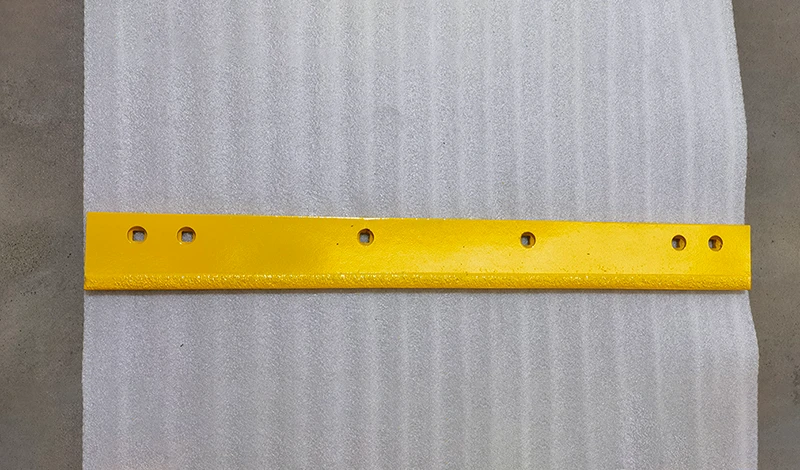
The counter-intuitive part of a seasonal changeover is that the blade swap is the easy part. Fitting an edge takes a fraction of the day; what takes the rest is establishing the condition of the machine it is going onto, recording what went on, and handing the unit back with its settings known rather than assumed. Fleets that treat changeover as a fitting job finish early and spend the season finding out what they missed.
This is a verification workflow for that day: what to inspect and in what order, what to have ready before the machines arrive, how to record a baseline, what the operator needs to be told, and the omissions that cause most of the winter’s avoidable failures.
Why changeover goes wrong
Most changeover problems are created before the blade is fitted. The edge goes onto a machine whose mounting line was never measured, so a good edge fails in the same pattern as the last one. The hardware is reused because the box of new fasteners was never ordered, so the joint starts the season with less preload than it needs. Or the machine is returned to the route with a different shoe setting and no note, so it is driven to the previous setup for the whole winter.
Those three failures share a cause: the changeover was scoped as a parts job rather than as an inspection with a parts job inside it. The fix is a sequence that puts the inspection first, because everything after it depends on what the inspection finds.
Changeover is a sequence, not a list of jobs
The order matters because several steps produce information the later ones need. Measuring the worn edge before removal gives the wear figure; inspecting the mounting line after removal gives the frame condition; and both feed the decision about whether the new edge is the right specification or a repeat of the last one. Running the steps in a different order means some of that information is lost.
It also matters for scheduling. A machine that arrives without its parts staged spends the day waiting rather than being worked on, and a workshop that discovers a frame problem mid-changeover has to stop and re-plan. Staging the parts and reading the previous season’s records before the machines arrive is what keeps the day to a day.
Blade changeover workflow: the season-start sequence
Inspect the machine, then fit, then record.
The sequence below produces a usable record and a machine that is genuinely ready. It assumes the parts have been staged in advance and the previous season’s notes are to hand, and it puts the measurements before the fitting so the baseline is captured while the machine is still in working order.
Pre-season inspection sequence
The inspection runs before anything is dismantled, because several of the readings cannot be taken once the edge is off.
- Measure the remaining edge at the marked positions along the working width, and record the smallest reading.
- Check the mounting line for straightness with a straight edge, along its full length.
- Inspect the fixing holes for elongation at several positions rather than only at the worst.
- Check the seating face and any pocket for high spots, fretting or repair from a previous season.
- Record the settings in use before anything is adjusted: shoe height, blade angle and down-pressure position.
The fifth step is the one most often skipped and the one that makes the rest of the season interpretable. Without the settings the machine ended the last season on, a change made at changeover cannot be evaluated, and the fleet cannot tell whether a different wear pattern came from the new edge or from the new setting.
Parts and labour planning
Changeover is a predictable demand, which makes it the easiest thing in the workshop to plan. What the plan needs is the parts list per machine, the labour estimate per machine, and the order the machines will come in.
Three items belong on the list beyond the edges themselves: the hardware, including any fastener that will not pass a reuse check; the consumables, such as anti-seize and cleaning materials; and any wear plate or shoe that the inspection is likely to condemn. Estimating the labour per machine from the previous season’s actual times is more useful than applying a standard allowance, because the variation between machines is usually larger than the variation between years.
Torque and hardware checks
The hardware sequence is short and determines whether the edge stays located for the season.
- Clean the thread and the bearing faces before anything is applied, and discard fasteners that fail the reuse check.
- Apply protection to the thread and the seating face where the fleet’s practice calls for it.
- Torque in a sequence that works outwards from the centre, so the edge is not pulled to one end.
- Re-check the torque after the first shift, since a newly fitted edge beds in as the parts settle.
The fourth step is the one that catches a seat problem early. A fastener that loses its preload on the first shift is usually seating on a damaged countersink, and finding that in the first week is a great deal cheaper than finding it after the hole has elongated. Hardware selection and torque practice are set out on the conical nut and plow bolt page.
Documenting baseline dimensions
The baseline record is what turns the rest of the season’s measurements into a comparison, and it takes minutes per machine.
- The edge specification fitted, with its batch or order reference.
- The dimension the new edge presents, measured at the same positions that will be used later.
- The condition of the frame, holes and seat found at inspection, with anything not corrected noted.
- The settings the machine went into service with, and the settings it came out of the previous season with.
The third entry is the one that protects a later claim. A frame condition recorded as found, with a note that it was left as it was, is a fact about the machine rather than an excuse; the same condition discovered later without a record is a question about whether it was caused by the new edge.
Operator handover points
The handover is where a good changeover is either preserved or lost. Three items matter, and they are all points at which the machine’s behaviour differs from what the operator last experienced.
What changed: a new edge, a different specification, a revised shoe height or a change of blade angle. What to watch for: a change in how the blade clears, a change in the surface left behind, or a new noise or movement from the blade at full articulation. And what to report, which is the same set of observations the fleet uses to diagnose wear: where on the route the machine behaves differently, and what it looks like afterwards.
Post-changeover road test
The road test is short and it catches the errors that only appear when the machine is moving.
- Lower the blade to its working position on a known surface and confirm it reaches it.
- Cycle the blade through its full range of movement and listen and look for contact.
- Operate the hydraulic and electrical functions to their stops.
- Run a short section and check the windrow pattern rather than only the surface behind the blade.
The second step is the one that catches the assembly problem no bench check will find: a blade or edge that fouls at an extreme of movement, which may not be reached in a straight pass at all. Running the last step before the machine returns to the route is what separates a changeover from a fitting.
Common changeover omissions
Six omissions account for most of the avoidable failures that follow a changeover, and each one is a step from the sequences above.
Fitting the new edge without measuring the frame, which repeats the previous season’s failure. Reusing hardware without checking it, which starts the season with a compromised joint. Adjusting settings without recording the ones the machine came in with, which makes the season uninterpretable. Omitting the baseline dimension, which removes the starting point for every later measurement. Skipping the re-torque after the first shift, which catches seat problems a week later than it could. And returning the machine without telling the operator what changed, which means the new configuration is evaluated against the driver’s memory of the old one.
Turning the changeover into next season’s plan
A changeover produces the two records the following year’s plan needs. The labour each machine actually took, which sizes the schedule, and the condition each frame was found in, which identifies the machines that need work before the season rather than during it.
Reviewing both at the end of the season rather than at the start of the next one is what makes them useful, because the workshop still has the time to act on a frame that needs correcting. The parts list for the following changeover comes out of the same review, and the hardware side of it is examined on the fastener kit planning page.
What good looks like at the end of the day
A completed changeover leaves four things behind: a machine whose edge is within the pattern and torqued correctly, a record of the condition it was found in, a baseline dimension against which the season’s wear will be measured, and an operator who knows what changed. Any of the four missing means the day produced a blade swap rather than a changeover.
The value of the fourth is easiest to underestimate. A driver who knows that the shoe setting moved will report whether the change helped, and that report is the cheapest field data a fleet can collect. Standards for the assemblies involved are maintained by SAE International and the Association of Equipment Manufacturers, fastener specifications by ASTM International and ISO, and fleet practice by the Snow and Ice Management Association.
SENTHAI manufactures plow edges, wear plates and carbide inserts in Rayong, Thailand, and produces edges to the pattern and profile each machine requires, so a changeover does not also become a fitment project. Edges that need their pattern or profile confirmed before the season can be raised through the contact page.
FAQ
What should a pre-season blade inspection cover?
The edge and the machine together: remaining edge thickness at each position, mounting line straightness, fixing hole condition, seat or pocket wear, and the setting of any shoes. Checking the edge alone misses the frame conditions that will cause the new edge to fail in the same way.
Should hardware be replaced at every changeover?
Not every fastener, but every fastener that fails the reuse check: a marked seating face, a stretched or galled thread, or a coating broken at the bearing face. Treating the rest as consumables and replacing them at changeover usually costs less than the labour of removing them seized later.
Why record baseline dimensions at changeover?
Because a measurement with no starting point cannot be interpreted. A reading taken mid-season means nothing without the dimension the edge started at, and a warranty question cannot be argued without a record showing the assembly was sound when it went into service.
What should the driver be told at handover?
What changed, what setting the machine is at, and what to look for. A machine returned with a new edge and a revised shoe setting but no handover note will be driven to the previous setup, and the fleet will conclude that the new configuration performs no differently.
Is a road test after changeover necessary?
A short one is, because several changeover errors only appear when the machine is moving: a blade that does not reach the surface, one that fouls at full articulation, and a hydraulic or electrical connection that is not fully seated. All three are cheaper to find in the yard than on a route.
Send the machines in the changeover, the patterns they run and the settings they came out of last season on. The SENTHAI engineering desk will confirm the edges and hardware so the day is not spent waiting on parts.