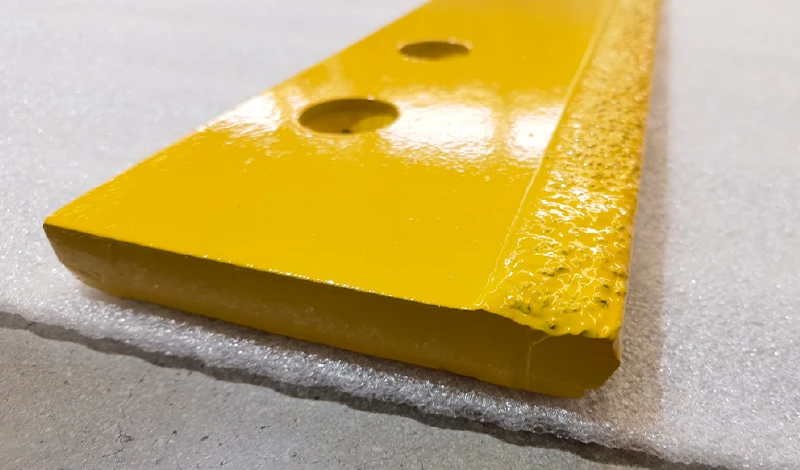
For snow plow blade lifespan: the variables that actually decide it, the best result comes from matching the component, material, and setup to a documented operating condition, then validating fit, wear, safety, and cost in a controlled trial. This updated guide uses current search evidence and official-source checks to turn the topic into a repeatable selection process.
Updated: October 19, 2026
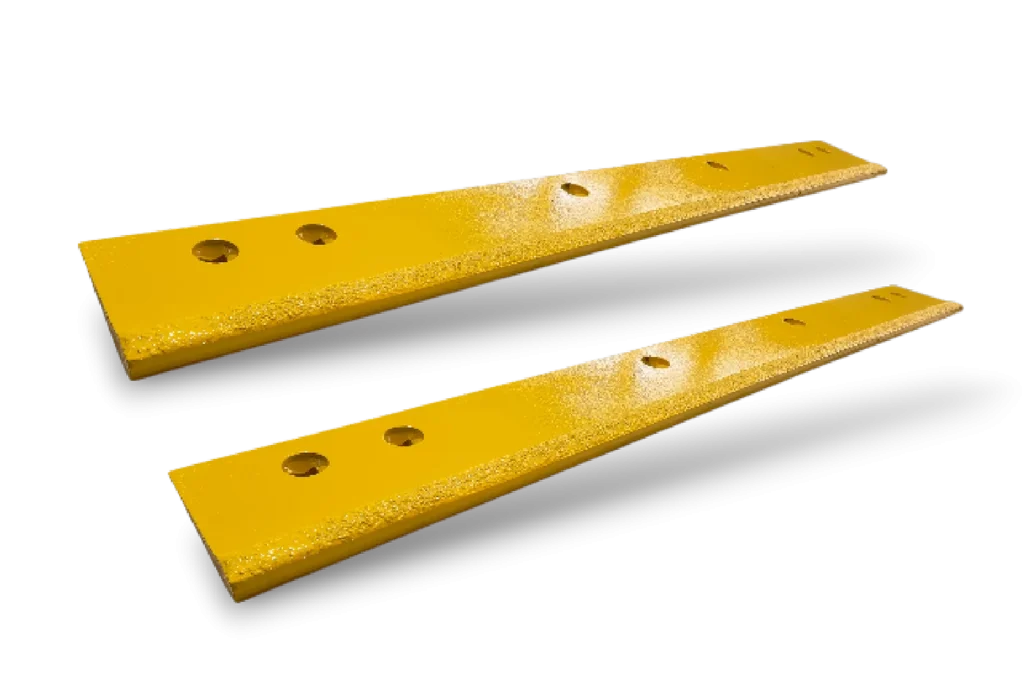
The counter-intuitive part of blade lifespan is that it is not a property of the blade. It is the outcome of five variables acting together — the surface worked, the number of events, the down pressure and speed used, the specification chosen, and how the edge is stored between seasons — and the same blade can last one season on one route and three on another without anything about the part changing.
This is a cost anatomy of lifespan rather than a table of figures. It decomposes the variables into the drivers that move each one, sets out which of them a fleet controls, and describes how to build an interval estimate from the fleet’s own records rather than from a borrowed number.
Snow plow blade lifespan: the variables that decide it
Lifespan is abrasiveness against the blade’s resistance.
Two groups of variables act on that. The first describes the work: what the edge meets, how often, at what pressure and at what speed. The second describes the blade: the material and geometry of the cutting edge, and how the assembly is set up.
The first group sets the demand and the second sets the resistance, and lifespan is the relationship between them.
This framing matters because the two groups are not equally adjustable. A fleet can change its specification and its settings; it cannot change the surface its routes present or the number of storms a winter brings. Recognising which variables are in each group is what stops a fleet buying its way out of a problem that is not about the blade.
Surface type and abrasion
Surface type is the largest single variable and the one least under the fleet’s control. The table below sets out how the main surfaces differ in what they remove.
| Surface | Dominant mechanism | Effect on life |
|---|---|---|
| Clean sealed pavement | Sliding contact at low abrasiveness | Longest life of any surface |
| Pavement with applied grit | Abrasion from loose and then embedded particles | Materially shorter, and shortened further where grit is applied repeatedly |
| Chip seal and coarse asphalt | Continuous abrasion at the contact face | Short, with an even wear pattern |
| Unsealed gravel | Abrasion with impact as the edge meets loose material | Short and unpredictable between routes |
| Bonded ice and hardpack | Riding contact with little cutting | Wear concentrated in bands rather than evenly |
The fourth and fifth rows are the two that surprise fleets most. Gravel combines abrasion with impact, which means a specification chosen for one of them underperforms on the other. Hardpack produces the least material removal per pass and the most concentrated wear pattern, which shortens life through localised loss rather than through even abrasion.
Route length and event count
What consumes an edge is contact, and contact accumulates with events rather than with distance or with the calendar. A long route worked twice a week can consume less than a short route worked twice a day, and the fleet’s event count captures that difference where a distance figure does not.
Two refinements make the figure usable. Recording events per route rather than per fleet, because the routes differ by more than the machines do. And recording which events involved the blade being down for the whole pass rather than raised for part of it, since the second contributes less wear and will otherwise make a route look less abrasive than it is.
Down pressure and speed
Down pressure and speed move lifespan in opposite directions and they interact. Higher down pressure raises the load at the contact, which increases the wear rate where the surface is abrasive and improves the cutting where the surface is bonded. Higher speed shortens contact time at each point, which reduces wear per unit of distance but also reduces the cutting action, so the edge frequently ends up making more passes for the same result.
The practical consequence is that neither setting has a single correct value. The setting that extends life on a paved route with occasional packed snow is not the setting that clears bonded ice at an intersection, and a fleet that fixes one setting for everything is choosing which of its routes to serve well.
Edge material and insert quality
The specification sets the resistance side of the relationship, and it works only where it matches the mechanism the route produces. A harder material resists abrasion better and tolerates impact less; a tougher one does the reverse. Where those are mismatched, a more expensive edge can deliver less life than a cheaper one, because it is optimised for a failure mode the route does not produce.
The second half of the specification is consistency. An edge whose dimensions and joint quality vary between lots will produce variable life on the same route, and the variation will be read as a route problem rather than a supply one. Material test methods are published by ASTM International and ISO, and the ways in which a mismatched specification fails are described on the blade failure modes page.
Operator technique
Operator technique is the variable that most affects life without appearing in any specification. Four practices move it: carrying speed through transitions rather than lifting, running more down pressure than the surface needs, using the edge to break through material that should be bladed in stages, and turning or reversing with the edge in contact with the road.
The effect is asymmetric, which is why it is easy to underestimate. Good technique extends life by a margin; poor technique can end a blade’s service early through impact damage that no wear allowance accounts for. The signature is timing and location: a change that follows a specific route or driver, concentrated at the transitions on that route.
Storage and handling
Storage affects lifespan between seasons rather than during them, and it does so in two ways. Steel and any bonded joints can corrode where moisture is held against them through an off season, which weakens the assembly before it is used. And rubber or polymer components can harden and take a set where they are stored under load or in direct sunlight.
Both effects reduce the life available in the following season without appearing as wear, which is why a blade can come out of storage and underperform without anything having visibly changed. The handling requirements are the same as for a new edge, and the wear measurement taken at the end of the season is what provides the baseline for the next one.
Estimating lifespan from your own records
An interval estimate from the fleet’s own data beats a borrowed figure, and it needs three steps rather than a model.
- Measure the edge at fitment and at removal, at the same marked positions.
- Record the events, kilometres or blade-down time the edge worked between those measurements.
- Divide the material consumed by the work done, and apply the rate to the minimum dimension the design allows.
The third step produces an estimate in the fleet’s own units, which is what makes it usable for planning. The measurement routine that produces the first step is described on the blade wear measurement page.
What you control and what you do not
Separating the variables by whether the fleet can move them is what turns the analysis into decisions.
| Variable | Under the fleet’s control | How it is moved |
|---|---|---|
| Edge specification | Fully | Chosen against the failure mode the route produces |
| Down pressure and speed practice | Fully | Settings and operator training |
| Storage and handling | Fully | Store off the floor, out of light, without load |
| Event count | Partly | Reduced by prevention and by route treatment practice |
| Surface abrasiveness | Not directly | Influenced only through treatment and gritting policy |
The bottom two rows explain why some lifespan differences between routes cannot be closed at all. A fleet cannot make a gravel road behave like clean pavement, and a specification chosen to survive gravel will be over-specified on the pavement. Recognising that is what stops the search for a blade that lasts equally well everywhere.
Setting realistic service-life expectations
Expectations should be set per route group rather than per fleet, and they should be stated as a range rather than a figure. A route group with an abrasive surface and frequent events has a shorter expected life than a group on clean pavement, and stating one target for both guarantees that one group always appears to be underperforming.
Two practices make the expectation usable. Reviewing it once a season against the measured rate, so the target reflects the fleet’s own data rather than its original assumption. And stating it in the unit the work is planned in — events, lane kilometres or blade-down hours — so a change in the interval is visible before a change-out is forced.
Why the same blade lasts differently on two routes
The answer is not a defect, it is the arithmetic of the variables. A blade’s service is set by the abrasiveness of the surface, the number of times it is brought into contact, the pressure and speed it is worked at, the specification’s fit to the failure mode, and the condition it was stored in. Two routes differ on three or four of those, and the difference in life follows.
For a fleet, the practical conclusion is that lifespan is a managed outcome rather than a purchased property. The specification is one of five levers, and the other four are settings, records and handling, all of which are cheaper to change than a blade. Winter operations practice is published by the Transportation Research Board and the Federal Highway Administration, and fleet maintenance practice by the Snow and Ice Management Association.
SENTHAI manufactures carbide and rubber-flex plow edges, wear plates and inserts in Rayong, Thailand, and matches the edge specification to the failure mechanism a route produces rather than to a general duty description. Routes whose measured rate suggests a specification change can be discussed through the contact page.
Use Measurements and Failure Modes Instead of a Fixed Replacement Rule
This research-backed framework closes a recurring gap in pages ranking for Snow Plow Blade Lifespan: The Variables That Actually Decide It: readers need a decision method, not a list of unsupported superlatives. Apply the same evidence fields to every option before choosing snow plow blade lifespan: the variables that actually decide it.
| Decision gate | Evidence to collect | Release rule |
|---|---|---|
| Geometry | Remaining edge height, bevel condition, straightness, and bolt-hole clearance | Replace before the holder, moldboard, or fasteners become the wear surface |
| Carbide retention | Missing, cracked, or loose inserts and braze-line separation | Remove a damaged section from service and identify the impact or bond cause |
| Machine behavior | Chatter, skipping, pull, vibration, and repeated readjustment | Check attack angle, down pressure, shoes, trip system, and carrier condition |
| Route evidence | Surface, speed, temperature, obstacles, hours, and operator notes | Compare like-for-like routes before changing edge material or bevel |
A single service-life number or bevel angle cannot be universal. Carrier geometry, attack angle, road surface, impact frequency, setup, and operator practice all change the result.
Run a Controlled Trial Before Full-Fleet Adoption
-
Freeze the baseline: record the current component, carrier settings, route, weather, operator, hours, and reason for removal.
-
Approve fit first: compare the supplier drawing with the machine and attachment. Do not drill, grind, weld, or substitute fasteners without an approved procedure.
-
Change one major variable: keep route and operating method as consistent as practical so the result can be attributed to the component rather than a different setup.
-
Inspect at planned intervals: photograph the same locations, measure wear, check fastener torque and retention, and log impacts or abnormal vibration.
-
Release against written criteria: decide in advance what wear, removal quality, downtime, and cost per operating hour would justify expansion.
Official-Source and SERP Verification
The technical boundary was checked against Federal Highway Administration snow and ice guidance. That source is used for the operating or safety context; model-specific dimensions, settings, and limits must still come from the approved manual for the exact machine and component. The following leading pages were reviewed for search intent and missing decision details:
Frequently Asked Questions
What should be verified before selecting snow plow blade lifespan: the variables that actually decide it?
Confirm the exact application, dimensions, carrier limits, operating surface, expected impacts, supplier drawing, and acceptance evidence. A product name or grade label alone is not enough.
How should snow plow blade lifespan: the variables that actually decide it be compared on cost?
Compare landed and installed cost, service hours, maintenance labor, downtime, collateral wear, and replacement reason. Use cost per operating hour for comparable routes rather than purchase price alone.
When is a trial required?
Use a controlled trial whenever fit, material, setup, route conditions, or supplier process changes. Define the baseline and pass criteria before the trial starts.
Which document controls installation and operating limits?
The current manual, approved drawing, and written instructions for the exact carrier and component control. General articles and cross-reference tables are screening tools, not installation authority.
Request an Application Review
Send SENTHAI the carrier or machine model, drawing or dimensions, operating surface, route condition, current failure mode, expected quantity, and target service interval. The engineering team can then review a suitable product path without changing the evidence requirements described above.