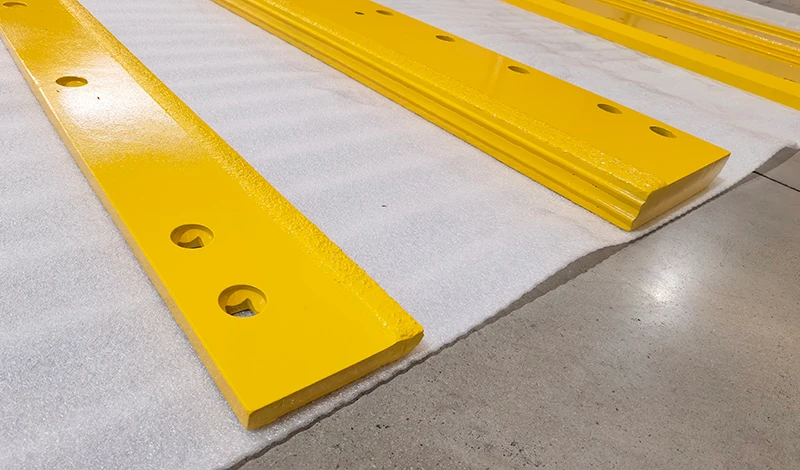
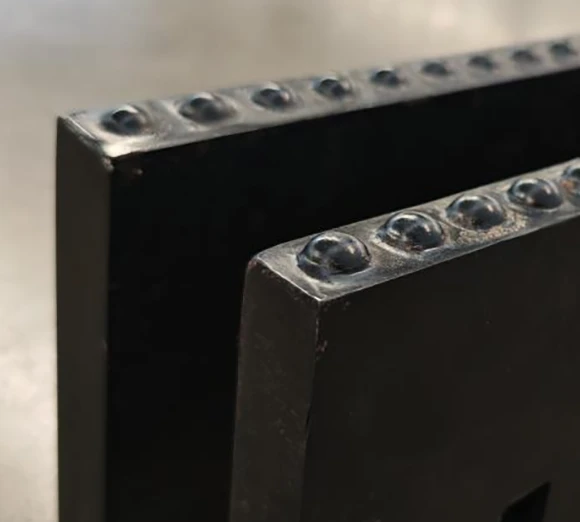
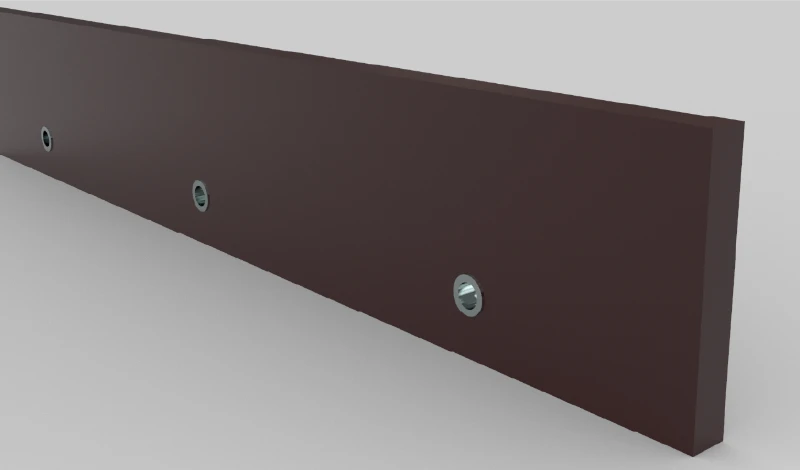
Two county routes, same truck class, same driver training. The first is chip seal for most of its length, and an edge on it wears evenly until the carbide is spent. The second mixes paved sections with gravel shoulders, and the same edge chips along the outer third long before it wears out. The difference is not the blade; it is the abrasion profile of the route.
Choosing between steel snowplough blades, carbide-edged blades, clad overlays and rubber-flex edges is therefore a question about what the surface does to the edge, not about which material is better in general.
How surface abrasion differs by route type
Match the edge material to the abrasion profile of the route.
An abrasion profile is the combination of what the surface is made of, how much grit sits on it, and how often the edge meets an obstacle, which together decide whether an edge wears out or chips out.
Clean asphalt and concrete are mild on the edge and give it little to catch on. Chip seal and surface dressing are the opposite: the aggregate is designed to be rough, and it grinds the contact face continuously. Gravel and mixed unpaved routes add a second mechanism, because loose stone strikes the edge as well as sliding past it. Decorative paving and jointed concrete add a third, where the edge does little abrasive work but risks catching a raised section.
Fleets that record failures by route type usually discover that their wear bill is concentrated in a minority of the network. That record is the input to a material decision: it tells you whether the edge you are buying needs to resist grinding or to survive impacts, and those two requirements pull in opposite directions. The relationship between weather, surface condition and the load the network places on equipment is documented by the Federal Highway Administration.
Carbon steel edge behaviour
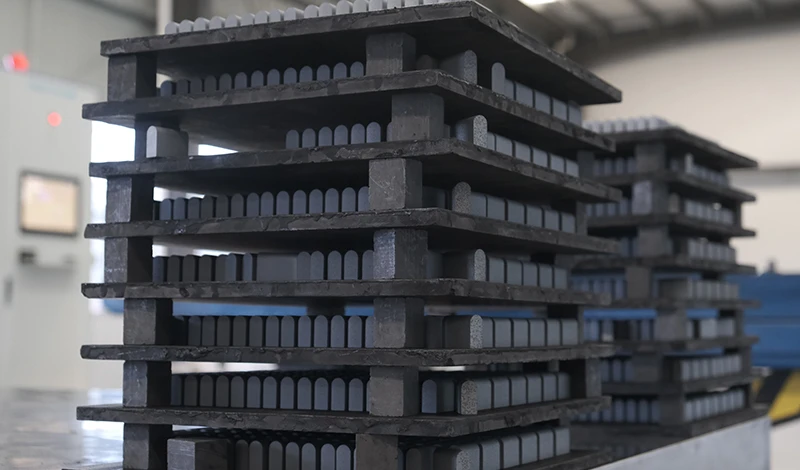
Carbon steel is the reference material for a cutting edge, and it remains the right answer for a large part of the work. It is tough, it can be straightened after a knock, it is available in a wide range of sections and hole patterns, and it costs less per edge than any carbide option.
Its limitation is wear rate. Steel wears across the whole contact face rather than at a wear-resistant insert, so the edge loses its shape progressively and the fleet pays in changeouts. On a light residential route where the surface is mild and the season is short, that is a reasonable trade. On continuous abrasive work, it is not, because every changeout consumes labour and downtime as well as an edge.
Steel also behaves predictably, which has value. A fleet can forecast its consumption from a wear curve, hold stock accordingly and rotate edges between routes as they wear. The failure mode to watch is not wear but deformation, which points to a section that is too thin for the duty or to a mounting fault rather than to the material.
Salt exposure is the second environmental input behind a wear decision. Chloride accelerates corrosion on any edge stored wet or unpainted between storms, and the wider case for managing how much salt reaches the roadside environment is set out by the US Environmental Protection Agency. An edge that rusts between events is losing service life that has nothing to do with abrasion.
Heat-treated and through-hardened edges
Heat treatment moves steel along the same hardness and toughness trade-off that governs carbide grades. Through-hardened edges are harder across the section, which raises abrasion resistance, while surface-hardened or selectively treated edges keep a tougher core.
The distinction matters when a fleet is comparing suppliers on hardness numbers alone. A higher hardness figure means more abrasion resistance and less capacity to absorb a strike, so the number should be read together with the route profile and the section thickness. Two edges with identical hardness can behave differently if one is hardened through and the other keeps a ductile core.
Ask what the treatment is, how it is verified and whether the certificate follows the batch. Material and hardness claims can be checked against the published test methods maintained by ASTM International, and the raw material side of the same conversation, including tungsten supply and grade fundamentals, is summarised in the mineral commodity reporting published by the US Geological Survey.
Carbide-edged blades in abrasion
A carbide-edged blade separates the two jobs that steel does at once. The steel carrier takes the structural load and provides toughness, while inserts at the contact face provide the abrasion resistance. That separation is why carbide edges hold their shape for longer and why they are specified on routes where the edge would otherwise be changed mid-season.
The cost of that separation is brittleness at the insert and a greater dependence on the quality of the join. A carbide edge on a route with heavy stone impact needs a tougher grade and a protected insert position; a carbide edge on clean abrasive asphalt can take a harder grade and tighter spacing to maximise life.
Material behaviour at this level is well documented by the manufacturers who produce carbide powders and wear parts, and the technical literature from producers such as Hyperion Materials & Technologies is a reasonable orientation for buyers who want to understand grade differences rather than accept them. What matters for a specification is that the grade name, the insert geometry and the spacing are all recorded against a batch.
Clad and overlay alternatives
Clad and overlay edges occupy the middle of the range. Instead of inserts, a wear-resistant layer is bonded to a tougher base, so the contact face is harder than the material carrying the load. The result sits between plain steel and carbide on both cost and life.
These edges suit programmes where abrasion is steady rather than extreme and where the fleet is not ready to move to an insert-based product. They also suit retrofit situations where the mounting and the carrier are fixed and only the wear surface can change.
Two questions decide whether a clad edge will perform as expected. The first is the specification of the overlay and the base, since the combination defines the behaviour. The second is the bond between them, because a delaminated overlay ends the edge as surely as wear does. Ask how the bond is produced and how it is checked on the production lot rather than on a development sample.
Rubber-flex edges in the same comparison
Rubber-flex edges do not compete on abrasion resistance at all; they compete on surface protection and impact damping. A rubber body with carbide wear segments absorbs the strike of a raised joint or a curb, spreads load across the segments and runs more quietly than a rigid edge.
That makes them the default choice for decorative paving, commercial lots and residential grids, where the cost of damage to the surface outweighs the cost of faster edge wear. On a chip-seal highway they are the wrong tool, because the abrasive load is exactly what a flexible edge cannot resist for long.
The mistake buyers make is comparing a flex edge and a carbide edge on wear life alone. They are answering different questions, and the comparison that matters is total cost per lane kilometre on the route in question, including the cost of a claim for damaged paving. The published range from SENTHAI divides the families along the same line, with the rubber-flex JOMA style blade positioned for lots and decorative surfaces.
Selection matrix by surface and speed
Use the matrix to shortlist, then verify the shortlisted material against the fleet’s own wear record before ordering a season.
| Edge material | Surface it suits | Tolerates well | Fails when |
|---|---|---|---|
| Carbon steel | Light residential, mixed light duty | Impact, deformation, low cost per change | Abrasion is continuous and severe |
| Heat-treated steel | Arterial and moderate abrasion | Steady abrasion with moderate impact | Hardness is pushed past the impact risk |
| Clad or overlay edge | Steady abrasion, retrofit situations | Longer life than plain steel without full brittleness | The overlay bond is inconsistent |
| Carbide-edged blade | Chip seal, asphalt, hardpack | Abrasion and shape retention | Stone impact, unprotected insert position |
| Rubber-flex edge | Decorative paving, lots, residential grids | Impact damping and surface protection | Continuous abrasive highway work |
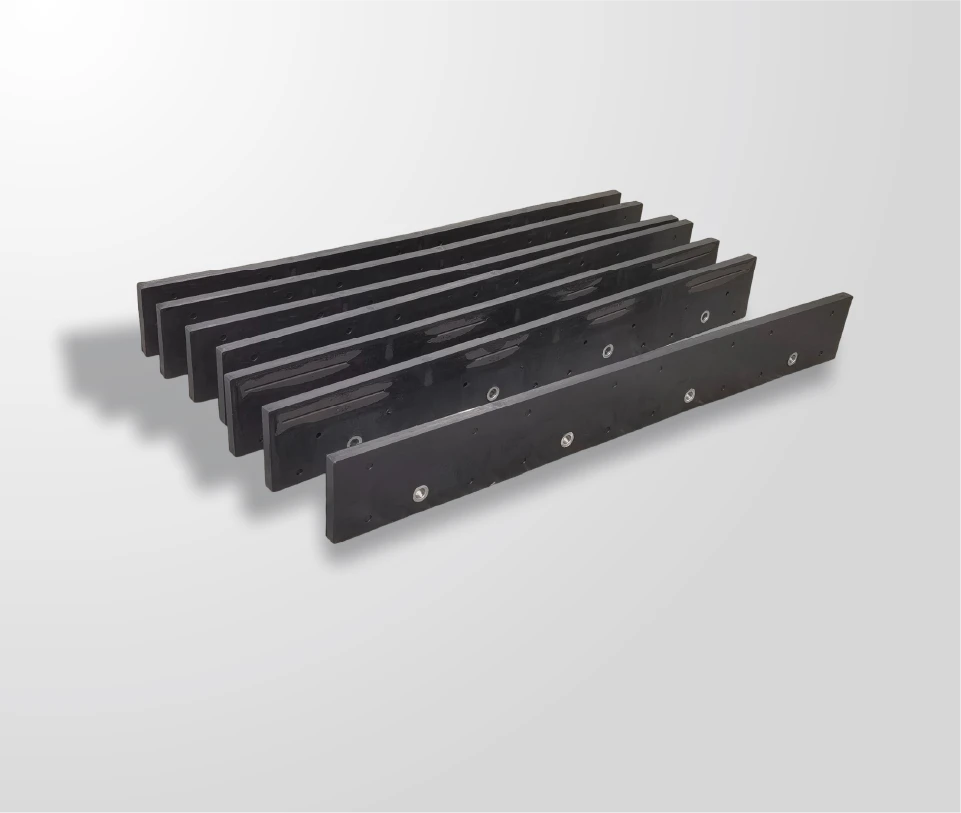
Where a fleet runs more than one profile, the answer is usually a mixed inventory rather than a single standard, and the spare parts discipline that goes with it is the same one described for the wider blade range. SENTHAI produces carbide edges, inserts and flex blades to a measured mounting pattern and packs mixed orders together, so one shipment can cover several profiles (carbide snow plow blade for highway and municipal fleets).
Independent research on how agencies evaluate winter maintenance materials and methods is published by the Transportation Research Board, and it is a reasonable place to look when a specification is being rewritten after a bad season.
FAQ
Which plow edge material suits the most abrasive surface?
Carbide answers abrasion most directly, because the wear resistance sits in the insert rather than in the whole edge, and the steel carrier behind it provides the toughness. On chip seal and surface dressing the combination of a hard grade with closer insert spacing is the usual specification. Clad and overlay edges sit between plain steel and carbide, and they suit fleets that want longer life without moving to an insert-based edge.
Is a steel blade better than poly for a UTV snow plow?
They are built for different surfaces rather than for different budgets. Steel scrapes hard and clears packed snow well on asphalt and gravel, but it marks decorative paving and can catch on joints. A poly or rubber-flex edge protects the surface, runs more quietly and absorbs impact, which is why it is common on paved lots and residential work. The correct answer follows the surface the machine works on most.
What is a clad cutting edge and when is it worth specifying?
A clad edge carries a wear-resistant overlay on a tougher base, so the material at the contact face is harder than the material carrying the load. It is worth specifying where abrasion is steady but impact risk is moderate, and where a fleet wants longer life than plain steel without the brittleness risk of a fully hard edge. Ask for the overlay specification and how the bond is controlled, because that bond decides the result.
Does a harder edge always last longer?
No. Hardness resists abrasion and buys wear life, but it also reduces the material’s ability to absorb impact, so a harder edge can fail earlier on a route with gravel shoulders, bridge joints or buried obstacles. The useful question is which mechanism removes the edge: if it wears down evenly, hardness helps; if it chips or cracks, toughness matters more and a slightly softer grade lasts longer.
Send the route mix, the speed the units run and the failures you saw last season. The SENTHAI engineering desk will match each route to an edge material and quote the mixed set as one order.