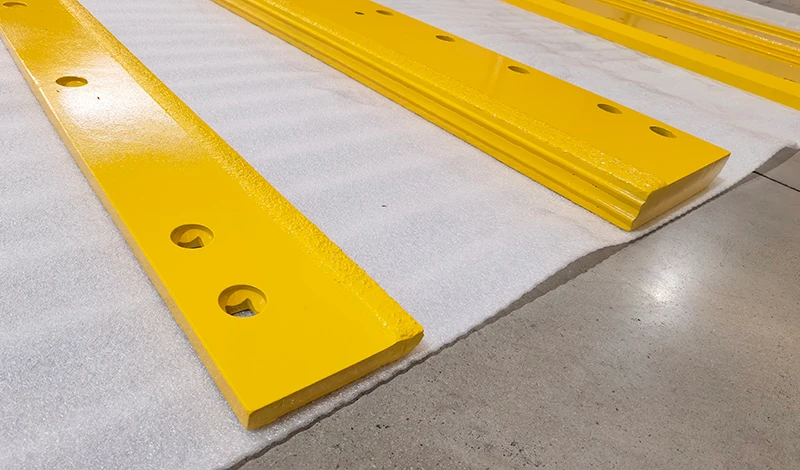
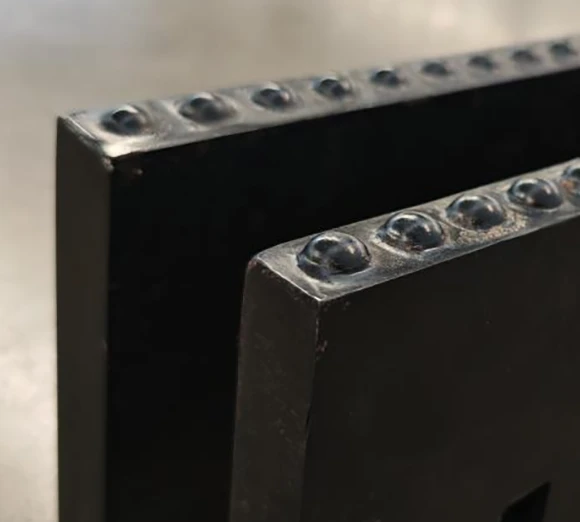
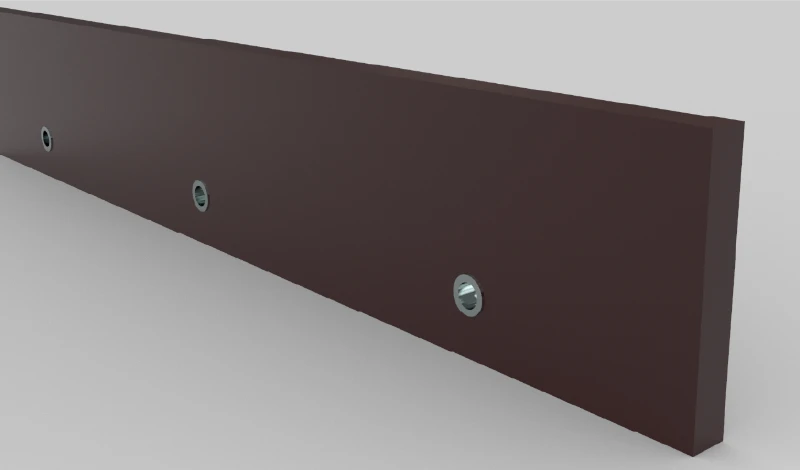
Two trucks leave the same yard, and they should not carry the same edge. One runs a downtown business district where decorative paving, tight turns and pedestrian islands punish a rigid steel edge; the other runs a county chip-seal route where abrasive aggregate wears a steel edge down before the season is half over. The first truck needs a rubber-flex edge that damps impact and protects the surface. The second needs carbide for abrasion resistance. Same fleet, same specifications handbook, two different answers.
That is the whole argument of snow plow blade selection by road class, and it is the argument this guide works through class by class: what each road type actually demands, which edge family answers it, what goes wrong when the wrong one is fitted, and how to turn those decisions into an inventory a buyer can forecast.
Why one blade type cannot cover a whole network
Match the edge to the surface mix, then to the route class, and only then to the price.
Snow plow blade selection is a surface problem before it is a product problem: the edge has to survive the abrasion of the road and the impact of what is buried in the snow, and those two demands pull in opposite directions.
The reason one part number cannot cover a network is that surface and speed change at the same time. A residential grid is slow, tight and often surfaced with decorative paving or jointed concrete, where impact and surface damage dominate. An arterial is faster and carries more traffic, so the edge works harder per lane kilometre. A highway shoulder runs at the highest speed against chip seal and surface dressing, where abrasion does most of the wearing. A hardpack route on a gravel road combines ice with stone.
A buyer comparing suppliers on price per blade is therefore comparing incomparable things, because the correct product on a residential route is not the correct product on a highway. The comparison that holds up is cost per lane kilometre within one route class, using the edge family that suits that class in the first place.
Residential and low-speed route requirements
Residential work is an impact and surface-protection problem rather than an abrasion problem. Cul-de-sacs, parked cars and driveways force constant speed changes, and the surface may be stamped concrete, pavers or asphalt with joints that a rigid steel edge will catch. The failure that matters is not a worn edge but a damaged surface and a complaint.
This is where a rubber-flex edge earns its place. The rubber body absorbs the impact of a raised joint or a curb strike, spreads the load across the segments instead of concentrating it, and runs more quietly, which matters on a night route through a residential grid. Carbide wear segments inside the flex body still provide abrasion resistance at the contact face, so the trade-off is not “soft or durable” but which combination of behaviours the route needs. The published range describes this family as the edge for commercial lots and decorative paving, where surface protection outranks maximum wear life (see the rubber-flex blade family).
The operational consequence is scheduling, not specification. A residential route with a flex edge can hold its speed on a tight grid without the crew slowing for every joint, and that difference shows up in the lane kilometres cleared per shift.
Arterial and collector street requirements
Arterials and collectors are the compromise class, which is why they are the hardest to buy for. Traffic volume is high enough that the edge works continuously, but speeds and surface conditions vary within the same route: asphalt on the main carriageway, patched sections near intersections, and a mix of curb and shoulder strikes that a highway edge never sees.
The practical answer is usually a carbide edge in a middle grade, with the specification written around the dominant surface rather than the average. Where an arterial crosses a chip-seal section daily, the abrasion case is stronger than the map suggests. Where the same route includes a gravel shoulder the crew consistently works, the impact case strengthens and a tougher grade belongs in the discussion.
State transport departments publish how they classify routes and assign winter equipment, and those documents mirror what the surface tells you: a small number of classes, each with its own equipment expectation rather than one universal unit (Colorado Department of Transportation). For a fleet buyer, the value of that structure is forecasting: you can plan changeouts by class instead of by truck.

Highway and expressway requirements
Highway work concentrates the abrasion problem. Chip seal, surface dressing and the grit that remains on the carriageway after a storm all grind the edge at speed, and the failure mode a fleet sees is even wear along the length rather than chipping. This is the class where carbide pays back most clearly, because the alternative is a steel edge changed more often on a route where every changeout closes a lane.
Expressway plowing also raises the impact energy of anything the edge meets. A frozen berm, a dropped object or a bridge joint arrives faster, which is why carrier toughness and recessed hardware matter as much as hardness. The specification needs to say both: an abrasion-led grade at the contact face, and a carrier that has been treated for toughness rather than left at maximum hardness.
Weather demand on this class is the most volatile input in the whole plan, and the seasonal pattern that drives it is public: the National Weather Service publishes the outlooks and warnings that trigger call-outs, and the wider relationship between weather events and road network performance is documented by the Federal Highway Administration. For a buyer, that volatility is the argument for holding a spare edge per highway unit rather than for standardising down to one part number.
Packed ice and hardpack routes
Packed ice and hardpack break the rule that abrasion is the enemy. On these routes the edge skates across the surface instead of cutting into it, so the first requirement is bite: an aggressive insert layout that fractures the ice rather than polishing it. A harder grade with the wrong geometry leaves the ice behind just as effectively as a soft grade does.
The second requirement is down-pressure discipline. Aggressive geometry only works when the blade is loaded correctly against the surface; too little pressure and the edge skips, too much and the carbide is ground into the road for no extra gain. This is where a specification should name the machine and the working method rather than only the edge, because the same blade behaves differently across a loader, a grader and an underbody mount.
Complete kit systems exist for this class, combining the edge with the insert layout and hardware as one assembly (packed ice carbide kit). The buyer’s question is whether the route is consistently hardpacked or only occasionally so. Where ice is a seasonal episode rather than the normal surface, a general carbide edge and an occasional aggressive pass may be cheaper than equipping every unit for the worst week of the year.
Matching blades to carrier vehicles
Blade selection does not finish with the surface, because the carrier decides how much edge the machine can actually use. A one-ton pickup, a tandem axle plow truck, a grader and a loader each impose a different limit on width, weight and down-pressure, and fitting past that limit transfers the cost from the blade to the truck.
The mechanics are straightforward. Heavier blades need more front-axle capacity and change the steering feel under load. Underbody mounts put the load into the chassis rather than the front end, which is why they suit compaction work on trucks that could not carry the equivalent front blade. Loaders and graders work at lower speed with high down-pressure, so edge geometry matters more than speed-related abrasion resistance.
The specification discipline is the same in every case: name the machine and the mounting position, then let the edge profile, thickness and bolt pattern follow from it. SENTHAI builds edges for trucks, graders, loaders and skid steers to a measured or photographed mounting pattern. Technical documentation from carbide material producers such as Hyperion Materials & Technologies is a useful reference on how wear grades behave at the material level.
Rotation strategy across vehicle classes
A rotation plan is where a mixed inventory starts paying for itself, because it converts wear from a surprise into a schedule. The principle is to move each edge through a sequence of duty cycles that match its remaining condition rather than its original specification.
The sequence that works for most municipal fleets runs downhill in severity: a new carbide edge starts on the highest-abrasion highway or arterial route; when it has worn but is still serviceable, it moves to a lower-speed route where slight undercutting matters less; and at the end of its life it may finish on a yard or a lot where the only requirement is to move snow. Flex edges follow a similar path, spending their first hours on decorative or high-visibility surfaces before moving to industrial lots.
Rotation only works if condition is measured rather than judged by eye. A fixed measurement point on each edge, checked at set intervals and recorded against the route, gives the fleet a wear curve instead of an impression, and the changeout trigger can then be written into the specification as a number. Trade research on winter maintenance practice is a reasonable place to look for how other agencies structure those records (Transportation Research Board).
Building a mixed blade inventory
The buying decision that follows from road class selection is not which blade to standardise on, but how many of each family to hold. That is a forecast problem, and it is solved with route data rather than with a supplier’s recommendation.
| Road class | Dominant demand | Edge family that fits | Failure if mismatched |
|---|---|---|---|
| Residential and low-speed grids | Impact and surface protection | Rubber-flex JOMA style edge | Scuffed decorative paving and surface complaints |
| Arterial and collector streets | Mixed abrasion with curb strikes | Carbide edge, middle grade | Fast wear on one section, chipping on another |
| Highway and expressway | Sustained abrasion at speed | Carbide edge, abrasion-led grade | Repeated changeouts and lane closures |
| Packed ice and hardpack | Bite on a skating surface | Aggressive packed ice kit | Ice left on the road after every pass |
| Gravel and mixed unpaved | Stone impact with abrasion | Tough impact-led carbide | Chipped inserts and early insert loss |
Two numbers make the inventory plan defensible: the lane kilometres each class produces per season, and the measured wear rate of the edge currently used on it. Divide the second into the first and the fleet has an annual quantity per class. Contractors add a third input, the response time written into each snow and ice management agreement, because a client with a two-hour trigger needs a spare edge on the truck rather than in the warehouse (Snow & Ice Management Association).
Distributor programmes usually combine families on one shipment, so a fleet holds one pallet per class instead of one part number for everything (wholesale and distributor supply).
FAQ
How often should plow blades be replaced?
There is no calendar interval that fits every route. The workable trigger is a wear threshold written into the specification, measured at a fixed point on the edge, plus a visual check for chipping and for a carrier that has lost flatness. Fleets that record changeouts by route can then replace on evidence, and the interval that emerges from those records is what belongs in the next season budget.
Can one blade type really cover a whole network?
One edge can physically fit every truck, but it will not be the right edge for every route. A hard grade that survives chip seal chips on gravel shoulders, and a rubber-flex edge that protects decorative paving wears quickly on abrasive asphalt. Standardising on one part number usually means paying for compromises on both ends of the network rather than saving on inventory.
Is a straight blade or a V-plow better on a mixed route?
They solve different problems. A straight blade carries snow across and off the road at speed, which suits long runs on open carriageway. A V-plow opens and splits deep or drifted snow at lower speed, which suits residential grids and entrances. On a mixed network the practical answer is usually both, assigned by route, with the cutting edge specified separately for each.
Does a wider blade always clear more road?
Not automatically. A wider blade clears more road per pass, but it also adds weight and side load, and on narrow streets and tight intersections the extra width costs manoeuvring time rather than saving it. Width should follow the route geometry and the capacity of the truck carrying it, and the cutting edge underneath still has to suit the surface being scraped, so width and edge material are two separate decisions.
List the road classes in your network with the surface mix and the machine assigned to each. The SENTHAI engineering desk will map an edge family, grade and packing plan to every class and quote it as one order.