Two numbers size a plow blade, and they move independently. Length is set against the vehicle’s track and the geometry of the routes it works; thickness is set against the duty cycle the route imposes. A fleet that treats them as one decision — picking a class of truck and a class of blade to match — ends up with blades that are the right size on paper and the wrong size on the road.
This decision path takes the two numbers in the order they should be settled, eliminating a class of wrong choice at each step, and finishes with a table a buyer can work through before requesting a quotation.
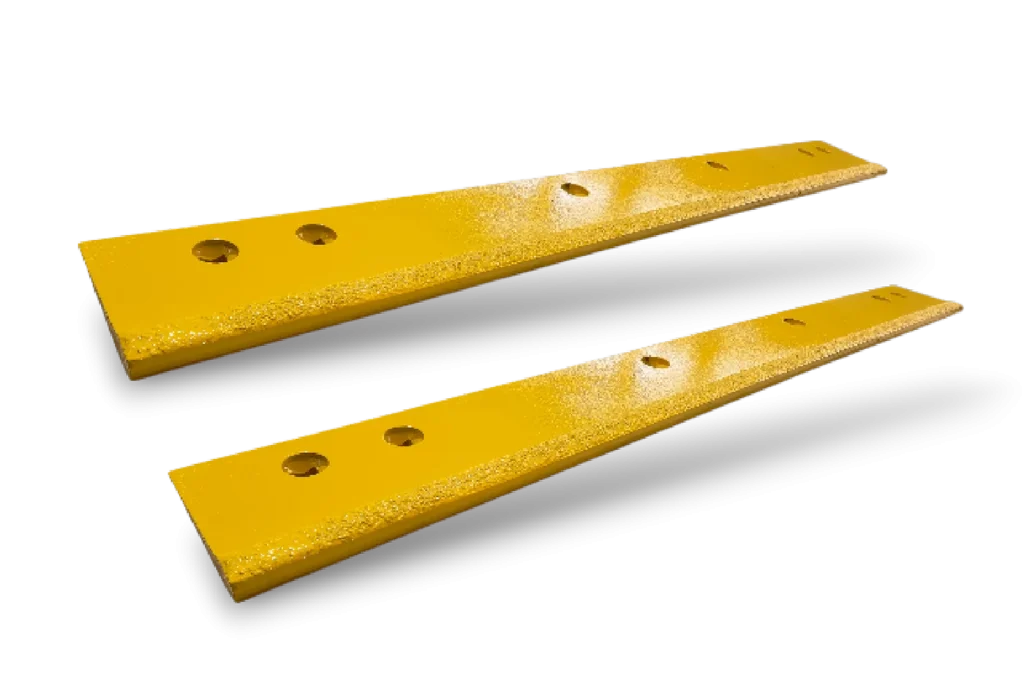
Blade width versus vehicle width rules
Width is a relationship to the vehicle, not a number.
A blade is sized so that it covers the machine’s track fully, overhangs enough to clear the outer tyre line while angled, and still leaves the operator able to place it without striking fixed objects on a normal pass.
The decision is easier to reason about as a proportion. A blade narrower than the vehicle’s track leaves an uncleared strip under the wheels, which is the failure that shows up as a strip of packed snow down the middle of a lane. A blade that overhangs far beyond the track clears more per pass but reduces the margin the operator has in kerb-lined streets, around parked vehicles and on tight turns, and the cost of that margin appears as kerb strikes rather than as wear. The usable band sits between the two, and it moves with the route geometry rather than with the truck.
This is the first step that eliminates a wrong choice, and it eliminates it on the narrowest route in the network rather than on the widest. A blade chosen for the expressway and then asked to work a residential circuit with parked cars is oversized for half its life, which is why route data has to be checked before the width is fixed. Route classification practice used by highway agencies is summarised in the maintenance material published by the Federal Highway Administration.
Thickness thresholds by plowing duty
Thickness is set by the duty cycle, which is a combination of surface, speed and what the blade meets — not by the vehicle class alone. Two trucks of the same size working a residential circuit and an expressway shoulder load their edges differently, and the section that suits one is over-specified on the other.
The useful way to think about thickness is as resistance to local deformation rather than as a wear allowance. A section thick enough to stay flat under the largest impulse the route presents will keep the wear face in its designed geometry and reduce the strain on the insert bond; a section that flexes will lose inserts at the points where it bends, regardless of how much carbide is on the face. That is why the thickness decision follows the impact exposure rather than the annual distance.
The threshold that matters is therefore the largest obstacle the route presents on a normal shift: raised ironwork and expansion joints on high-speed routes, and surface transitions and kerb lines on urban ones. Where a fleet cannot state that, the honest starting point is a measured trial on one route rather than a fleet-wide specification.
Half-ton, three-quarter-ton and one-ton carriers
Light carriers are where the two decisions most often collide, because the vehicle’s ratings constrain the blade more tightly than its size suggests. The limiting figures here are the front axle and payload the vehicle is rated for, the capacity of the linkage to hold the blade against the surface, and the width the machine can still steer accurately with the blade angled.
Compared with the heavier classes below, the light carrier’s trade is capability against mass. A blade that exceeds the mounting’s ability to carry it spends its life skipping rather than cutting, which produces both poor clearing and accelerated wear at the points that do land. A blade that is too light for the route wears out in the season rather than over several, so the useful band is narrower here than at any other class.
The check that confirms the choice is a comparison against the vehicle’s published ratings — not against another owner’s setup, which may be based on a different route and a different tolerance for risk. Where the numbers do not work, the answer is a lighter blade or a different machine rather than a compromise that sits outside the vehicle’s rating.
Medium-duty and heavy municipal chassis
Medium and heavy chassis change the balance because the constraint moves from the vehicle’s ability to carry the blade to the route’s ability to absorb it. These machines can hold heavier sections in contact consistently, so the marginal cost of an extra millimetre of section is low, while the consequence of an edge that deforms is high — a large blade carries more load into its mounting when it meets something it cannot ride over.
Measured against the light carrier, the decision inverts. Where a half-ton vehicle is usually choosing the largest blade it can control, a municipal chassis is usually choosing the smallest blade that covers its lane and its duty, because extra width on a wide machine costs manoeuvrability in the same way. The mounting pattern and hardware specification also matter more here, since the loads transferred back through the moldboard are larger and the cost of a distorted mounting line is a workshop job rather than a blade change.
Loaders, graders and tractors
Non-truck carriers remove the road-width rule entirely and replace it with the machine’s working geometry. A loader blade is sized to the bucket it replaces rather than to a lane, a grader edge to the moldboard it is fitted to, and a tractor blade to the implement mounting and the surfaces a farm or estate actually presents.
The comparison with truck-mounted blades is instructive because the duty differs more than the size does. Loader and grader blades frequently work unsealed surfaces, where the limiting factor is surface protection rather than abrasion, and where a rigid edge that reaches the surface will remove the surface itself. That shifts the material decision before the dimensional one, and the options are set out in front, underbody and wing blade selection.
How the moldboard affects blade choice
The moldboard is the constraint that survives every other decision, because the blade has to bolt to it and sit flat on it. Its width sets the widest edge that can be mounted; its curvature sets the geometry the edge works at; and its mounting line decides which bolt patterns are available.
Against the earlier steps, the moldboard is a filter rather than an option. A blade that is the right length and thickness but drilled for a different pattern is not a candidate, and one that fits the pattern but leaves the mounting line unmatched will not sit flat whatever its section. Where a fleet is specifying a new machine and a new blade together, settling the moldboard and the pattern first removes a class of quotation that will never fit.
Sizing table
The table consolidates the decisions above into the fields a buyer can answer before requesting a quotation. It is a decision table rather than a rating table: the governing inputs are listed so the fleet supplies its own figures, because vehicle ratings and route severity are machine-specific and a published number from another fleet would be misleading.
| Carrier class | What sets length | What sets thickness | Confirm by |
|---|---|---|---|
| Half-ton and light utility | Vehicle track and the narrowest route worked | Largest obstacle on the route, within the mounting’s rating | Vehicle front axle and payload ratings |
| Three-quarter and one-ton | Track plus the route geometry of the regular circuit | Impact exposure at working speed | Linkage capacity and measured steering margin |
| Medium-duty municipal | Lane width and plow position | Bonded-layer work and mounting load transfer | Moldboard width and mounting condition |
| Heavy highway chassis | Lane width at working speed | Impact exposure from structures and joints | Measured wear and failure pattern per season |
| Loader, grader, tractor | Machine working geometry, not road width | Surface type — sealed or unsealed | Surface protection requirement |
Read down the third column and the pattern is clear: thickness is never a property of the truck class on its own. It is a property of what the blade meets, which is why two fleets running identical vehicles can justifiably buy different sections.
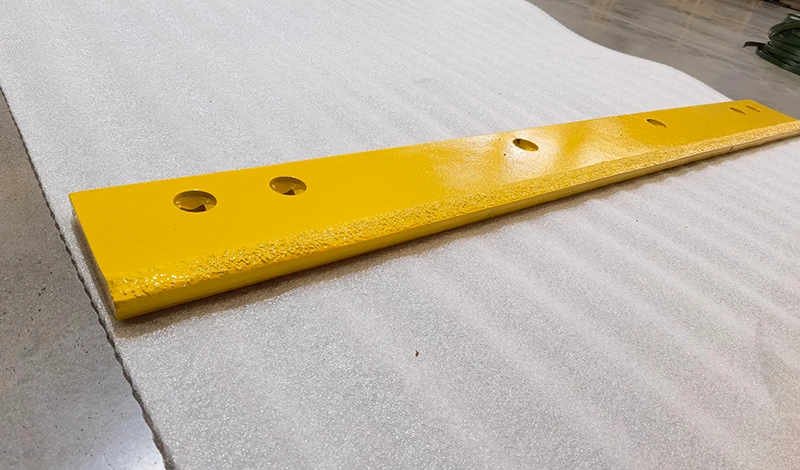
Where buyers oversize and undersize
The oversizing failure is more common and easier to spot: a machine whose blade is consistently wider than the route needs, showing kerb strikes, hard steering and slower working in tight sections. It usually begins with a specification written for the widest route in the network and applied to every vehicle.
The undersizing failure is quieter and shows up as consumption. A blade that is too light for its duty wears within a season, and because it never fails dramatically the fleet attributes the cost to the route rather than to the specification.
Work the decisions in this order and both errors are harder to make:
- Fix the width against the narrowest route the machine works, not the widest.
- Fix the thickness against the largest obstacle on that route.
- Confirm the moldboard pattern and the mounting ratings before either figure is quoted.
- Re-measure at fixed positions after one season and move the figure if the route disagrees with the decision.
The record that separates oversizing from undersizing is the same one: measured wear at fixed positions, compared per machine, which is the practice described in specifying carbide edges for a fleet.
Winter maintenance and equipment guidance is published by the Transportation Research Board and the Federal Highway Administration, mounting and bolt-pattern practice by AASHTO, equipment compatibility by the Association of Equipment Manufacturers, and operator experience by the Snow and Ice Management Association.
Length against the route, thickness against the duty, then the moldboard pattern as the filter: that order removes most of the wrong choices before a quotation is written. SENTHAI manufactures carbide and rubber-flex blades in Rayong, Thailand, and confirms the mounting pattern against the customer’s measurements before production.
FAQ
Isn’t a wider blade always more productive?
A wider blade clears more per pass only while the machine can control it. Past the vehicle’s track and steering limits the extra width costs time in tight geometry and increases kerb damage, so productivity falls even though the blade is larger.
Does blade thickness follow the truck class or the route?
The route sets the duty and the vehicle sets what the mounting can carry. Two machines of the same class working different surfaces can justify different sections, which is why class alone is a starting point rather than an answer.
Why do buyers oversize blades?
Usually to cover a route they expect rather than the route in front of them, or because a wider blade appears to promise fewer passes. The cost appears later as harder steering, kerb strikes and a section the vehicle did not need to carry.
Can one blade size serve a mixed fleet?
It can serve the machines whose tracks and duties match, and it will be wrong for the rest. Standardising the mounting pattern and the hardware usually pays; standardising the length across a fleet of different vehicle sizes usually does not.
Send the vehicle classes, the routes they work and the mounting pattern you measure. The SENTHAI engineering desk will confirm the length, the section and the hardware before anything is quoted.