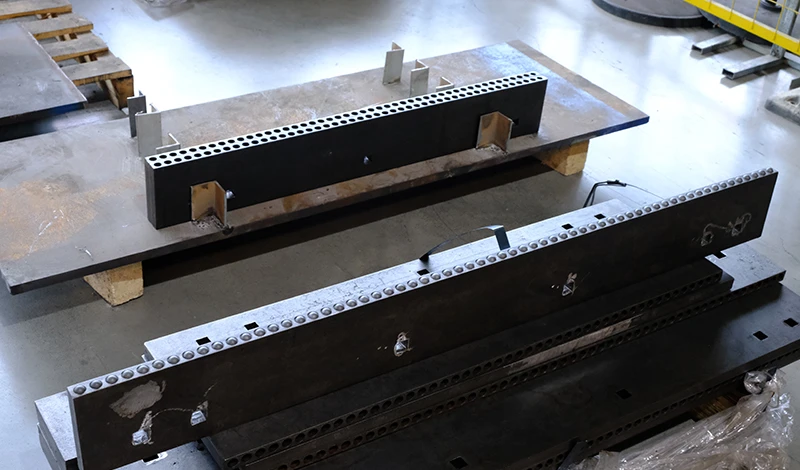
A 45 hp compact tractor arrived with a 2.4 m loader-mounted blade and a leaking lift circuit. The blade had been chosen for the width of the yard rather than for what the loader could hold, and the machine had been asked to do a job it could only half finish: lift the blade on a yard, but not carry it angled through the gateway.
Selecting a tractor blade is a checklist exercise rather than a size comparison, because four separate limits have to be satisfied before the blade can work at all. What follows gives each check in the form the workshop needs: what to inspect, what proves it acceptable, and what the failure looks like when it is not.
Hydraulic capacity and blade width limits
Size the blade to the hydraulics, not the yard.
A tractor blade needs enough flow and pressure to lift, hold and angle the blade under load; a blade matched to the machine’s weight but beyond its hydraulic capacity cannot be used at full angle.
Inspect the machine’s published hydraulic flow and relief pressure, then compare them with the blade’s cylinder requirements rather than with its weight. What proves the combination acceptable is a blade that lifts and angles at working engine speed with the machine at the temperature it will actually be used at in winter, because cold oil moves more slowly and a circuit that is marginal in summer becomes slow in January. What failure looks like is a blade that angles only with the engine revved, or that drifts off angle under load — both of which point at the circuit rather than at the blade.
Front versus rear mounting on compact tractors
Mounting position changes what the operator can see, what the tractor has to carry, and how the machine can be used when the blade is off.
A front-mounted blade gives a clear view of the edge and lets the blade be angled without reversing, which is what makes it practical around buildings and gateways. The cost is load on the front axle. A rear blade hanging on the three-point linkage is easier to add to a machine that already has a loader, distributes load differently, and leaves the front of the machine free — but the operator works looking backwards, which slows everything and is the reason many grounds teams keep the blade on front implements even at the extra axle load.
The check that decides it is which end of the machine has spare capacity. A tractor already carrying a loader on the front has less to give; a machine with a heavy rear implement and a light front can take the blade at the front without any change at all.
Loader-mounted blade options
A blade that replaces the bucket on a loader is the most common arrangement for compact and utility tractors, and it brings its own set of checks. The loader’s geometry sets the blade’s angle range, its lift capacity sets the blade mass, and its quick-attach interface decides how quickly the machine can be changed back to bucket work.
What proves the arrangement acceptable is a blade that can be carried at a useful height without the relief valve lifting, and that can be angled through its full travel with the loader arms in a working position. What failure looks like is a blade that only works with the arms low, or a quick-attach plate that has been modified to fit a blade it was not designed for — the usual cause of stress cracks at the plate rather than in the blade.
Cutting edge wear on gravel and yard surfaces
On a tractor, edge wear and surface damage are the same problem seen from two sides. The machine works yards, lanes and unsealed ground where the edge has to follow a surface that moves, and an edge that reaches the surface will move the surface itself.
Inspect the edge at marked positions and inspect the surface behind it at the same time. What proves the combination acceptable is an edge that shows even wear while the surface behind the blade retains its material; what failure looks like is an edge worn in one place with a windrow of gravel on the shoulder, which means the blade is cutting rather than clearing. On these surfaces the answer is usually a different edge type or a different height setting rather than a harder material — the comparison between rigid and flexible edges is set out in front, underbody and wing blade selection.
Shoe and skid settings on unsealed surfaces
Shoes set how much of the edge reaches the surface, and on a tractor they do most of the work of protecting both the machine and the ground. The setting that suits a paved lane leaves a residue on gravel; the setting that suits gravel cuts into pavement.
Inspect shoe height on both sides and measure the remaining material at the same time as the edge. What proves the setting acceptable is a pass that clears the loose layer and leaves the compacted surface intact, with both shoes worn evenly. What failure looks like is one shoe worn twice as far as the other, which points at a blade that is not sitting level, or a surface being cut rather than swept, which points at a height that is too low for the material being cleared.
Blade for paved laneways versus gravel yards
The two surfaces ask for different things from the same machine, and most grounds teams have both. A paved laneway wants an edge that reaches the surface and a setting that leaves nothing behind; a gravel yard wants an edge that rides the loose layer and a setting that preserves it.
Rather than compromise on one setting, the practical approach is to keep the change small: a flexible or rubber-edged blade for the unsealed work, a rigid edge for the paved lanes, and a recorded height setting for each. The comparison between the two edge families on the same machine is covered in blade selection by road class, which treats surface type as the deciding variable rather than machine size.
Matching blade mass to tractor ballast
Blade mass and tractor ballast have to be considered together, because a blade on the front of a light machine reduces the load available for traction at the rear. The blade is carried at the end of a lever arm, so its effect at the axle is larger than its own weight.
Inspect the machine’s published front and rear axle ratings, and weigh the combination with the blade fitted and the ballast in place. What proves it acceptable is a machine that steers normally and holds traction when the blade is pushing, with both axles inside their ratings. What failure looks like is light steering, a front axle that bottoms out on uneven ground, or rear wheels that lose grip the moment the blade loads — and the answer is usually less blade rather than more ballast, because the ballast adds load to the same axle the blade is already loading.
What to check on the tractor before ordering a blade
The checks above can be run in an hour on the machine, and the result is a short list a supplier can quote against without guessing. The table consolidates them into the fields that matter for a tractor application, with the failure each one prevents.
| Check | What proves it acceptable | What it prevents |
|---|---|---|
| Hydraulic flow and pressure | Blade lifts and angles at working speed with cold oil | A blade that cannot be angled under load |
| Mounting position | The loaded end of the machine has spare axle capacity | Overloading the axle that already carries the loader |
| Loader geometry and quick-attach | Full angle range at a working height | Stress cracks at a modified attachment plate |
| Shoe height and edge type | Loose layer cleared, surface material retained | Gravel moved to the shoulder, pavement cut |
| Ballast with the blade fitted | Both axles inside their ratings, steering normal | Loss of traction and light steering |
Printed and taken to the machine, the table is also the record that answers a supplier’s questions. It is worth keeping with the machine’s file, because the next blade for that tractor will need the same five answers.
Tractor ballast, tyre setup and traction in snow
Traction on a tractor blade comes from the interaction of ballast, tyre type and surface, and the three are usually optimised for the rest of the year rather than for winter. A machine set up for summer field work with wide, low-pressure tyres and no rear ballast will spin long before it runs out of engine power.
The parameter that describes it is load per driven wheel rather than total machine weight. Added rear ballast increases the load available at the driven wheels but also increases the total mass the blade has to stop and the load on the front axle when turning. Added front weight from the blade reduces the rear load. The two work against each other, which is why the setting has to be checked on the machine rather than calculated from a table.
What failure looks like is consistent: the machine spins when the blade starts to load, the operator adds weight to the rear, the front axle begins to float, and steering becomes vague at exactly the moment more control is needed. The fix is usually a narrower blade at the front and less rear ballast, not more of both.
Operator checks that keep a tractor blade working
The operator is the only person who sees the blade working, and on a tractor the feedback arrives faster than on a truck because the machine is slower and the surface closer. Three checks at the start of a shift catch most developing problems before they become jobs.
- Check the blade angle and height against the recorded setting, rather than setting them by feel after a change of surface.
- Listen for a change in the lift circuit or a slower angle response as the oil warms, which is the first indication of a hydraulic limit.
- Look behind the blade at the windrow: material that came off the surface is the earliest sign that the height setting is wrong for the ground under the machine.
Reporting those three things costs a sentence at the end of a shift and saves the diagnostic time that would otherwise be spent working out whether the problem is the blade, the machine or the surface. Equipment-side guidance for these mountings is published by the Association of Equipment Manufacturers, and operator practice by the Snow and Ice Management Association.
Winter maintenance guidance and equipment research are published by the Transportation Research Board and the Federal Highway Administration, and material and hardness test methods by ASTM International.
SENTHAI manufactures carbide snow plow blades, rubber-flex blades and cutting edges in Rayong, Thailand, and confirms the mounting pattern and blade mass against the customer’s own tractor measurements before production. The range is listed on the snow plow blade hub.
FAQ
What is the best snow plow for a tractor?
The one the tractor can lift, hold against the surface and steer with. On compact machines that usually means a narrower blade mounted on the loader or the front linkage, sized to the hydraulic flow rather than to the machine’s weight.
Are tractors good for plowing snow?
They are good on yards, lanes and unsealed ground where their traction and ground clearance help, and they are slower than a truck on long road routes. The route rather than the machine decides which is the better fit.
Should a tractor snow blade be front or rear mounted?
Front mounting gives the operator a clear view and lets the blade be angled without reversing, at the cost of loading the front axle. Rear mounting uses the three-point linkage and is easier to add, but the operator works looking backwards.
How much ballast does a tractor need for a snow blade?
Enough to keep the drive wheels loaded when the blade is pushing, and not so much that the front axle is overloaded by the blade itself. Weighing the machine with the blade fitted is the only reliable check.
Send the tractor model, the loader or linkage it uses and the surfaces you clear. The SENTHAI engineering desk will confirm the blade width, mass and edge type against the machine’s own limits before quoting.
This article is one step in the Snow Plow Blade Selection Guide, which works the whole decision in order — surface, position, size, geometry and material — through to the written specification.