Procurement calendars that used to treat carbide edges as a boring rebuy line are suddenly crowded with pricing calls, allocation rumors, and vendor pitches for “carbide-free” armor. The question is not whether tungsten carbide still cuts hardpack—it does—but whether your fleet should keep paying for it on every route while the market is noisy.
A tungsten carbide snow plow blade shortage shows up as stretched quotes, jumpy insert costs, and pressure to trial armored steel or ceramic alternatives before the next major storm cycle. Buyers who win through this stretch separate company-specific cost anecdotes from route-level wear data, keep abrasive corridors on carbide, and only switch where a fair trial clears downtime and scrap thresholds.
This guide is for municipal and contractor buyers comparing keep-carbide versus switch paths. Pair it with the product view of a carbide snow plow blade and the lane-cost logic in the carbide vs steel cost-per-lane-kilometre worksheet before you rewrite the bid sheet.
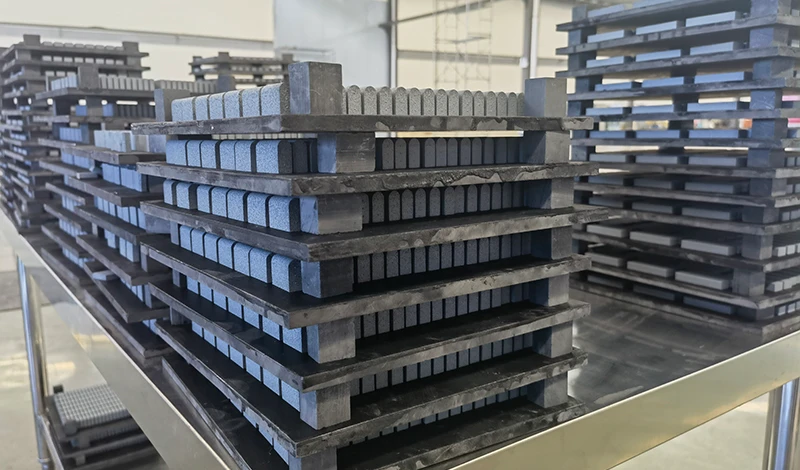
What a tungsten carbide snow plow blade shortage means for fleets
A tungsten carbide snow plow blade shortage means longer quote cycles, less predictable insert and finished-edge pricing, and higher odds that mid-season reorders miss the storm window. Fleets respond by freezing specs earlier, dual-tracking carbide and carbide-free options, and judging landed cost per lane-kilometre instead of sticker price alone.
Shortage here is commercial and logistical, not a claim that carbide stopped working. Cutting edges still need hardness on abrasive pavements; what changed is the reliability of timing and the spread between vendor quotes. Treat every dramatic percentage as a labeled anecdote until it is tied to your PO history.
Crisis facts you can put in a buyer brief
Use a short “facts box” in internal memos so hallway numbers do not mutate:
- China accounted for roughly 82% of mined tungsten production in 2024 per USGS figures cited in industry commentary.
- U.S. tariff increases on certain Chinese tungsten products and China’s February 2025 export controls on selected tungsten items are part of the 2025–2026 supply story summarized by blade makers and mineral agencies.
- NOV Inc. stated in its Q1 2026 earnings discussion that its tungsten carbide costs had risen approximately 400% since the end of 2025—that company’s own cost path, not a published index of every snow-plow blade SKU.
Primary narrative and NOV attribution: Evolution Edges on the carbide market shift. Mineral context: USGS tungsten statistics. Do not invent tariff rates, MOQs, or plant lead times in your public pages; confirm those on the quotation.
| Claim type | How to label it | Buyer action |
|---|---|---|
| USGS share of mine output | Agency mineral statistic | Bookmark source; refresh yearly |
| NOV ~400% carbide cost (Q1 2026) | Single-company self-report | Do not paste into every bid as “the market” |
| Vendor “carbide-free equals equal life” | Marketing until trialled | Require matched-route hours and photos |
| Vendor “prices up 600%” / “tungsten leaves plow blades” / “3× life” | Manufacturer or distributor claim | Label as vendor speech; do not paste as USGS or fleet fact |
| Plant origin / non-China tungsten | Supplier claim | Ask for evidence pack and batch marks |
When keeping tungsten carbide edges still makes sense
Keep carbide where abrasion, chip seal, curb strikes, and long continuous plow hours dominate the failure mode. Soft alternatives that look cheap on the pallet often lose when changeouts strand trucks during the overnight window. If your wear photos already show gradual insert recession rather than early tip lift, the metallurgy is doing its job—price pressure alone is a weak reason to rip it out of the high-duty fleet.
Practical keep signals: high lane-kilometres on abrasive corridors; prior seasons where steel edges failed early; crews already trained on carbide changeout torque and inspection. For insert geometry and grade language, use the carbide inserts product page when you refresh the RFQ appendix.
When a carbide-free trial is worth running
Carbide-free armored steel or ceramic-tipped concepts earn a trial when (1) the route is lower abrasion or secondary, (2) you can park a control carbide bar on a matched segment, and (3) finance will fund enough spares that a failed experiment does not empty the storm rack. Trial design matters more than brochure hardness charts.
Write the trial sheet before the first install: hours or lane-kilometres, photo cadence, reason codes for pull (wear, chip, bend, fastener), and a stop rule. If the carbide-free bar cannot beat your downtime budget, return that corridor to carbide without politics.
Armored steel and ceramic: test, do not assume
Armored steel blades aim to trade insert cost for a different wear system—often hardfacing or clad zones on a steel body. Ceramic concepts chase abrasion with a different fracture profile. Neither is “illegal”; both fail differently than sintered tungsten carbide. Expect different chip patterns, different noise at the curb, and different scrap value.
Ask vendors for failure photos from fleets with similar pavement, not only polished demo bars. Keep ceramic and clad trials off your worst curb routes until impact toughness is proven. Agency reports on ceramic-insert edges have been mixed—see our note on ceramic-insert blades and why agency reports were mixed before you treat ceramic as a one-for-one carbide swap. For broader steel vs carbide vs clad selection under abrasion, use the steel, carbide and clad edge selection guide rather than rewriting this shortage page into a materials textbook.
Winter ops pressure that makes early pull decisions costly is a reminder to stage spares before the first major event—see road-weather planning cues from FHWA road weather and season framing from the National Weather Service.
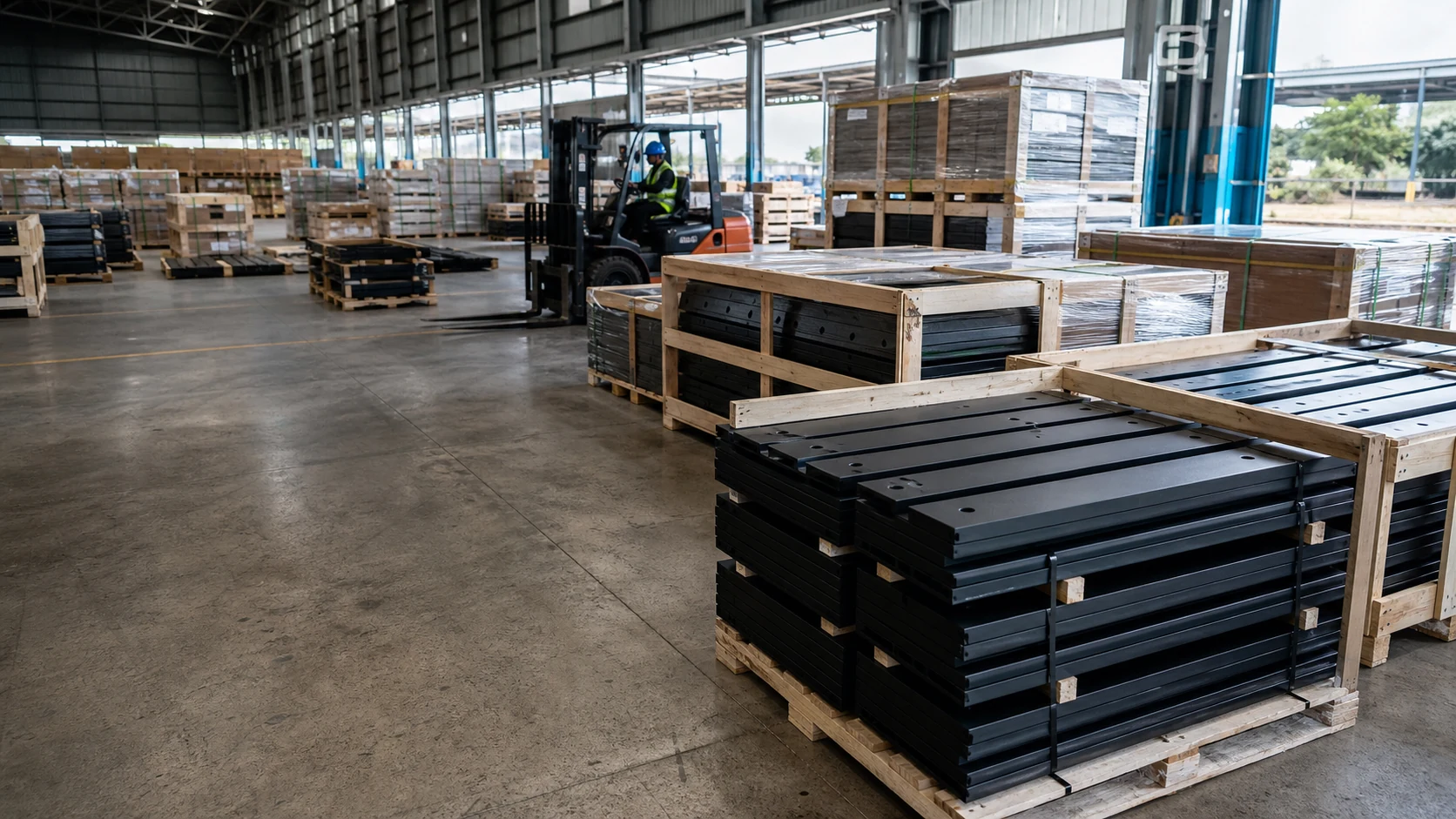
Category 5 combination blades and proprietary carbide formulas
When sintered tungsten carbide quotes stretch, distributors also push combination and proprietary-carbide systems. Treat these as categories to trial—not as proof that conventional carbide inserts are obsolete.
Category 5 (carbide combination) edges. One publicly pitched example is Norstar’s Impact SX line, framed as a Category 5 carbide combination blade for fleets that want a hybrid wear path while tungsten markets are noisy. In the same pre-order note, the company states that China controls roughly 80%+ of the tungsten carbide market, that carbide prices were raised 600%, and that “tungsten will no longer be used for snow plow blades.” Those lines are manufacturer/distributor statements, not independent mineral-agency verification, and they are not the same numbers as a USGS mine-output share or another firm’s earnings remark. Use them as vendor speech in your bid file; keep mineral context in Who Mines Tungsten? USGS 2026 procurement risk when you need agency sourcing language. Source commentary: Norstar — Snow Blades in July?.
U.S.-made proprietary carbide formulations. Another category is a domestic proprietary carbide system rather than a standard vacuum-sintered insert stack. Winter Equipment’s Razor XL with Winter Carbide is marketed that way—U.S.-made carbide chemistry on a cutting-edge system—and the product page claims up to about 3× life versus conventional tungsten insert systems. That “3× life” figure and the proprietary-formula pitch are vendor marketing, not third-party verified fleet data for your pavement. Score them as a U.S. proprietary-carbide category in trials; do not retarget them as a substitute keyword war against sintered carbide product pages. Source: Winter Equipment — Razor XL with Winter Carbide.
For either category, keep the same trial discipline as armored steel or ceramic: matched routes, photo cadence, and a stop rule. Combination and proprietary systems can belong on secondary corridors first; abrasive chip-seal primaries stay on proven carbide until the trial clears your downtime budget.
Thailand non-China tungsten and in-house sintering (Brief-aligned)
SENTHAI states on its website that it is a US-invested manufacturer in Rayong, Thailand, running powder metallurgy through pressing, sintering, welding/brazing and finishing, with tungsten raw material purchased outside China and processed in Thailand (“100% non-China tungsten” per company website). That is a supply-story differentiator for buyers who want geographic diversification—not a third-party audit certificate pasted into this article.
During a shortage narrative, diversification only helps if you can evidence it. Use the checklist in verifying non-China tungsten claims and keep alternate plant/grade rows alive in your supply risk register review routine. Scale claims such as years in wear parts or blade counts belong as “per company website,” not as audited guarantees.
Stocking rhythm when carbide pricing is volatile
Volatile markets punish last-minute panic buys and overstuffed sheds equally. A workable rhythm for most mid-size fleets:
- Freeze bolt pattern and length families before peak RFQ season.
- Place primary carbide coverage for abrasive corridors with documented batch marks.
- Hold a small carbide-free pilot kit only if trial rules and photo owners are named.
- Review open POs monthly against storm forecasts—not against hallway rumor percentages.
- Refuse blanket “production week” promises on public pages; confirm schedules on each quotation.
Distributor partners who need pallet programs can start from the wholesale page linked above rather than inventing MOQ numbers in the blog.
Keep vs switch decision matrix
| Route / duty | Lean keep carbide | Lean trial carbide-free | Watch-outs |
|---|---|---|---|
| Highway / chip seal abrasion | Yes | Only after long secondary proof | Early tip loss kills savings |
| Curb-dense municipal | Yes if impact grade proven | Caution on brittle concepts | Photo every pulled bar |
| Low-abrasion lots / secondary | Optional | Good first pilot zone | Do not generalize to highways |
| Airport / sensitive pavement | Spec-driven | Only if surface rules allow | Follow agency edge language |
Canadian municipal buyers can keep transport and winter-ops bookmarks handy at Transport Canada while local DOTs set plow readiness. Example agency winter-ops culture: North Dakota DOT.
Bid evaluation when carbide is scarce (watch low-price middlemen)
Shortage seasons attract more than alternative metallurgy—they attract low bids from intermediaries who do not stock blades, do not understand insert grades, and disappear when a bar chips mid-storm. Industry commentary has long warned about “government bid trolls”: firms that win on price alone, then scramble to source whatever is cheapest once the PO lands. See Kueper — Trolling for Plow Blades (13 Oct 2026) for that framing from a blade maker’s perspective.
Municipal and fleet evaluators can blunt that pattern without turning this page into a full overseas-plant RFQ tutorial (keep plant-level RFQ craft on its own checklist). Write evaluation language that scores more than unit price:
- Grade and edge specification — insert grade or clad/combination category, retention method, length/thickness/bolt pattern, and whether substitution needs written approval.
- Origin and evidence — plant or powder-origin statements you can check, batch marks, and first-article photos—not a brochure slogan.
- After-sales and support responsibility — named contact, warranty path, mid-season claim process, and who owns freight/replacement when a bar fails early.
- Inventory and fulfillment reality — whether the bidder holds stock or is only brokerage; ask what sits in their warehouse today for your bolt pattern family.
- Landed cost and downtime — cost per lane-kilometre and changeout labour, not sticker price alone, especially when carbide-free or combination alternatives enter the same bid.
If a quote is dramatically below the pack and the bidder cannot show inventory, grade evidence, or a support desk, treat that as procurement risk—not as a win. Lowest-price-only scoring is how “only-compare-price, no-stock, no-after-sales” middlemen clear the bar while abrasive corridors still need real carbide coverage.
RFQ language that works for either path
Whether you stay on carbide or add a carbide-free line, keep the bid sheet short and comparable. (Deep overseas-plant RFQ sequencing belongs on the dedicated how to RFQ a custom carbide snow plow blade checklist—not as a second copy of that intent here.)
Force answers on:
- Declare insert retention process (braze vs other) for carbide bars; declare cladding or ceramic attach method for alternatives.
- Require batch marks, first-article photos, and a named contact for mid-season claims.
- Ask for origin statements if non-China tungsten is scored in the bid—and verify documents.
- Forbid substituting materials mid-contract without written approval and a new trial plan.
- State that lead time and MOQ are quotation-specific by product family.
ISO 9001 / 14001 language, if your policy needs it, should request current certificates for scope check rather than invented certificate numbers. Background: ISO 9001 overview. SENTHAI describes ISO 9001 and ISO 14001 certified processes per company website.
FAQ
What does a tungsten carbide snow plow blade shortage mean for a fleet?
It means longer quotes, less predictable insert and finished-edge pricing, and more risk that mid-season reorders miss the storm window. Fleets respond by locking specs earlier, dual-tracking carbide and carbide-free options, and measuring cost per lane-kilometre—not only unit price.
Should we abandon carbide because one manufacturer reported a 400% cost jump?
No. NOV Inc. described roughly a 400% rise in its own tungsten carbide costs since end-2025 in Q1 2026 remarks—company-specific, not a universal blade-price index. Keep abrasive high-duty routes on carbide unless a controlled trial shows a carbide-free edge meets your wear and downtime targets.
When is a carbide-free armored steel or ceramic trial justified?
Trial carbide-free edges on lower-abrasion or secondary routes first, with matched hours, photos, and changeout logs. Keep primary chip-seal or curb-heavy routes on proven carbide until the trial beats your downtime and scrap thresholds.
How do we verify non-China tungsten claims during a shortage?
Ask for origin statements, mill or powder-source documentation, and batch marks you can quarantine—not brochure slogans. Treat “100% non-China tungsten” as a supplier claim to evidence-check, then keep a live supply-risk register for alternate grades and plants.
How should a municipality score plow-blade bids when carbide is scarce?
Score grade/spec, origin evidence, after-sales responsibility, and real inventory—not unit price alone. Low quotes from intermediaries that keep no stock and offer no support are a known risk in shortage seasons; require named contacts and batch-level evidence before award.
FAQ uses realistic buyer questions for this shortage / keep-vs-switch topic (no DataForSEO PAA capture in this planning round; labeled as buyer questions).
Request Specs or a Quote
If you are deciding whether to reorder carbide or run a carbide-free pilot this winter, mail [email protected] your route class notes, preferred edge length and thickness, bolt pattern, and either the plow make/model or clear photos of the bar you are replacing. We usually reply within one working day in English or Chinese. MOQ and lead time are confirmed by product family in the quotation; this page does not publish a blanket production week count.
Related Articles
- Carbide vs steel plow blade cost-per-lane-kilometre worksheet
- Ceramic-insert blades: why agency reports were mixed
- Steel, carbide and clad edge selection
- Who mines tungsten? USGS 2026 procurement risk
- Verifying non-China tungsten claims
- Keeping a supply risk register alive
- Carbide snow plow blade
- Carbide inserts
- Wholesale snow plow blades for distributors
Official Resources
- Evolution Edges — carbide market commentary
- USGS tungsten statistics
- Kueper — Trolling for Plow Blades
- Norstar — Snow Blades in July? (Impact SX / Category 5)
- Winter Equipment — Razor XL with Winter Carbide
- FHWA road weather
- National Weather Service
- Transport Canada
- North Dakota DOT
- ISO 9001 overview