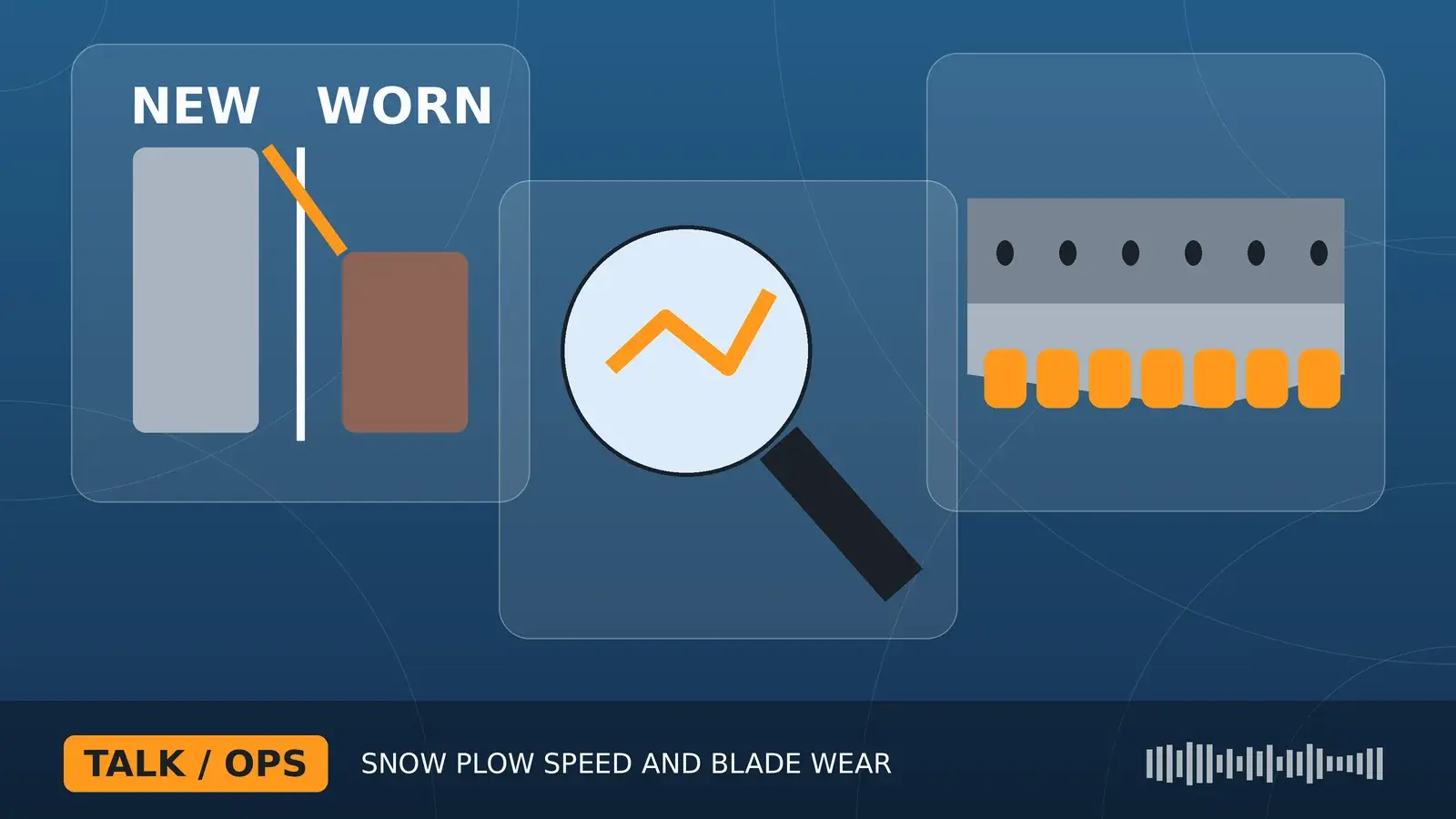
Myth or claim: “plowing faster wears the edge faster.” Verdict: plausible, since more energy goes into each contact, but I could not verify a study in my sources that quantifies it, so I make no numerical claim. Speed also changes clearing quality and safety, so the question matters. You can test it yourself with a simple log. This is a checked-claim piece without data from a source.
What is plausible and what is not known
The mechanism is plausible; the size of the effect is not established.
- Plausible: higher speed increases impact on joints and raised features, and can increase chatter on hard surfaces.
- Not known here: how much extra wear, on which surface, and whether it differs by edge type. I make no claim.
- Confounders: faster routes often differ in surface, snow type and traffic from slower ones, so comparing routes alone can mislead.
How to test with your own records
The question is answerable from your own records, but only if both speed bands are safe and legal and the routes are matched. Design the comparison before the season, not during it.
- Choose matched routes of similar surface, length and traffic, or the same route on different nights. Two different routes measure the routes, not the speed.
- Set two speed bands that are both safe and legal. A band nobody will drive is not a test.
- Record per shift: truck, route, hours, speed band, snow type, surface and edge fitted. Snow type changes wear more than speed does.
- Measure wear the same way each time, at the same three points. A reading taken at a different point is a different measurement.
- Repeat over several events, not one. One storm is weather; several are a pattern.
- Compare wear per hour for each band, and clearing quality and route time as well. A slower band that clears worse is not a saving.
Read the result carefully
The result is about your fleet, and it only means something if the comparison was fair.
- If wear per hour is similar, speed may not be your main driver.
- If slower plowing costs more labour than it saves in edges, compare both costs before changing practice.
- Do not set a speed rule for safety reasons on wear data alone; follow your agency’s safety policy.
Example record layout
| Date | Truck | Route | Hours | Speed band | Wear reading |
|---|---|---|---|---|---|
| (date) | (number) | (name) | (hours) | (A or B) | (mm or gauge) |
If your drivers disagree
Disagreement is useful. Ask the drivers who believe speed matters and those who do not to help design the test, and agree in advance what result would change each person’s mind. People accept results more readily from a test they helped set up, and the log you produce will outlast the argument.
Boundary: No figure or study is cited; safety and legal speed limits come first and must not be overridden by wear considerations.
Further reading on this site.
Plow Blade Wear Measurement: When to Rotate and When to Replace ↗Highway Plow Blades: What Changes Above 60 km/h Plowing Speed ↗Carbide snow plow blades ↗Cul-de-Sacs and Turnarounds: Moving Snow Without Burying Driveways or Wearing Edges ↗Mailbox Strikes and Driveway Windrows: Reducing Complaints Without Slowing Down ↗Obstacle Marking Programmes: Stakes, Flags and Hazard Maps That Prevent Edge Strikes ↗


