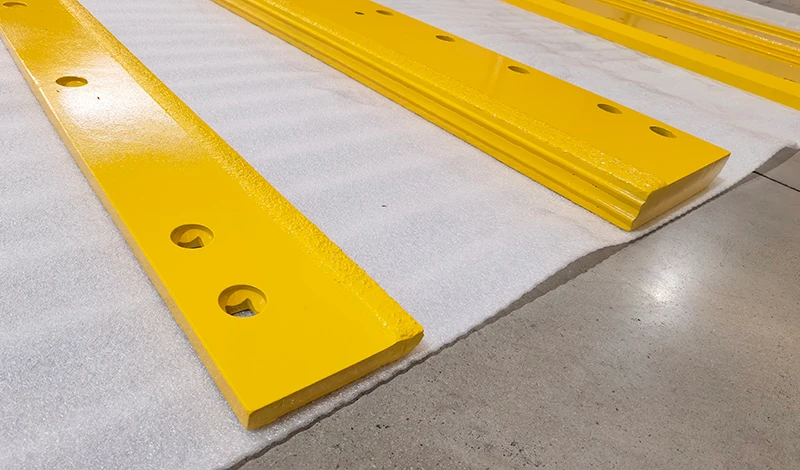
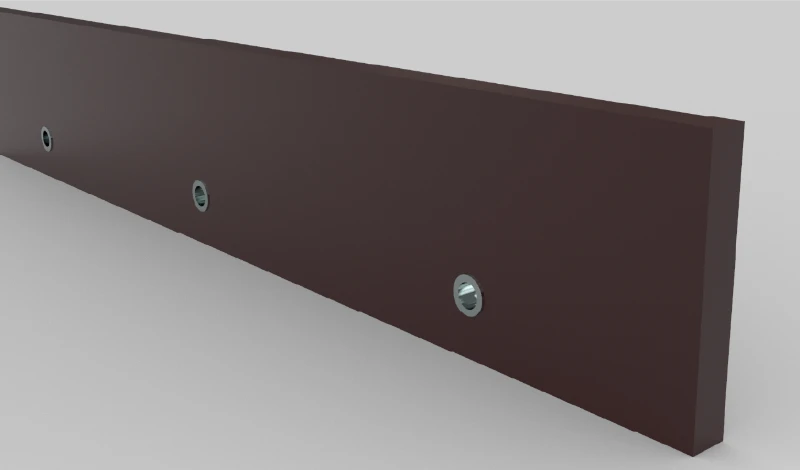
A compact tractor arrives for the season with a loader-mounted blade that is wider than the machine and heavier than the loader wants to carry. On a gravel yard the edge digs in and stops the tractor; on the paved lane it leaves a scar along the paver course. Nothing on the blade is defective. The blade was chosen for the yard’s width instead of the machine’s limits.
This is a selection checklist for tractor-mounted snow blades, worked in the order the constraints apply: hydraulics and width first, then mounting position, then the surface the machine actually works on.
Hydraulic capacity and blade width limits
Size the blade to the tractor’s hydraulics, weight and ground.
A tractor-mounted snow plow blade works when the machine can lift it, angle it and steer with it loaded; the width that satisfies that is narrower than the width the yard suggests.
Three limits set the usable size. Hydraulic capacity decides how quickly the blade lifts and angles and whether it can hold down-pressure on hardpack. Machine weight and traction decide whether the loaded blade can be pushed without the tractor crabbing sideways in deep snow. Front-axle or loader rating decides how much mass can hang at the front without the rear becoming light.
The order matters because the failure appears in a different place for each limit. Too much width shows up as loss of steering in the heaviest snow; too much weight shows up as a light rear end and poor braking; insufficient hydraulic flow shows up as a blade that cannot be corrected quickly enough at the end of a pass. Where a machine is marginal on all three, a narrower blade with a good edge is more productive than a wide blade that fights the operator.
Front versus rear mounting on compact tractors
Front and rear mounting solve different problems, and on a compact machine the choice usually follows the loader.
A front-mounted blade lets the operator see the work and clears ahead of the wheels, which suits lanes, driveways and long straight runs. It loads the front axle and often the loader frame, so the mount and the machine rating set the limit. A rear-mounted blade, commonly on the three-point linkage, avoids loading the front end and can be angled or offset, but the operator works looking backwards and the blade follows the tractor rather than clearing ahead of it. That makes rear blades effective on yards and open areas and awkward on tight lanes with obstacles.
Two practical points decide between them. First, where the machine has a loader, a bucket- or frame-mounted blade usually wins because the loader is already designed to carry and control a front load. Second, a rear blade that stays on the machine through the season can be used for other work, which matters when the tractor has more than one job.
Loader-mounted blade options
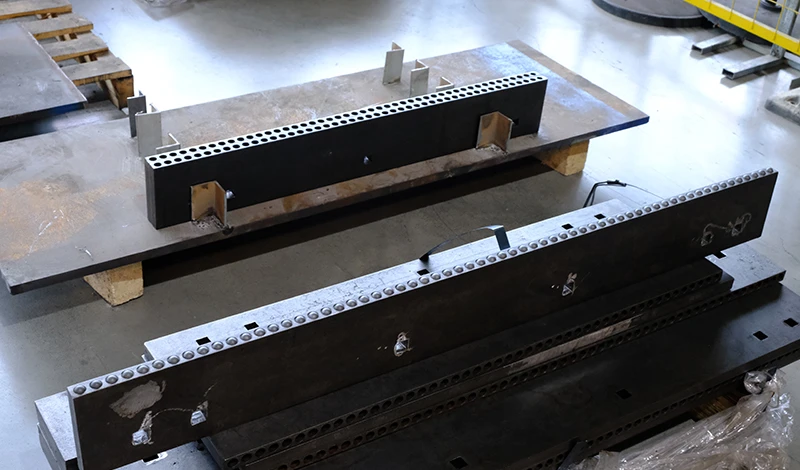
Loader-mounted blades split into two families: blades that clamp or bolt to the bucket, and blades carried on a frame that replaces or attaches to the loader attachment plate.
Bucket-mounted blades are quick to fit and easy to remove, which suits seasonal use and machines that need the bucket back for other work. They rely on the bucket’s own strength and on the clamp or bolt arrangement to hold position, so the attachment detail is what determines durability. Frame-mounted blades put the load into the loader arms and quick-attach geometry, which gives better control and a cleaner interface with the machine, at the cost of more hardware to store and fit.
Either way, the two features that matter in use are visibility and float. An operator who cannot see the blade’s corners over the hood will leave material behind or catch obstacles; a blade that cannot follow the ground transfers every surface change into the loader arms. Both are specification items, not operator preferences.
Cutting edge wear on gravel and yard surfaces
Gravel changes the wear equation completely, because the edge faces loose stone rather than a bonded surface. The dominant failure is chipping and impact damage rather than steady abrasion, so a hard edge that would excel on chip seal is the wrong material here.
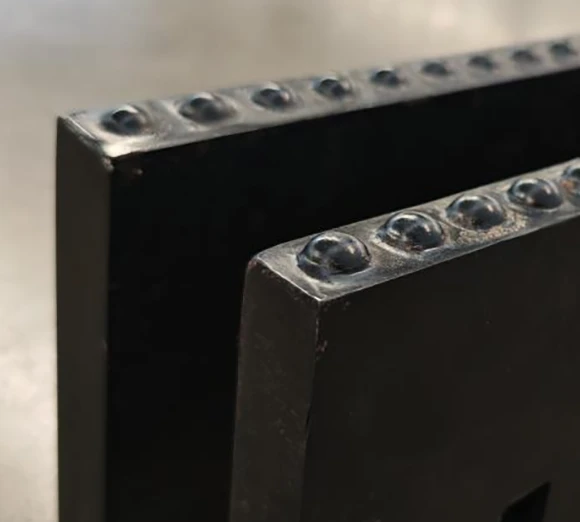
The practical result is that tractor work on unsealed surfaces usually calls for an impact-led carbide edge, a rubber-flex edge, or steel that can be straightened and reused. Complete kit systems with an aggressive insert layout exist for hardpack and ice, and they are the right answer where the yard ices over and the blade has to bite; where the ground is soft gravel, that same aggressive geometry will dig and should be reserved for frozen ground (packed ice carbide kit).
Season timing matters as much as the material. Early-season passes on unfrozen gravel do the most damage to both the surface and the edge, while the same blade on the same yard in mid-winter works cleanly. The wider relationship between weather events and surface condition on the road network is documented by the Federal Highway Administration. Fleets and grounds teams that adjust the edge or the shoe setting between those conditions get materially longer life from the same blade.
Shoe and skid settings on unsealed surfaces
Shoes and skids are the cheapest protection available on gravel and turf, and they are the first thing to be forgotten when a blade is fitted in a hurry.
Their job is to hold the edge at a controlled height so it removes snow without removing the surface. On gravel that means leaving a thin layer until the ground freezes; on turf or landscaped edges it means keeping the blade clear of the soil. The setting is a compromise between clearing performance and surface protection, and it should be documented rather than left to whoever fits the blade.
Check the shoes as consumables in their own right. Worn shoes quietly lower the edge, which increases both surface damage and edge load, and the resulting complaints usually land on the blade rather than on the shoe. The wider operational context for grounds and municipal crews is published by bodies such as the Snow & Ice Management Association, whose guidance covers surface protection as well as clearing, and the research literature on winter maintenance practice is collected by the Transportation Research Board.
Blade for paved laneways versus gravel yards
The same machine often has to work both a paved lane and a gravel yard, and that is where a single blade specification starts to fail. The two surfaces punish different things: paving punishes a rigid edge that marks or catches, and gravel punishes a hard edge that chips.
Where both surfaces must be served, the practical answer is usually a flexible or impact-tolerant edge with a shoe setting that can be changed between areas, rather than a second machine. Operators can also work the paved section first with a lighter setting and the yard afterwards, which reduces the number of passes over the surface that is most easily damaged.
Surface damage carries a cost that never appears on a blade invoice: a gouged asphalt lane or a scarred paver course costs more to repair than several seasons of edges. That is the argument for choosing the gentler edge on mixed sites even when it wears faster. Municipal maintenance practice published by agencies such as MassDOT shows the same principle applied to road surfaces at a larger scale.
Matching blade mass to tractor ballast
Blade mass is a handling decision. A blade hanging off the front of a compact tractor removes weight from the rear axle, and the effect grows with the blade’s mass and its distance from the machine.
The usual remedies are rear ballast and correct tyre set-up, and both have limits. Adding weight to the rear increases traction and braking but loads the drivetrain and can compact soft ground; setting the tyres wider improves stability and reduces the ground pressure per tyre. The point at which a blade becomes impractical is when the machine can no longer steer or brake confidently with the blade fitted.
Seasonal weather adds a variable that is easy to overlook: a heavier snow event changes the load the blade carries rather than the blade’s mass, but the effect on the machine is similar. Forecasts that a supervisor would use to plan the shift are published by the National Weather Service, and treating the forecast as an input to the blade setting rather than only to the staffing rota is one of the practical habits that separates well-run grounds teams.
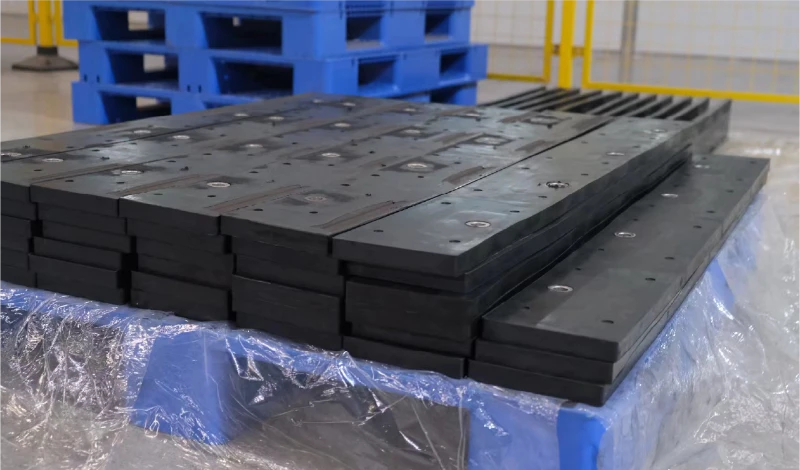
Where one machine has to cover several surfaces, frame-mounted blades with quick attach geometry are easier to standardise against a mixed fleet, and distributor programmes supply mixed sets against one drawing pack so the mounting patterns stay consistent (wholesale snow plow blades for distributors).
FAQ
Are tractors good for plowing snow?
They are effective in the right setting and awkward in the wrong one. A tractor gives high traction, slow working speeds and a range of mounting options, which suits yards, lanes, farm tracks and long driveways. It is a poor substitute for a plow truck on a highway route, where speed and legal width matter more than traction, and on tight paved areas the blade geometry has to be matched carefully to the surface.
What size snow blade suits a 40 hp compact tractor?
Size the blade to the tractor rather than to the yard: a 40 hp compact machine will normally work comfortably with a blade that covers its own track and leaves the operator able to steer, with the loader or three-point lift able to control the load. A blade that is too wide for the machine makes the tractor crab sideways in heavy snow, and a blade that is too heavy for the loader changes how the machine steers.
Does a loader-mounted blade need a float function?
It benefits from one, because the loader arms have no independent suspension and every surface change is transferred straight into the blade. A float position or a mechanically floating mount lets the blade follow the ground instead of loading the loader frame, which protects both the machine and the edge. Without it, operators compensate by adjusting height constantly, and the edge skips on hardpack and digs on soft ground.
How do I protect a gravel yard from a tractor blade?
Leave a layer rather than scraping to the surface. Set shoes or skids to hold the edge slightly high, use a blade with some give such as a rubber-flex or impact-led edge, and work at a speed where the edge can ride over a frozen ridge instead of digging. Once the ground is frozen hard the risk falls, so the early-season passes are the ones that need the most care.
Send the tractor model, the loader or hitch you use and the surfaces the machine clears. The SENTHAI engineering desk will confirm blade width, mass, edge material and shoe setting, then quote the set against your mounting.