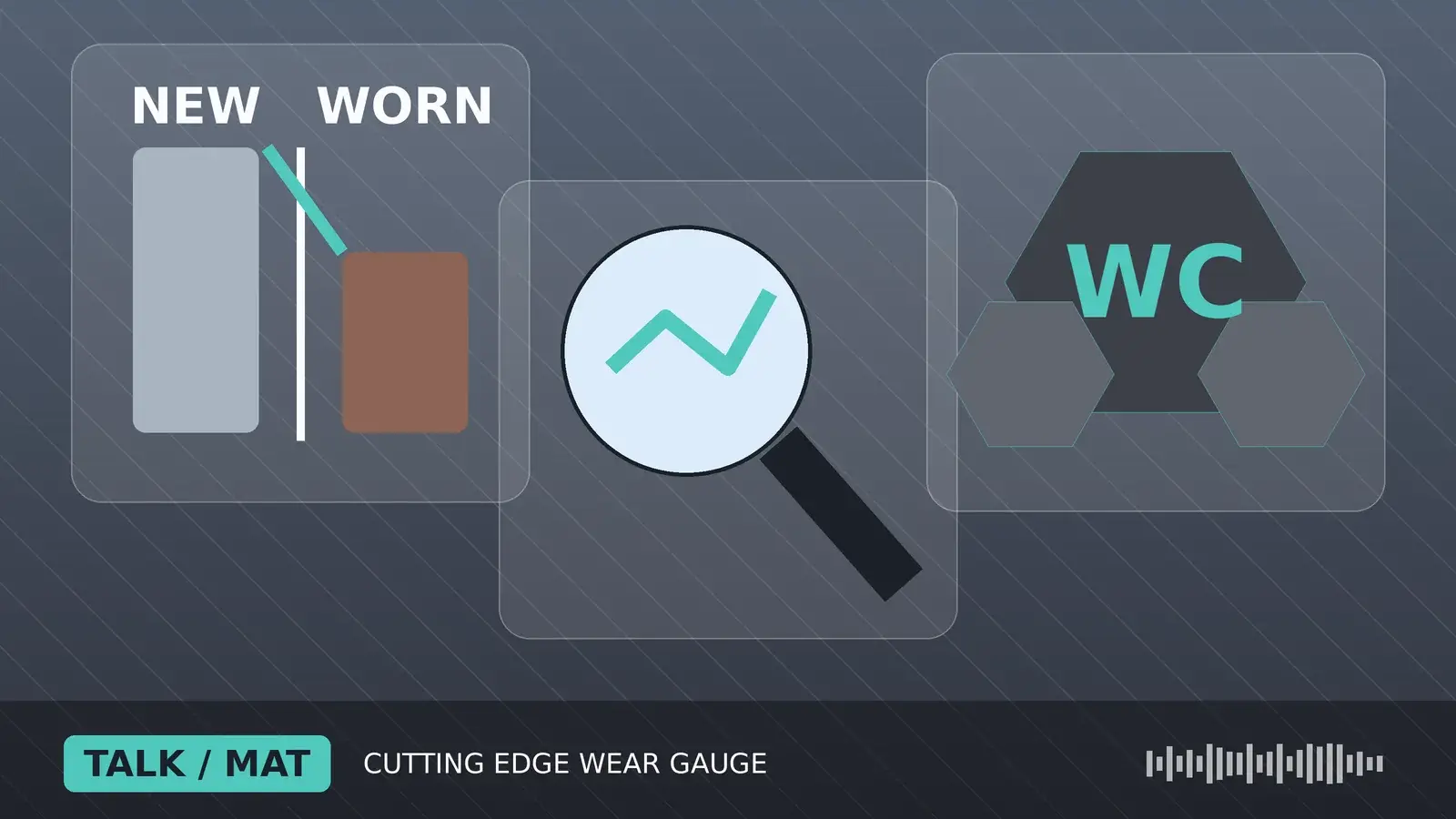
Scenario: drivers eyeball how much edge is left and decisions vary from person to person. Direct answer: a go/no-go gauge cut from sheet stock turns the judgement into a quick yes or no against a limit you set. The limit itself comes from your supplier or fleet rules, and the gauge only enforces it. The numbers in the example are invented.
Template: build and use the gauge
Materials and tools
- Steel or aluminium sheet, thick enough to stay flat and not bend in a glove
- Marker, rule, calipers, saw or shears, file, drill and a hole for a lanyard
- Paint or tape in two colours and a permanent marker
Steps
- Decide the limit. Ask your supplier or fleet manager what remaining height or thickness is the replacement point for your edge. Write it down with the source.
- Measure a new edge. Use calipers to measure the same dimension on a new edge, so you know the starting point.
- Mark the gauge. Cut a notch or step so the gauge sits on the steel face and its step shows when the edge is at or below the limit.
- Check against calipers. Test the gauge on three worn edges you have measured. It should say go or no-go the same way as the measurement.
- Paint it. One colour for go, one for no-go. Stamp or write the limit on the gauge.
- Label and hang. Add the date, the edge type it fits and a lanyard.
Illustrative example (invented numbers)
Suppose a fleet decides to replace an edge once less than 20 mm of steel stands below the wear bar line. The gauge has a 20 mm step. If the step slides under the bar, it is a no-go.
Use and care
A home-made gauge is a good tool as long as it is checked against a reference.
- Check the gauge against calipers every season, since filing and drops change it.
- Make one gauge per edge type, labelled clearly.
- Keep a record of readings if you want trends.
A safety note
Deburr every edge of the gauge and wear gloves while cutting. A gauge with sharp corners is a hazard in a cab. Keep it in a pouch when not in use.
Boundary: The limit must come from your supplier or fleet rules; the 20 mm figure is invented for illustration and is not a recommendation.
Further reading on this site.
An inspection photo shows a gauge reading but no part identity. Can we use it? ↗Only the outer end of our cutting edge is wearing quickly. What should we document? ↗Tungsten carbide inserts for snow plow edges ↗Cobalt Content in Carbide Inserts: Why Binder Percentage Is Only One Variable ↗Which Lab Tests Predicted Field Wear? What Clear Roads Project 07-01 Reports ↗Isolated Round Carbide Plugs: Questions to Ask About Design Claims ↗


