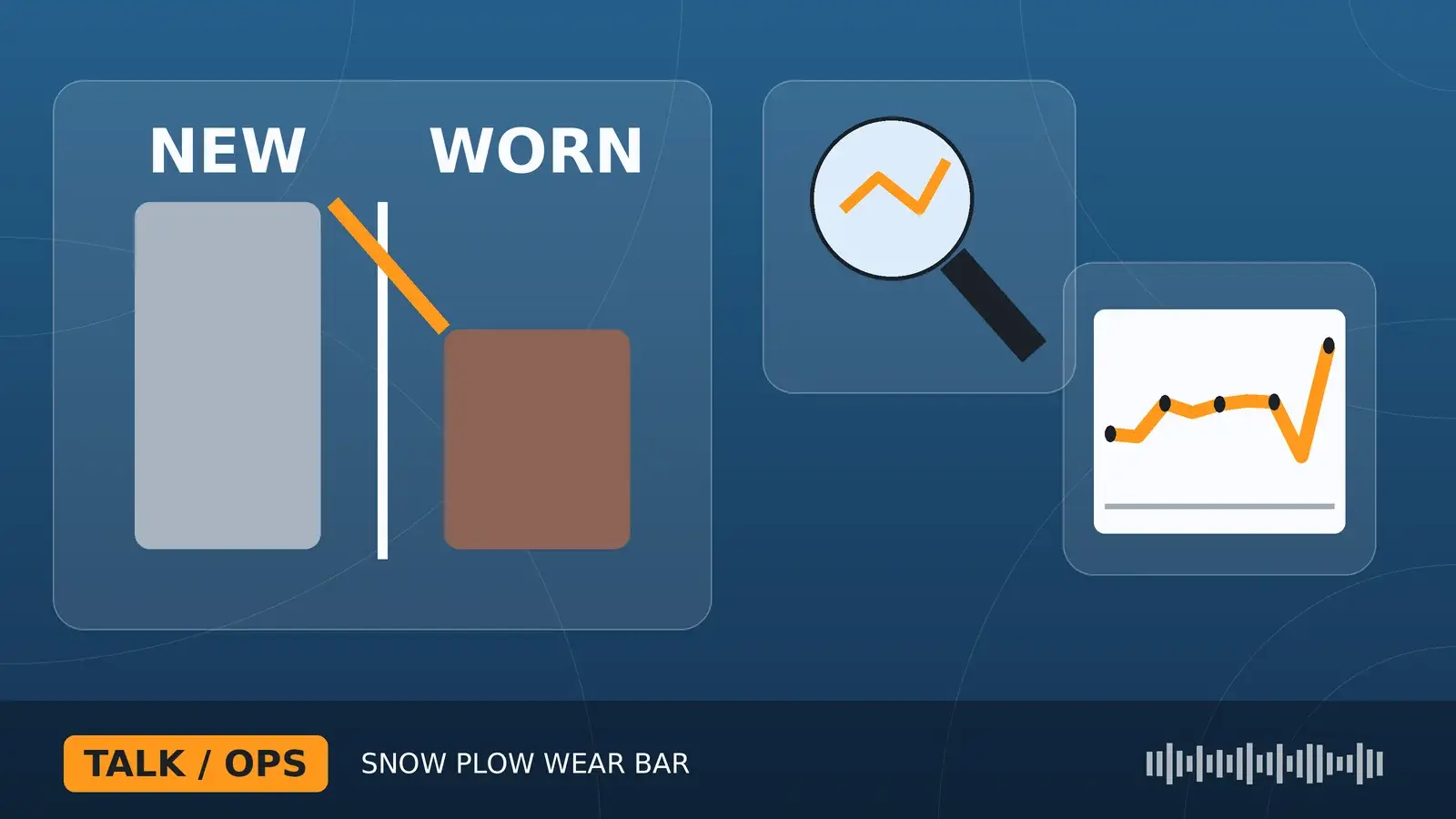
Scenario: the strip along the bottom of the moldboard looks worn and uneven after a few storms. Direct answer: uneven wear is a symptom to diagnose before you replace anything. The causes below are the usual suspects from shop practice. I give no wear limit numbers, so use your plow maker’s guidance for when to replace.
Terms: here “wear bar” means the replaceable strip, also sold as a cutting edge, wear strip or scraper bar, that takes ground contact so the moldboard does not. Check what your manual calls it.
| What you see | Likely cause | What to check | Typical fix |
|---|---|---|---|
| One end worn much faster | Plow trips or sits at an angle; uneven pavement crown | Frame level, lift-arm wear, shoe adjustment on both sides | Level the plow, correct shoes; rotate the bar if it is reversible |
| Wear in a dip or wave | Hard spot such as a manhole or drain cover | Where on the route the damage matches | Mark the hazard; replace the bar once it is below limit |
| Rapid overall wear | Plow set too heavy on the surface, or abrasive pavement | Down pressure setting and shoe height | Reduce down pressure; consider the edge material for that route |
| Chipped or cracked bar | Impact, loose bolts or brittle material in cold | Bolt torque and the impact history | Replace, re-torque, review the speed on hard-object routes |
| Stepped wear at the bolt holes | Loose bolts or hole elongation | Movement marks, bolt-head seating | Replace hardware; replace the bar if the holes are damaged |
| Bar looks fine but the plow scrapes poorly | Curved or bent moldboard, gap behind the bar | Straightedge on the moldboard, gap at the bar seat | Repair or replace the damaged part |
Order of checks
A worn bar produces symptoms that look like other faults, so check the simplest things first.
- Park on level ground, lower the plow and measure the bar height at both ends and the middle. Uneven height is the most common finding.
- Check shoes and the plow frame. A worn shoe changes the contact angle and imitates a worn bar.
- Check bolts and holes. Elongated holes let the bar move, and movement reads as wear.
- Compare your notes with last season’s. A change in the pattern matters more than the absolute number.
Boundary: the table is diagnostic guidance from general practice, not tested on any specific plow. Follow the manufacturer’s service limits and safety procedures, including blocking the plow before working under it.
Further reading on this site.
Blade Hardware: Bolt Torque and Wear Plates ↗Measuring a Snow Plow Blade for Replacement: The Four Measurements That Matter ↗Carbide snow plow blades ↗Rubber Plow Blade Curling or Cupping: Reading the Wear Shape Against Likely Causes ↗Trail and Sidewalk Plows: Steel or Carbide Edges? What Eagan’s Trial Shows and What It Does Not ↗Retorquing a New Cutting Edge: A Timeline From Install Day to Mid-Season ↗


