Two cities of similar size work comparable routes through the same storm. One finishes with bare pavement at the intersections and a clear run across the river; the other still has gloss at both places the following morning, having worked the same number of passes with the same equipment. The difference is not effort. It is that the second fleet treats every location on the route the same way, and the three locations that hold ice do not respond to the same treatment.
This is an operational sequence rather than a theory. It covers why these locations hold ice, what to do at each one and in what order, how to work within the access limits each imposes, and how to keep the record that a liability question will eventually ask for.
Packed ice removal tactics: why these locations hold ice
Three locations hold ice for three different reasons.
An intersection holds it because traffic stops and restarts there, shearing the surface and compacting what is left into a dense layer. A bridge deck holds it because the structure is exposed to air on both sides, so it cools faster and warms more slowly than the ground either side of it.
A shaded section holds it because it receives less solar warming than the surrounding route, so whatever forms there persists through the day rather than clearing with traffic.
Those three mechanisms produce layers that differ in thickness and durability, which is why a single tactic applied to all three underperforms. The intersection layer is dense and disturbed; the deck layer is often thinner but harder; the shaded layer is frequently thicker because nothing has removed it since it formed.
Treatment sequence by location type
The order below reflects both the mechanism and the consequence of leaving each location untreated, and it is written to be run inside an existing route pass rather than as a separate operation.
- Work the bridge decks and overpasses first, because they are the locations where the layer forms earliest.
- Cut the intersections immediately after, while the surface is still disturbed from traffic rather than fully set.
- Take the shaded sections next, since they will not clear on their own during the day.
- Clear the open sections last, because they respond to traffic and warming anyway.
- Return to any location where the surface has returned to gloss before the pass is finished.
The fifth step is the one that distinguishes a routine from a habit. On a heavy freeze-thaw cycle, an intersection cut at the start of a pass can be glossing over again by the end of it, and the return visit is what keeps it from setting overnight.
Intersections: stop-start traffic and refreeze
An intersection is the most demanding of the three because it combines the hardest layer with the least favourable working conditions. Traffic shears and compacts the surface, which produces a dense layer, and the same traffic makes it difficult to work the area without disrupting the flow.
Two practices make the difference. Cutting the intersection while it is still disturbed rather than fully set, because a layer that has been compacted repeatedly over several days is materially harder to remove than one that formed overnight. And working the whole intersection as a single unit rather than treating only the travelled lanes, because the material between the wheel tracks is what holds the rest in place and what returns first.
Bridge decks and overpasses: structure-driven icing
A bridge deck behaves like a surface suspended in air, because that is what it is. With no ground beneath to hold warmth, the deck cools faster on the way into a freeze and warms more slowly on the way out, so it will be icy when the approaches are not and remain icy after they have cleared.
The operational consequence is a timing problem rather than a technique problem. A fleet working to a route-average schedule reaches the deck after the layer has formed, which is the most expensive condition to remove. Bringing the deck forward in the sequence is the whole adjustment, and it needs no new equipment. Structure-related icing and its treatment are described in the road weather material published by the Federal Highway Administration.
Shaded sections and tree cover
Shaded sections are the location fleets most often leave untreated by accident, because they look clear on the pass and are found glossed the next morning. The mechanism is straightforward: without solar warming, whatever forms there survives the day, and each subsequent freeze adds to it rather than starting again.
Two features of a shaded section are worth mapping. The extent of the shade changes through the season as the sun angle moves, so a section that clears itself in December may not in February. And shaded sections are frequently on gradients or under tree canopy that drops material onto the surface, both of which make the layer thicker than the surrounding route.
Equipment access limits
Each of the three locations imposes a different constraint on what can be brought to it, and the constraints decide whether a mechanical or a chemical response is even available.
- Intersections are constrained by traffic and by turning movements, which limit how a carrier can be positioned.
- Bridge decks are constrained by width, by load limits and often by parapets that stop a wing or side edge from reaching the edge line.
- Shaded sections are constrained by the trees or structures causing the shade, which frequently overhang the surface.
Where a location cannot take the machine that would cut it, the response has to be planned in advance rather than improvised. That is a reason to record access limits on the route map next to the locations themselves, in the same place the treatment priority is written.
Chemical versus mechanical removal
The two approaches address different conditions, and treating them as alternatives is the most common procedural error at these locations. Mechanical cutting removes a layer that has already formed; it is the only approach that does so on a thick, durable layer, and it leaves the surface broken up rather than wet.
Chemical treatment works best before a layer sets or where the surface cannot be reached with a cutting edge. Applied to a formed layer, it produces a wet surface that refreezes quickly in the conditions that created the layer in the first place, which is why a treated intersection can look better for an hour and be worse by morning. The two approaches are best used in sequence: cut the layer, then treat to prevent the immediate refreeze.
Prioritising limited equipment
Priority should follow the consequence of not treating a location rather than the order in which a route is driven, and it should be fixed before the season. The table below sets out how the three locations compare on that basis.
| Location | Time to a problem | Priority position |
|---|---|---|
| Intersection | Shortest: stopping and turning manoeuvres on ice | First, along with the approaches |
| Bridge deck or overpass | Short: gradient, exposure and no escape route | First, ahead of the layers forming |
| Shaded section | Moderate: layer persists but speeds are often lower | Second, once the first two are worked |
| Open route sections | Longest: traffic and warming break the layer down | Last, and often self-correcting |
The order in the table is not the order in which the locations appear on a route, and the discrepancy is the reason so many fleets arrive late. Writing the priority list next to the route sheet makes the sequence a decision that was taken rather than one that was forced by geography.
Record keeping for liability
Records at these locations exist for a specific purpose: to show what was done, when, and with what. Four entries cover the requirement, and they take a few seconds per location once the route sheet is set up that way.
Record the time the location was worked, the treatment applied, the condition found on arrival and the condition left on departure. The last entry is the one that matters most in a claim, because it is the record that distinguishes a location that was cleared and refroze from one that was not cleared at all. Maintaining records of this kind is described in the practice published by the Snow and Ice Management Association.
Coordinating the sequence with the route pass
The priority order has to fit inside the route pass rather than replace it, or the rest of the route is abandoned to serve three locations. The arrangement that works is to treat the priority locations as fixed points in the sequence and let the intervening route be worked around them.
In practice that means the carrier works towards a deck rather than past it, cuts the intersections on the way, and covers the intervening route in whatever order the geography allows. The route still gets worked; the difference is that the locations that hold ice are reached before the layer sets rather than after. How the edge itself is set up for that work is covered on the down pressure and blade angle page.
Seasonal pattern review
The location list changes over a season, and a review at the end of it is what keeps the priority order accurate. Three things move: the extent of shade as the sun angle changes, the condition of any surface that has been repaired or resurfaced, and the pattern of traffic at intersections where a route has been altered.
The review is worth running against the records rather than from memory, because the locations that generate the most return visits are not always the ones operators remember. Counting the number of times each location was worked twice in one shift gives a list of problem spots that can be addressed with access planning, treatment changes or, where the layer keeps returning, a different cutting arrangement. What the surface itself does to an edge is described on the packed ice damage page.
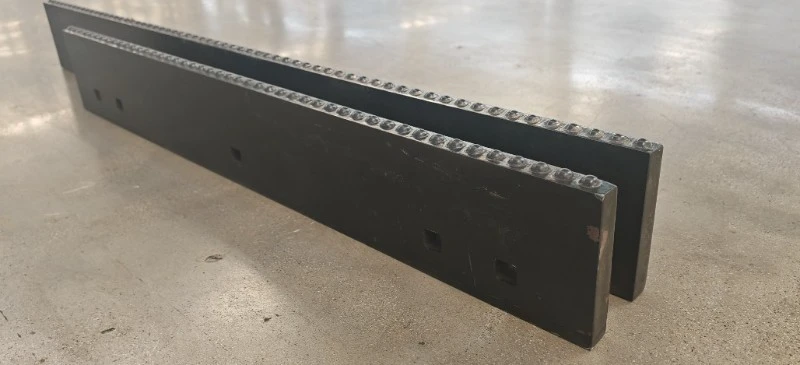
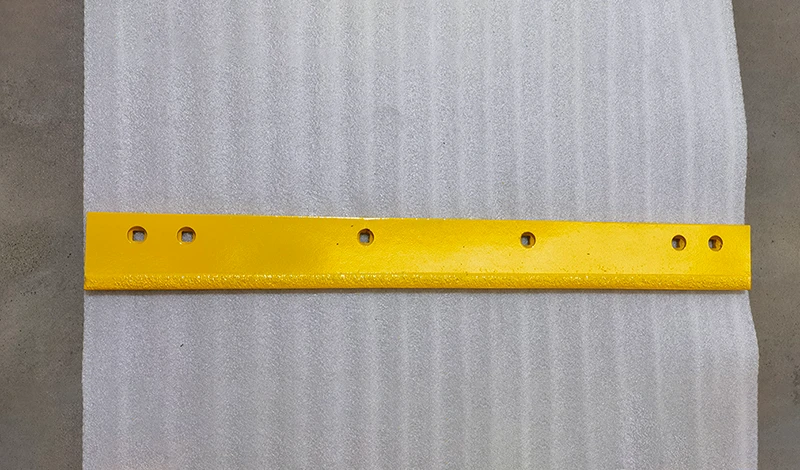
Prevention is the better half of this work where a fleet can act early enough, and the routine for that is set out on the packed ice prevention page. SENTHAI manufactures packed ice carbide kits, inserts and cutting edges in Rayong, Thailand, with the insert arrangement confirmed against the carrier and the surface a route produces. Research on winter maintenance performance is published by the Transportation Research Board, network-level guidance by the Federal Highway Administration, county-level practice by the National Association of Counties, and locations that need an arrangement matched to their access limits can be discussed through the contact page.
FAQ
Why do intersections always hold ice when the rest of the route does not?
Because vehicles stop and restart there, which shears and compacts the surface and then leaves it to refreeze. The result is a denser layer than the surrounding route and one that is disturbed repeatedly, so it forms earlier, resists mechanical clearing and returns faster after treatment.
Do bridge decks need a different tactic from the rest of the route?
They need an earlier one. A deck is surrounded by air on both sides, so it cools faster and warms slower than the ground either side of it, which means ice forms earlier and clears later. Working the deck on the same schedule as the approaches means arriving after the layer has already set.
Is chemical or mechanical removal better for packed ice?
They address different conditions. Mechanical cutting removes a layer that has already formed and is the only option where a layer is thick and durable. Chemical treatment works best before the layer sets or where mechanical access is impossible, and using it as a substitute for cutting on a formed layer often leaves the surface wet and ready to refreeze.
How should limited equipment be prioritised across these locations?
By the cost of not treating them. Intersections and bridge decks carry the shortest time to a collision and the highest exposure, so they lead; shaded sections follow where the layer persists through the day, and open sections last. The priority order should be written down before the season rather than decided during a storm.
Send the route map with the intersections, decks and shaded sections marked, and the carrier assigned to it. The SENTHAI engineering desk will confirm which cutting arrangement suits the access limits at each location.
This article is one step in the Packed Ice Edge Guide, which explains why a standard edge skates across hardpack and how to set one up so it bites.