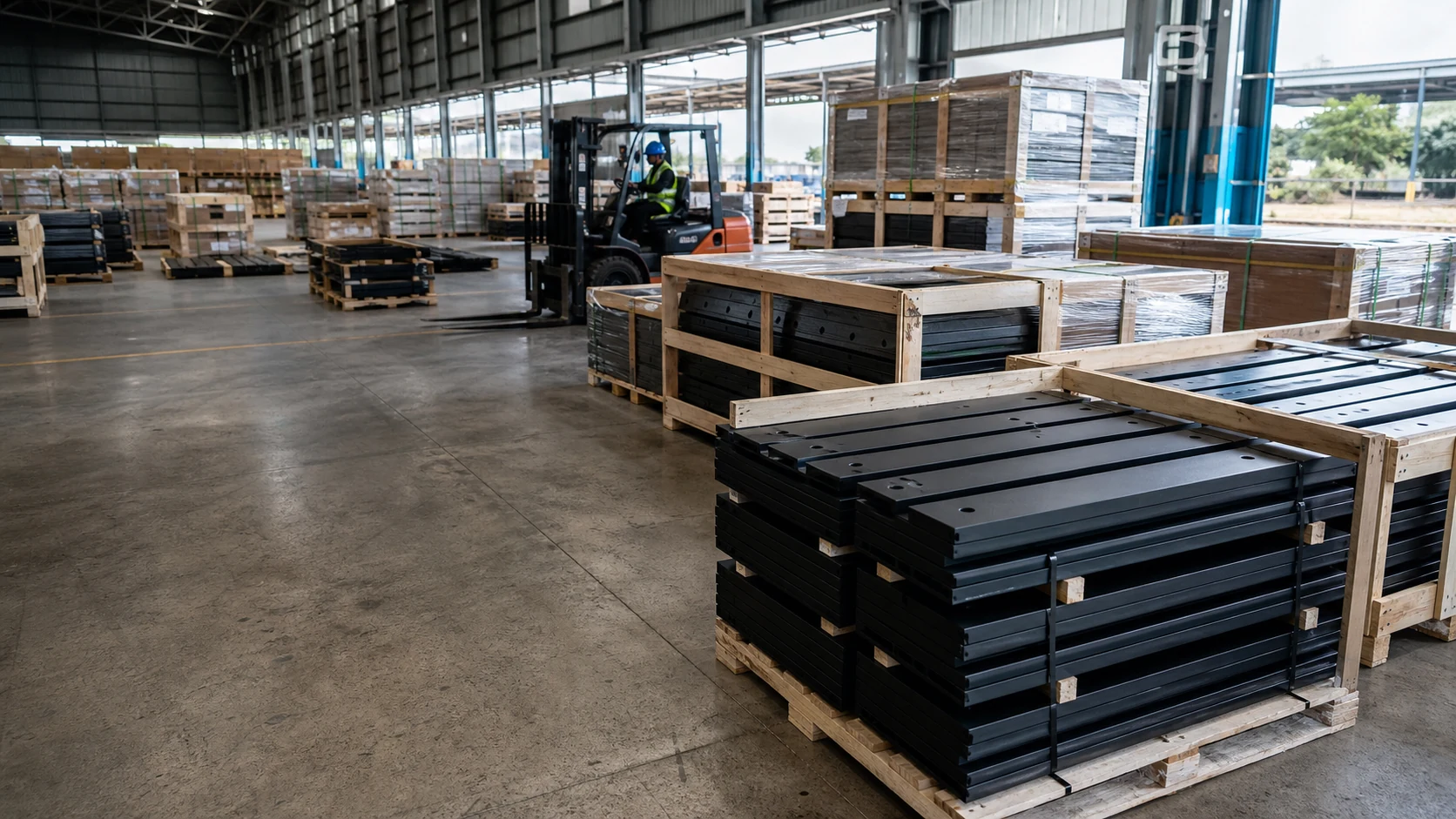
 A pallet label is readable but the individual blades are not marked. What happens when we split the pallet?
Keep unmarked blades traceable when a pallet is split. Link each new storage group to the original lot, inspection record and approved…
Read the guide
 How do we compare two suppliers when one will not disclose its proprietary carbide recipe?
Evaluate proprietary carbide through required conformance evidence and permitted testing, separating confidential recipes from essential tender data.
Read the guide
The order changed from finished blades to loose inserts. Which responsibilities must be rewritten?
Rewrite a blade order changed to loose carbide inserts by assigning joining, handling, inspection and final assembly release responsibilities explicitly.
Read the guide
Our distributor wants to add a fitment claim to the blade label. What evidence should support it?
Review a blade fitment label against exact equipment configurations and documented interface evidence before approving a distributor compatibility claim.
Read the guide
What should be clarified if a supplier will make the sample at a different site from production?
Qualify the intended blade production site when its approval sample came from elsewhere, linking sample evidence to representative production verification.
Read the guide
How can we prevent a repeat order from reviving an obsolete blade drawing?
Prevent obsolete blade drawings from returning in repeat orders by naming the current revision, reconciling supplier files and retiring old release attachments.
Read the guide
A supplier wants to change the packaging after sample approval. Does that need a separate review?
Review a blade packaging change for protection, identification and destination requirements, with an approved packing revision separate from part approval.
Read the guide
What should we ask when a quote says equivalent carbide grade without naming it?
Quote says equivalent carbide grade? Ask for the exact grade, the basis of equivalence and test evidence before accepting a competitor-grade match.
Read the guide
Can we use one RFQ for identical-looking blades with different hole patterns?
Use one blade RFQ with distinct variant lines, drawings and evidence requirements so combined purchasing does not imply identical hole-pattern fitment.
Read the guide
The supplier proposes a replacement material because the original is unavailable. What must stay open?
Keep a material-shortage substitution technically open until its exact specification, evidence and deviation scope are reviewed and authorized.
Read the guide