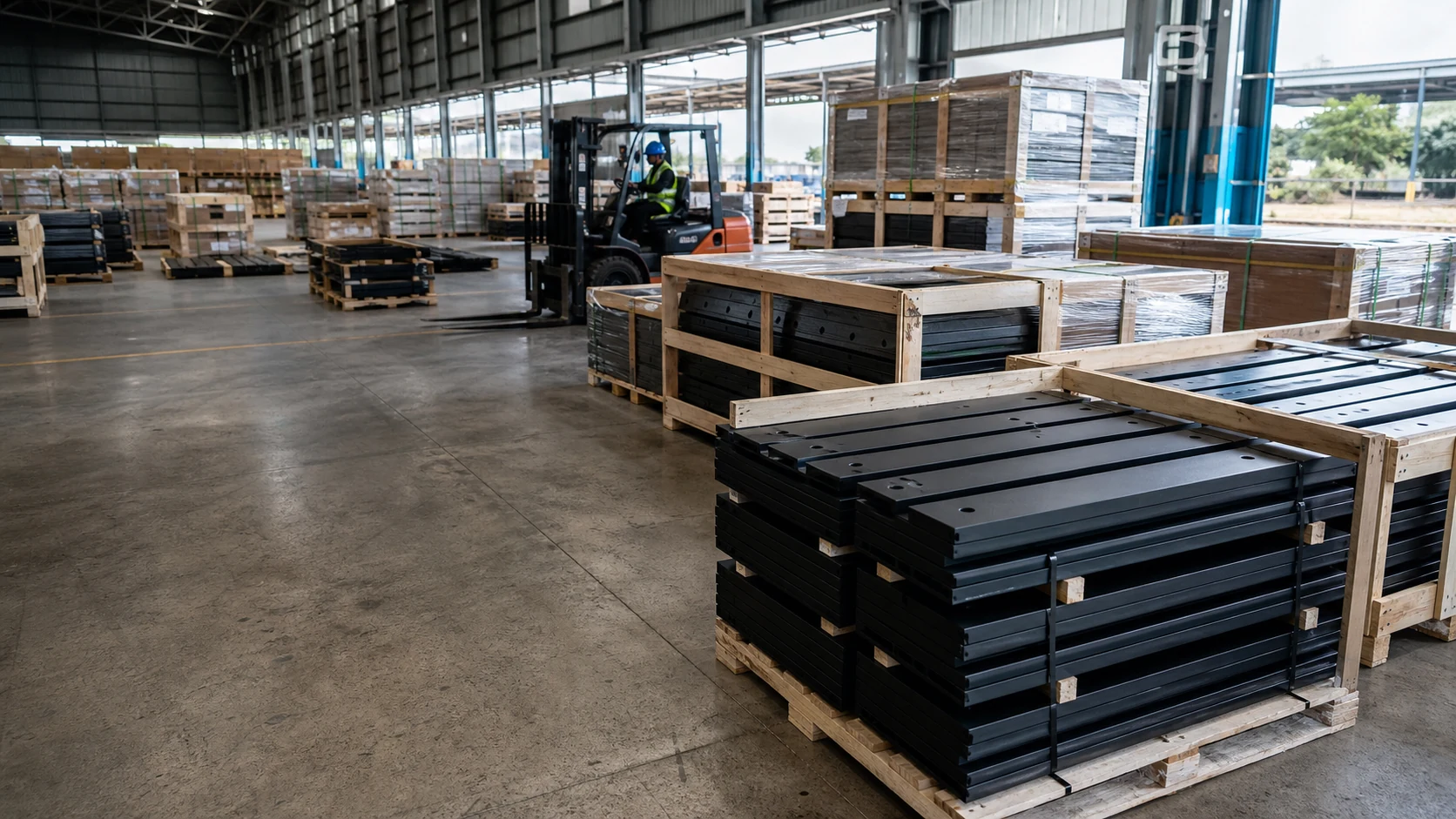
Record the pallet-to-part relationship before separating anything, then carry that relationship into each new bundle or storage location. An outer label can support a controlled transfer, but it cannot identify loose pieces after their connection to the original load has been lost. Resolve any uncertainty before releasing the split stock.
Record the original pallet-to-part and lot relationship before separation
Photograph the readable label with enough surrounding context to identify the actual pallet. Match its references to the packing list, order line, part description and available lot documents. Record the quantity you can account for and whether the pallet contains one configuration or several. A readable shipping number should not automatically be entered as a manufacturing lot number; ask the supplier what the identifier means.
The immediate task is preserving a known relationship, not creating a new origin story for the blades. If the pallet has already been opened or mixed with another load, note that limitation. Use the lot-traceability guide to frame the records request, while keeping this receiving decision focused on the particular pallet. Attach the supplier's confirmation to the stock entry so the next shift does not have to reconstruct it from email.
Create an approved transfer label or storage record for each new group
Prepare a transfer record before the split, with the parent pallet reference, part and revision, original lot reference where confirmed, quantity moved, destination and release status. Give each new group its own handling identifier. That local number points back to the parent record; it does not replace or manufacture a production lot. Record who performed the split and who checked the resulting quantities.
Choose an identification method approved for the storage and handling arrangement, such as an inner-pack label or controlled bin record. Confirm that staff can still retrieve it when the original wrapping is discarded. If a group is split again, repeat the link from its current record. Avoid a system in which all remaining pieces acquire the identity of whichever label happens to be nearest. Where different variants share a shelf, separation needs to be physical as well as visible in software.
Prevent unidentified loose stock without inventing marks on functional surfaces
Walk one proposed blade through the next handoff on paper: removal from the bundle, issue to a workshop and return of an unused piece. Ask what identifies it at each stage. If it becomes anonymous between the rack and the work order, adjust the issue process before opening the pallet. A complete count is useful, but it cannot establish which unmarked item came from which lot after mixing.
Do not improvise stamping, engraving or paint on functional surfaces as a traceability fix. Ask the supplier and responsible technical owner which identification options suit the part. When discussing replacement blade supply, include the smallest pack size that your stores actually issue. Close the receiving exception only when the quantities reconcile and each new stock group has a retrievable identity and disposition. If the original relationship cannot be confirmed, retain an unresolved status rather than borrowing an identity from similar stock.
Further reading. Clear Roads specifications ↗



