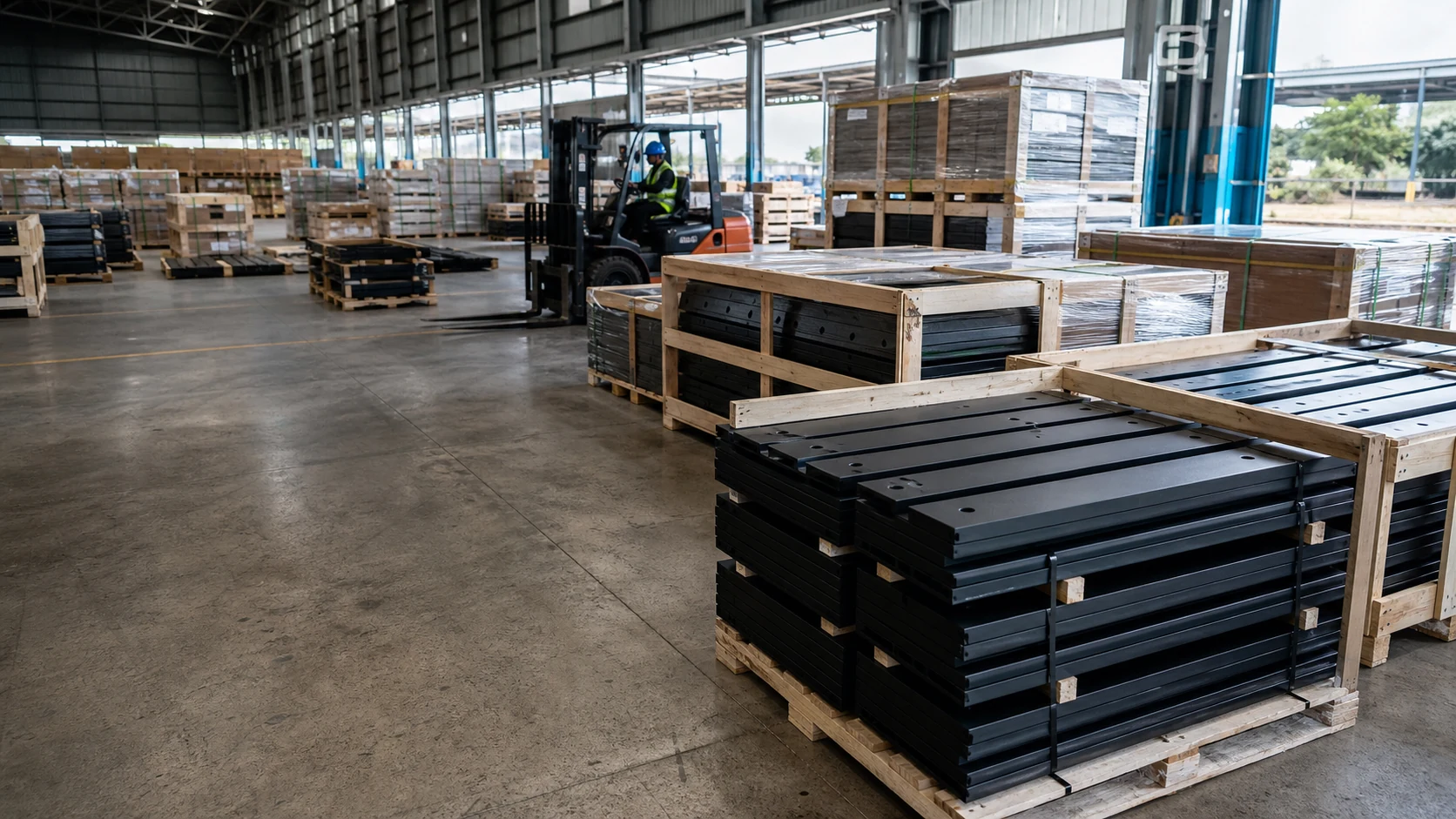
Identify the stored revision, assess its condition and obtain the applicable use or interchangeability decision. An older drawing date does not automatically make the spare unusable, and unused stock is not automatically suitable for today's assembly. Release it only for the application supported by the records and the responsible technical approval.
Identify the stored part's actual revision and condition
Retrieve the receipt, supplier reference, original drawing revision and any inspection release associated with the spare. Check that those records still identify the actual part rather than another blade stored nearby. If the only evidence is a generic bin description, treat the revision as unresolved until the supplier or technical owner can establish it. Do not assign the current revision simply because the part number remains familiar.
Inspect stored condition through the normal qualified process, including whatever checks the applicable documentation requires. Record packaging history or visible condition that may affect the assessment, without assuming a specific degradation mechanism. The inventory-planning guide addresses how spares support readiness; this decision is narrower: whether this particular older item can legitimately support this particular workshop job. Keep identity uncertainty separate from a condition finding so each issue receives the right review.
Obtain the approved interchangeability or restriction record
Compare the original and current controlled requirements through the responsible technical owner. Ask what changed and whether the earlier part is approved for the target assembly. A revision may affect dimensions, material, included components or documentation, and an unchanged external shape cannot settle every possibility. Seek the actual restriction or interchangeability record, not a general statement that old stock is usually acceptable.
Where approval depends on other components or a particular equipment version, identify those conditions on the work order. A conditional use decision should not become a universal stock-code equivalence. If a supplier proposes additional inspection or verification, have the qualified owner define its scope and disposition. Do not modify holes, edges or mounting details to make the stored piece fit an urgent job without a separately approved technical procedure. Availability is a planning fact, not a substitute for configuration control.
Issue only within the documented application rather than assuming age alone proves suitability
Record the final release against the spare's actual identity, including the permitted application and any limitations. Keep the original revision history visible after issue; renaming the piece as the latest revision would make future service records misleading. If the part is not approved for this job but is usable elsewhere, store it under the documented restriction rather than in a general emergency-spares location.
For a replacement blade enquiry, provide both the stored reference and the target assembly details so the supplier can distinguish replacement need from a compatibility question. Update the maintenance reservation if the older spare cannot be counted as confirmed coverage. Close the issue when either the specific use is approved and recorded or an alternative supply plan covers the job. The unresolved item should remain visibly unavailable until its disposition changes, even if that means the warehouse count exceeds the usable spare count.
WESTERN supplies model-specific installation references. WESTERN documents ↗



