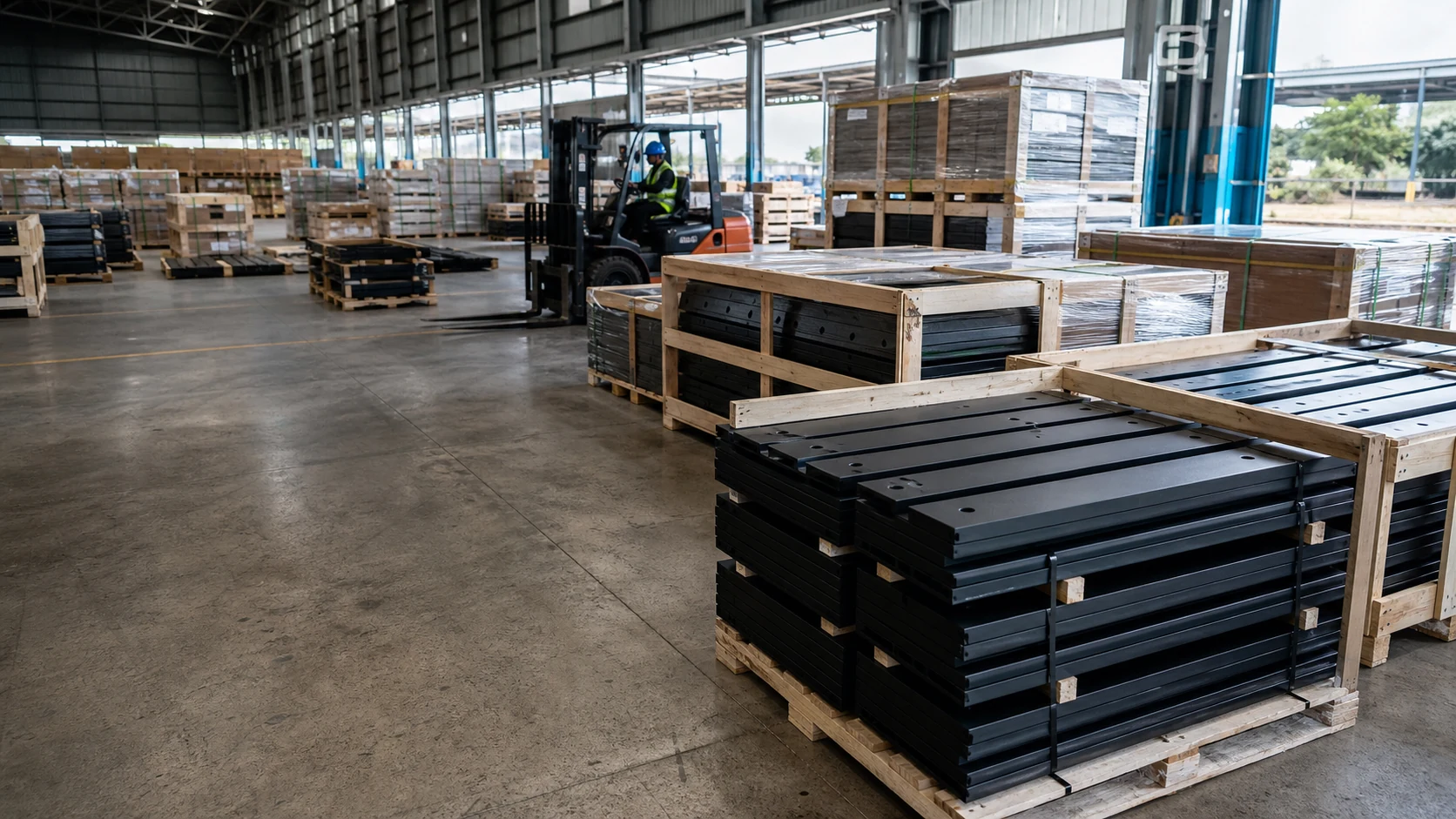
Track receipt by component and readiness by the approved assembly requirement. The blades can be recorded as received without marking the installation kit complete. Keep missing and technically unverified components visible until every required item is identified, checked and available for the particular job. A shipping milestone should not decide whether an assembly is ready to install.
Track the complete approved assembly bill of materials
Start from the current approved bill of materials or equipment-specific parts documentation for the job. Identify the blade sections and every associated item required within the agreed installation scope. Distinguish included hardware from separately ordered components and parts legitimately retained from the existing assembly where the applicable procedure permits that. Do not infer kit contents from a product name or a photograph showing a typical arrangement.
Map each requirement to the order line and delivery expected to supply it. The fastener-kit planning guide gives broader stocking context; this task needs a specific completion list for the affected assembly. Assign a clear unit to each line so a kit count cannot conceal missing individual components. If the supplier and workshop use different names, resolve the cross-reference before the second delivery arrives rather than leaving receiving staff to guess.
Mark received, missing and technically unverified items separately
Use distinct states for received and identified, received but awaiting technical verification, missing, and released for the job. Attach the evidence for each state. A box labeled hardware kit may satisfy the receiving description while its contents still need confirmation against the approved list. Conversely, the blade sections may be fully accepted even though the job remains incomplete. Keeping those decisions separate makes the shortage easier to manage.
If the purchasing system closes lines independently, retain an assembly-level completion record that remains open. Prevent automatic readiness notifications from treating a closed blade line as a complete installation package. Ask the purchaser to obtain a specific update for the missing hardware, with the actual part references and planned receiving milestone. A generic message that the balance is shipping does not tell the workshop whether the required components will be available for its scheduled work.
Release the installation kit only when the required compatible components are accounted for
When the hardware arrives, reconcile its identity and quantity with the job list and applicable documentation. Refer compatibility questions to the qualified technical owner. Do not substitute fasteners from a general bin merely to complete the count; appearance and nominal size do not establish that the required component has been supplied. Installation procedures and any reuse decisions belong to the equipment-specific instructions and responsible personnel.
For a blade-and-component enquiry, ask the supplier to distinguish the complete assembly scope from the items in each shipment. Release the installation kit only after the required compatible components are accounted for and any exceptions are resolved. Record who confirmed readiness and which document revision was used. Keep the separate receipt histories intact, because a later shortage or revision question may depend on knowing that blades and hardware arrived at different times. Completion should describe a supported job condition, not simply the receipt of the largest package.
WESTERN provides model-specific parts lists. WESTERN documents ↗



