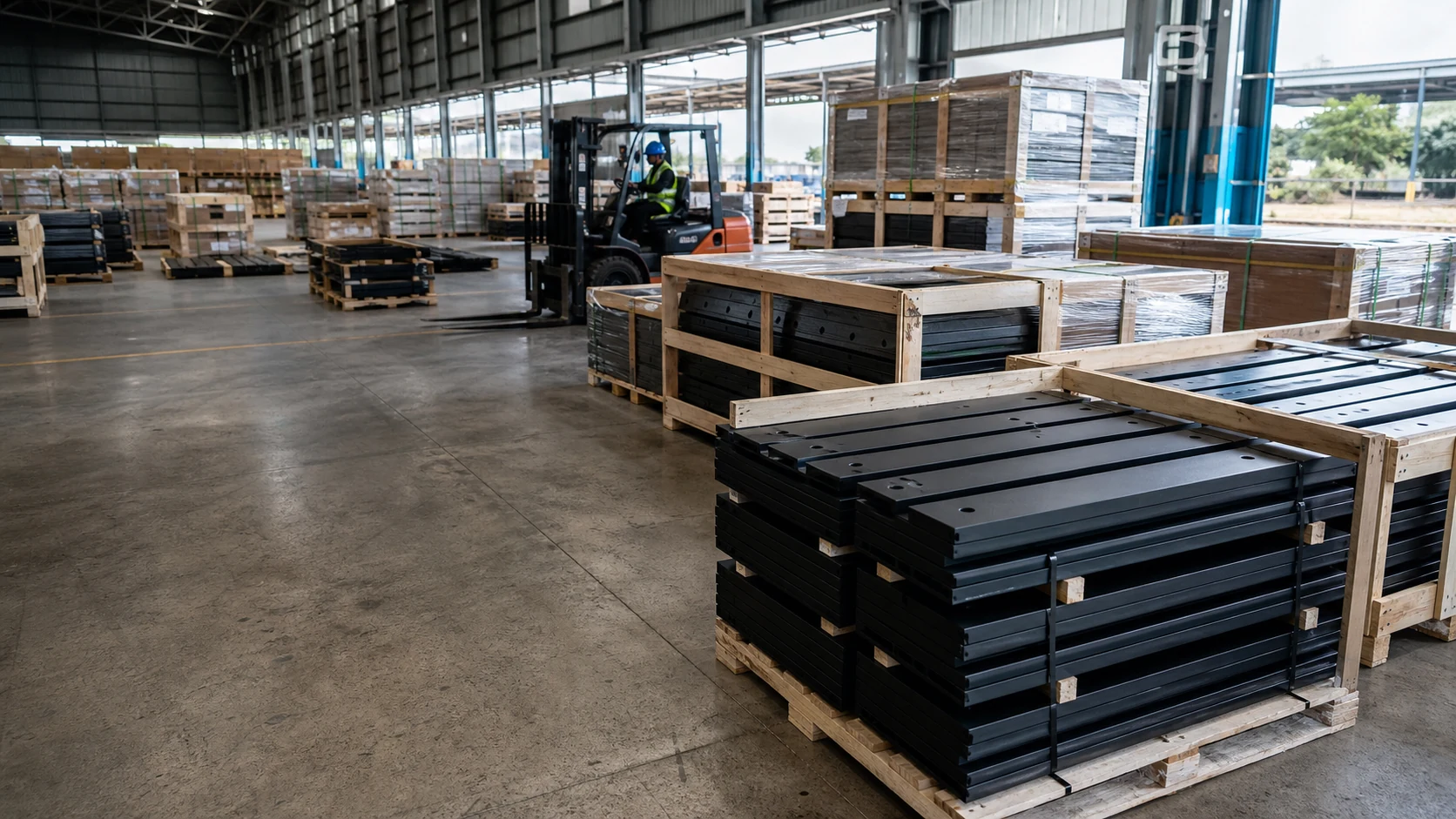
Do not sign off on quantity accuracy alone. Preserve the fields and document links needed to identify each stock group, establish its disposition and control issue. Test both directions of retrieval before retiring the old index: from a physical blade group to its evidence, and from a lot or restriction to the stock and movements affected.
Map part, revision, lot, location and release status to the new system
Map source fields to destination fields explicitly, including buyer and supplier codes, revision, manufacturing lot, location, quantity, unit, reservations and release status. Decide how the new system represents restricted or unresolved stock instead of allowing blank values to become released defaults. Preserve aliases as search aids without merging technically distinct parts. An old and new code may refer to the same item, but the migration should not decide that relationship without its existing approval.
Select representative cases that exercise the difficult records: mixed receipts, split lots, transferred stock, superseded codes and held items. The lot-traceability discussion explains the broader purpose; this migration needs proof that the working relationships survive a specific system change. Include the person responsible for technical status in field-mapping decisions. A software administrator can migrate a value accurately while misunderstanding what it permits users to issue.
Preserve original certificate and inspection references
Keep original certificates, inspection decisions, deviations and transfer records accessible through stable references. Check that links open the intended document and version, not merely a folder with a similar name. If documents remain outside the new warehouse application, define who maintains that repository and how users reach it. Do not replace a detailed release record with an imported yes field that loses application restrictions or the basis of acceptance.
Retain an authorized read-only archive of the old index until the responsible owners have confirmed the migration and retention arrangements. Document transformations, including code normalization and unit conversions, so discrepancies can be investigated. Where data is incomplete, migrate the uncertainty visibly rather than inventing a clean value. Record reconciliation exceptions with an owner and resolution plan. A missing lot link is different from a cosmetic description error and should receive a decision proportionate to its effect on traceability and issue.
Test forward and backward retrieval on representative stock before retiring the old index
Run ordinary receiving, reservation, picking, transfer and return examples in the new system before cutover. Include an attempted issue from quarantined stock and a search using an old depot code. Compare the outcome with the approved source record. Also start from an inspection hold and identify every relevant stock location; a system that retrieves one certificate but cannot find affected stock has preserved only part of the workflow.
Use a blade supply enquiry to resolve supplier-code questions that the source data cannot answer, rather than guessing during import. Agree acceptance criteria for the migration with stores, quality and planning, then record which cases passed and which remain blocked. Freeze the approved mapping for cutover and control subsequent corrections. Sign-off should establish that quantities reconcile, identity relationships remain retrievable and issue restrictions still work. Keep unresolved cases out of ordinary availability until their evidence and status are restored.
Further reading. Clear Roads specifications ↗



