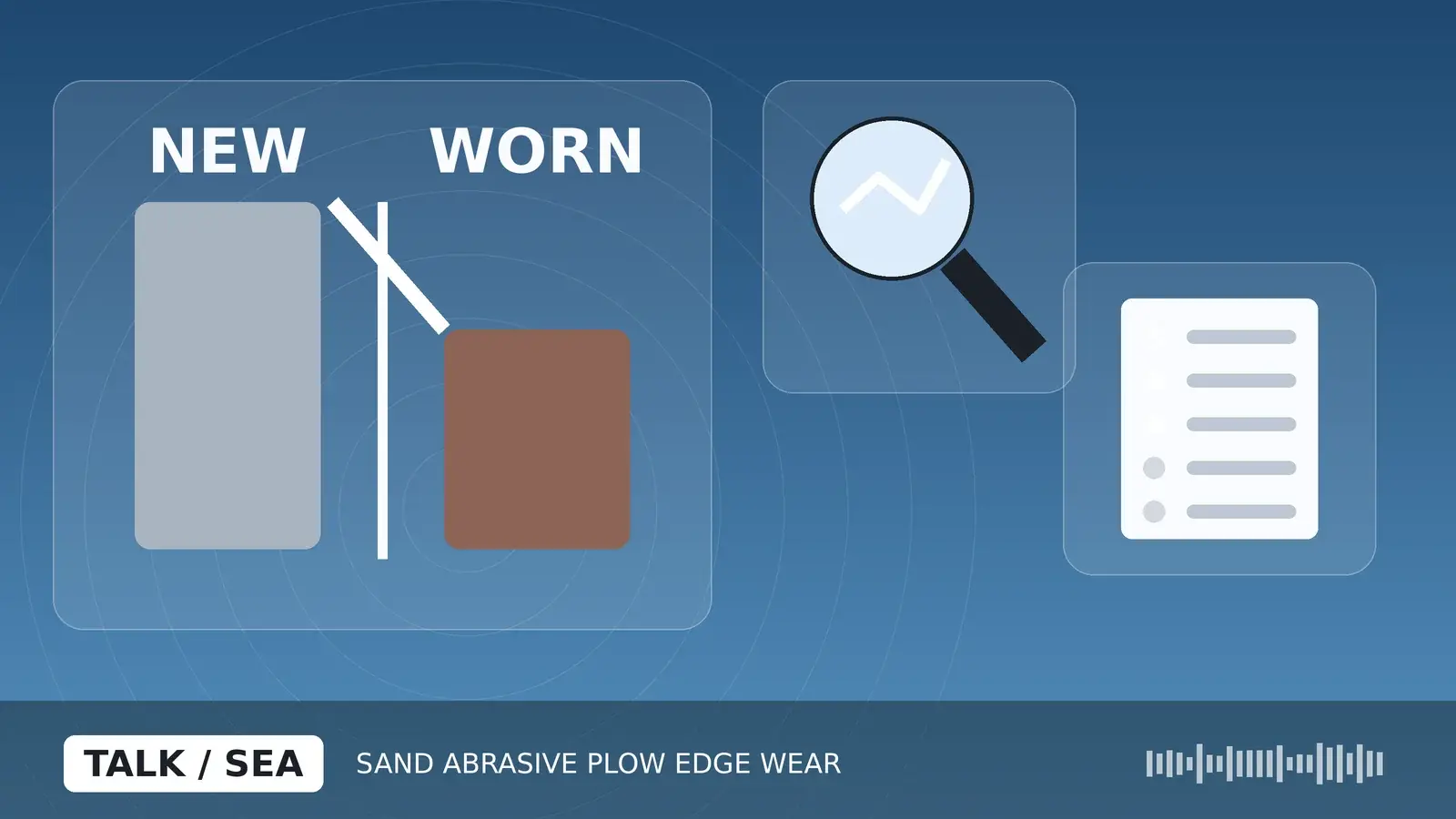
Why it is a hypothesis, not a fact
Sand is one influence among several, and the evidence is observational.
- Edge wear depends on many things at once: pavement type, speed, snow, edge material and how often the plow hits hazards.
- Routes that receive sand often differ in other ways: more ice, steeper grades or different traffic.
- Without matched comparison, a difference in wear could come from any of these.
How to test it
Sand changes wear, but only a controlled comparison will show how much. Tag the routes before the season, not after it.
- Tag routes as sanded, mixed or unsanded for the season. A route that changes treatment mid-season tells you nothing.
- Record per edge: hours, route type, dates fitted and removed, and the wear reading. One missing field breaks the comparison.
- Match where possible: similar routes, speeds and edge types. Comparing a mountain route with a city one measures the route, not the sand.
- Compare life in hours, not calendar time. Storms differ too much for dates to mean anything.
- Look at the wear pattern, not just the amount. Scoring and polishing point at grit; even wear points at hours.
Template: wear record
| Edge ID | Truck | Route type | Hours | Wear reading | Notes |
|---|---|---|---|---|---|
| Sanded / mixed / unsanded |
What crews can do either way
The practical actions are the same whether or not the hypothesis holds.
- Follow your agency or client rules on abrasive use; sand is also a debris and FOD concern on airfields, so check the guidance for your site.
- Remove accumulated sand from the road when the rules require it, and avoid spreading more than you need.
- Check edges more often on sanded routes until your records show whether it matters.
Limits
If your records show a large difference, share them with your supplier and look at edge options. If they show none, you have saved yourself a change.
Reading the result
After a full season, line up edge life in hours for the three route tags. If sanded routes show a clearly shorter life across several trucks and edge types, you have a case to take to your supplier and your budget. If the spread within each group is as wide as the gap between groups, the difference is probably noise. One season is a start; two seasons of matched records are far more convincing, and neither needs special equipment.
Boundary: No verified study or wear rate is cited; the effect of abrasives on edge wear is a hypothesis to test in your own records.
Further reading on this site.
Loader Bucket Edges and Wear Parts: Selection for Abrasive Material Handling ↗Hardened Steel vs Carbide in Abrasive Service: Choosing by Wear Mechanism ↗Carbide snow plow blades ↗Driver Pre-Trip Card for Plow Trucks: Edge, Shoes, Pins and Hoses ↗Holiday Storms and Parts Availability: What to Stock Before Shipping Cutoffs ↗Contractor Preseason Checklist: Edges, Shoes, Hardware and Sub-Sign-Ups ↗


