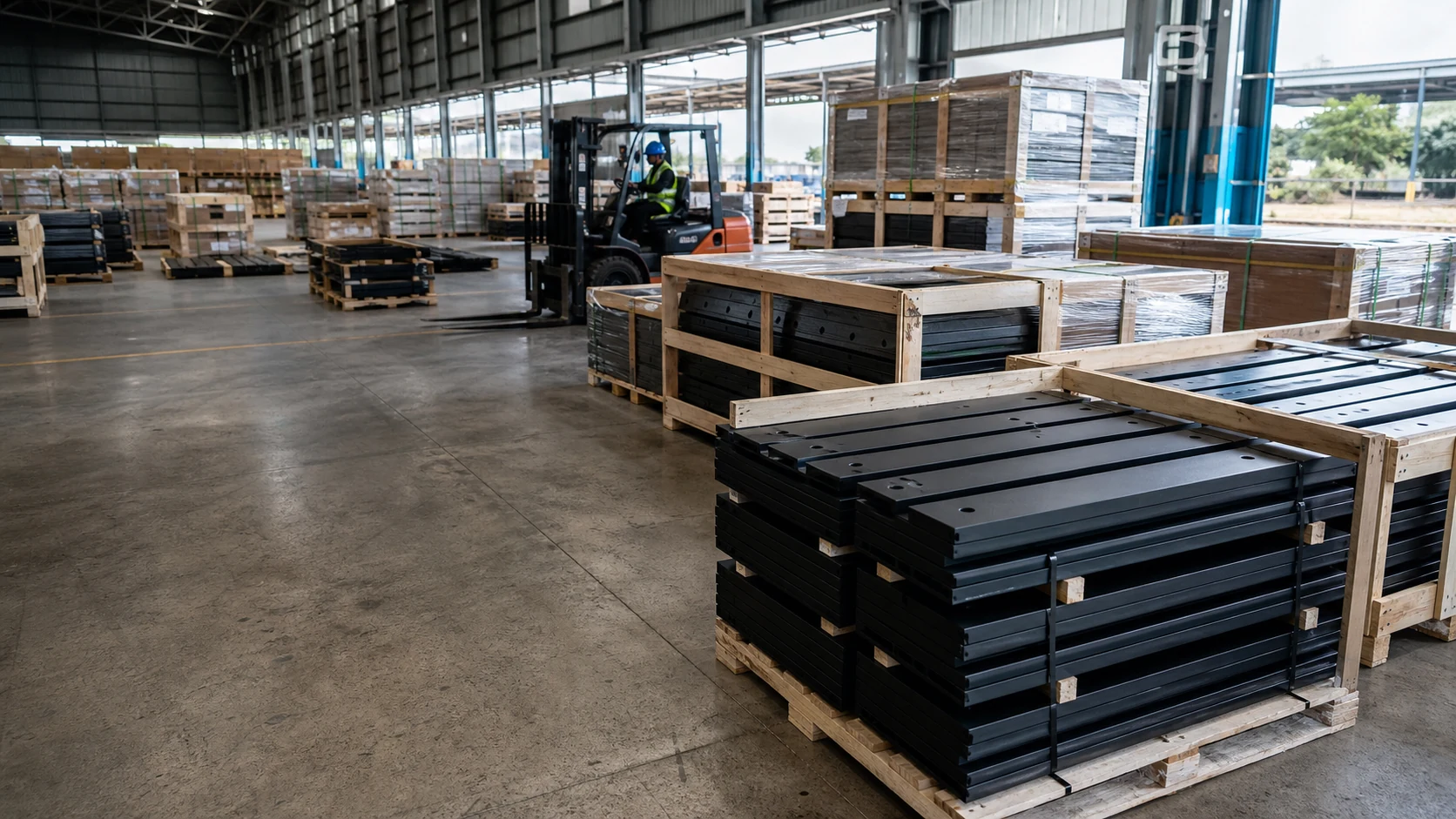
List the uncovered machines and requirements, then evaluate each candidate against that exact scope. Confirm identity, condition and approved interchangeability before treating available stock as coverage. Urgency can justify prioritizing the review and escalating service gaps, but it does not establish that a similar blade is suitable or that an unassessed spare can be installed.
List the affected machines and confirmed spare configurations
Start with the planned jobs: equipment identity, assembly position, current approved part and revision, required components and useful service date. Separate jobs already covered by released stock from those that genuinely depend on the delayed shipment. Confirm the latest delivery information through the responsible buyer, including what remains uncertain. A vague delay notice should not prompt unnecessary substitutions for every machine if only some changeovers are exposed.
Request candidate-stock details from the depots using the same fields. Include actual release status and whether the quantity is already reserved. The winter-parts planning calendar addresses the broader scheduling problem; the immediate decision needs a short, factual coverage list. A depot total is not enough if it mixes revisions, used returns or warranty-held parts. Keep candidate stock distinct from confirmed coverage until the supporting evidence has been reviewed.
Verify identity, condition and approved interchangeability before availability
Have the technical owner compare each candidate with the target application using controlled documents and existing interchangeability approvals. Identify any conditional use or required companion components. Do not assume that matching length or bolt spacing establishes the whole configuration. If the candidate's identity cannot be demonstrated, note it as unresolved rather than treating the absence of a known mismatch as proof of suitability.
Check condition and the scope of its release, especially for older or previously used spares. Arrange any additional qualified assessment required by the applicable process. Avoid improvising modifications or assembly combinations to make a candidate fit the schedule. Where a substitute is approved, record the actual reference and approval on the job, and retain the relationship to the original requirement. This protects subsequent maintenance and prevents an emergency choice from silently becoming the normal fleet specification.
Escalate uncovered needs without turning urgency into technical approval
Present the planner with three clear groups: covered by approved stock, potentially coverable after named checks, and still uncovered. Include the decision owner and required information for the middle group. That allows the service plan to be adjusted on evidence rather than optimism. Any decision to defer, reassign equipment or change service arrangements belongs to the responsible operational owner under the fleet's procedures, not to a generic parts comparison.
When making a replacement supply enquiry, provide the unresolved configurations and useful receipt dates so alternatives can be assessed precisely. Keep commercial approval separate from technical suitability; a supplier's offer is not an interchangeability decision. After a substitute is issued, reconcile reservations at both depots and record whether the delayed original stock is still needed. Close the exception when each affected job has an approved coverage or planning decision, and the temporary configuration remains visible for the next reorder and service review.
Equipment-specific documents guide configuration checks. WESTERN documents ↗



