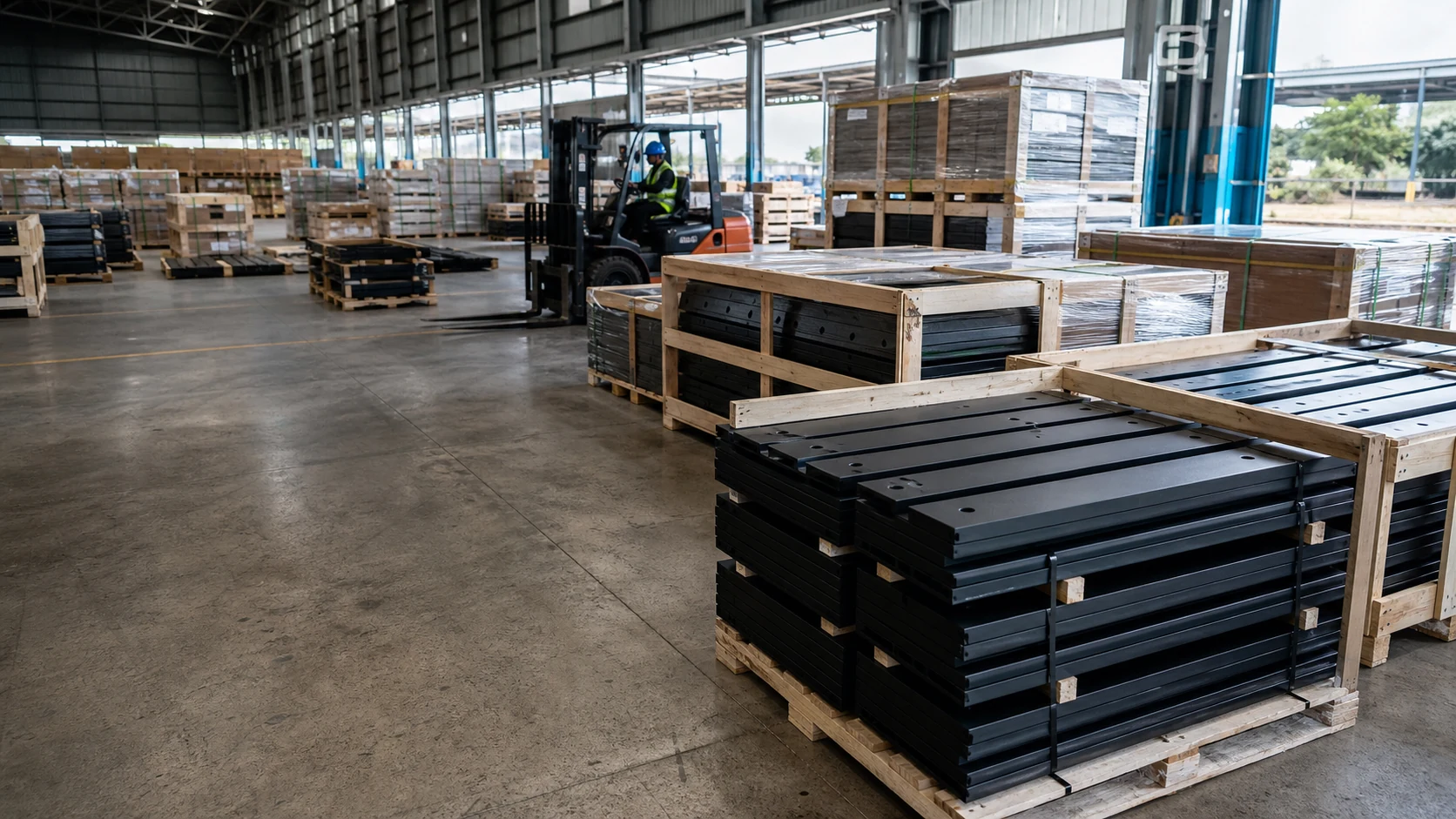
Confirm the actual packed shipment and the depot's receiving capability before dispatch. Loose blade dimensions are not enough to establish whether a delivery can be unloaded safely. Have the supplier, transport provider and receiving site's responsible logistics and safety personnel agree a suitable handling arrangement using verified package information and site constraints.
Confirm packed dimensions, weights and receiving access with the site
Ask for the packed dimensions, total and individual package weights, package count and proposed delivery vehicle arrangement. Distinguish confirmed values from estimates and identify when the final packing information will be available. A long section may be shipped with other components or protective packaging, so the catalogue dimensions alone should not be used to select unloading equipment. Request the relevant handling information from the packing provider without devising an improvised lifting method.
Have the depot describe its actual access restrictions, receiving area and equipment availability to the appropriate logistics owner. Include restrictions that affect the planned delivery, such as appointment arrangements or where the vehicle can reach. The landed-cost guide covers broader freight planning; this discussion is about whether the intended physical handoff is feasible. Confirm who is responsible for checking equipment suitability rather than assuming the carrier and depot have each made that assessment.
Have the logistics and safety owners agree suitable handling provisions
The receiving site's competent personnel should evaluate the proposed package and handling plan under their procedures. If the arrangement is unsuitable, resolve it before the shipment leaves: a different approved packing configuration, delivery service or receiving location may be needed. Each alternative requires confirmation of the actual details. Do not promise that staff can manage the shipment manually or with available equipment merely because individual loose parts have been handled before.
Keep the agreed arrangement in the transport booking and receiving instructions. Identify the person or role who will confirm readiness on the delivery date. If equipment is shared with other activities, make the dependency visible rather than assuming it will be free when the truck arrives. Where a packing change affects identification, component grouping or protection, review those consequences too. Solving an unloading problem should not create an unidentified collection of loose sections at the depot.
Avoid promising a shipment is manageable based only on loose blade dimensions
Ask for final package details before authorizing the planned dispatch milestone through the normal buying process. Compare them with the reviewed arrangement and resolve material changes. A heavier or differently configured pack should trigger reassessment, not a handwritten correction that nobody at the receiving site sees. Keep arrival-condition checks and shortage reporting in the plan so the depot can record what was delivered without disrupting safe handling.
When making a long-blade supply enquiry, state the depot constraint early and ask what packing information can be provided. Do not assume a particular split or delivery service is included in the price; the buyer should confirm the actual scope and costs. The shipment is ready when packing, transport and receiving responsibilities align and the qualified site owner accepts the unloading arrangement. If that cannot be established, change the logistics plan rather than relying on the driver or receiving shift to improvise on arrival.
Equipment documents are model-specific references. WESTERN documents ↗



