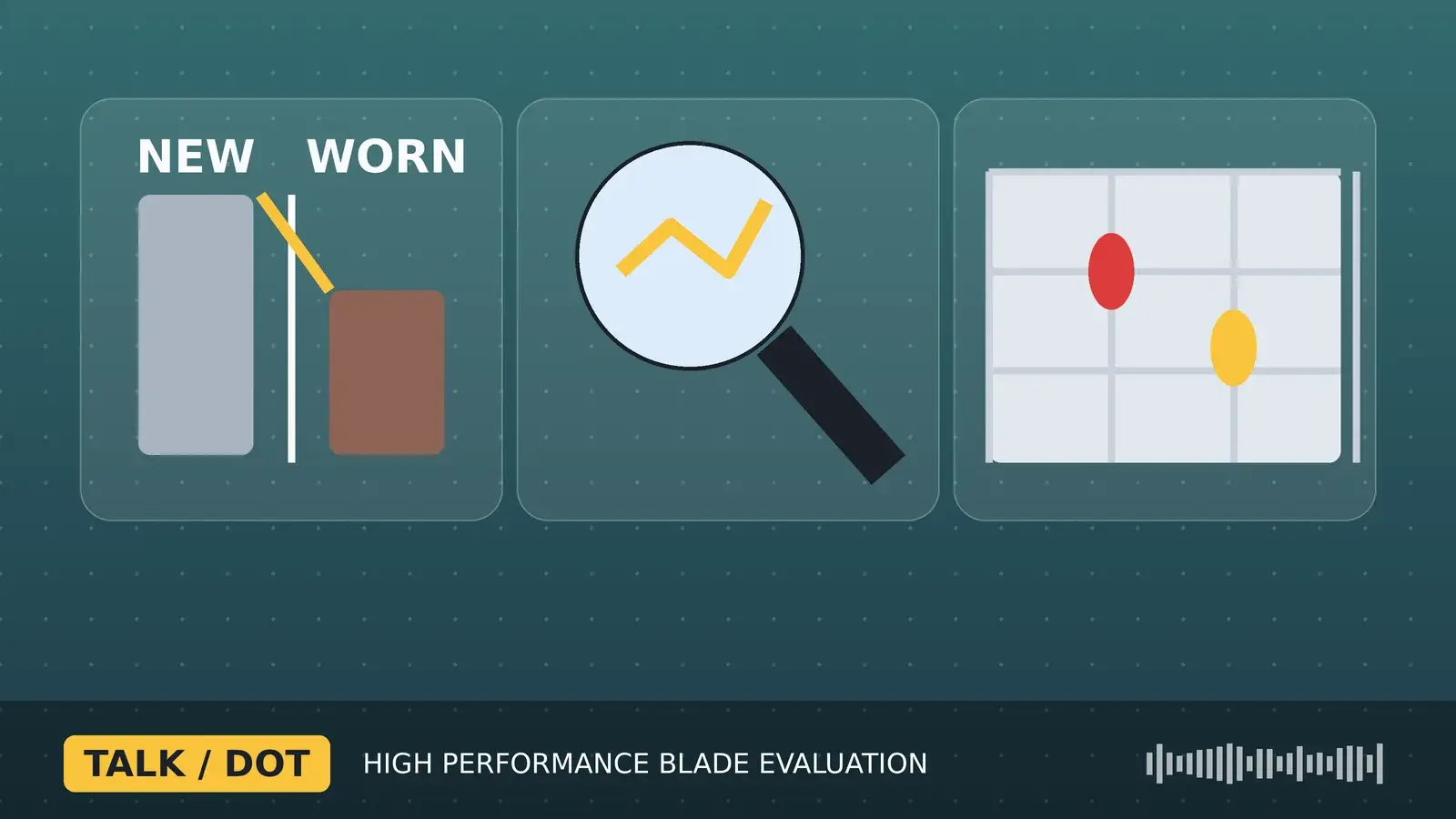
Three methods compared
| Method | How | Strength | Weakness |
|---|---|---|---|
| Height gauge | Measure remaining height at marked points with a simple gauge or caliper | Direct, cheap, quick | Depends on consistent points and a clean surface |
| Photo with scale | Photograph the edge beside a ruler from a fixed distance and angle | Creates a visual record; easy to share | Camera angle and light change the picture |
| Weigh-in | Weigh the edge when new and again when removed | One number for the whole edge | Needs a scale; hides where the wear occurred |
Making any method consistent
Three methods measure the same thing differently, and the value comes from using one of them consistently.
- Mark the points. Choose a few positions, such as both ends and the middle, and mark them with paint or a punch.
- Clean first. Remove dirt and ice before measuring.
- Use the same tool. Keep one gauge, one scale and one camera setup for the fleet.
- Record the same fields. Date, truck, route, hours or storms, edge ID, reading at each point.
- Take a photo as well. A picture backs up the numbers and helps if a reading is questioned.
Choosing
If you want one simple measure, start with the height gauge at marked points, add a photo and use the weigh-in only for special trials. Keep it light, because a method that takes too long is dropped within weeks.
What to do with the numbers
Plot or tabulate wear against hours, storms or route. Look for trucks or routes that stand out, and ask why before you change anything.
A record template
Keep one line per edge: edge ID, truck, route, date fitted, date removed, hours or storms, readings at points A, B and C, photo file name and notes. Print it as a card kept in the shop, or hold it in a shared sheet. After a season, you will have enough rows to compare trucks, routes and suppliers on the same basis, and to decide which to trial next.
Boundary: No published study is cited and no wear values are given; the methods are general shop practice.
Further reading on this site.
Choosing a Carbide Blade Manufacturer: Nine Evaluation Criteria ↗High-Speed Runway Clearing: Blade and Edge Requirements ↗Carbide snow plow blades ↗Reading Old Blade Research in 2026: A Cautious Guide to Dated Trials ↗Safe Blade-Change Procedure for Municipal Crews: Lift, Support, Torque, Verify ↗Reading the Clear Roads Product Experience Table: Four Ways It Can Mislead ↗


