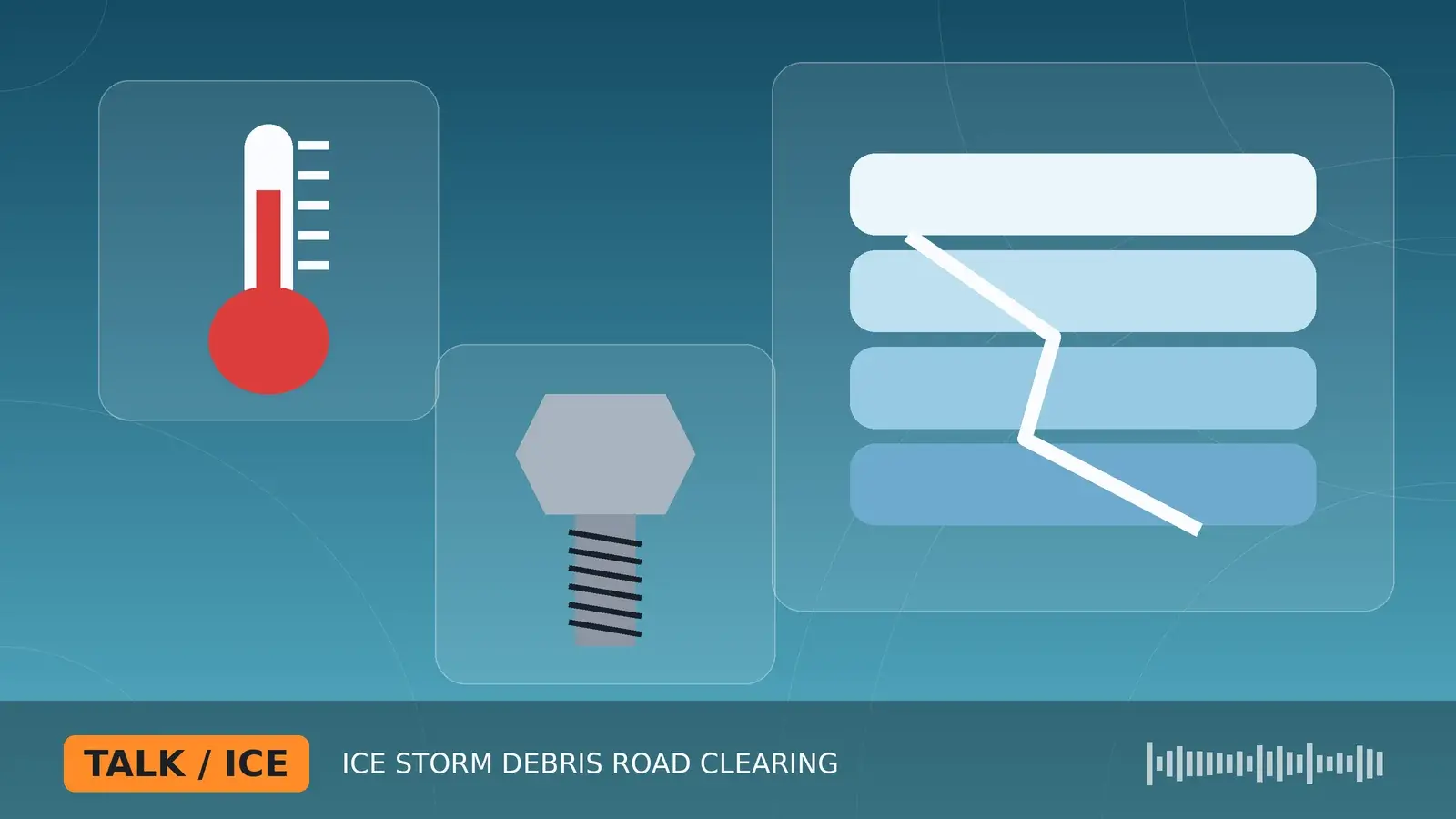
Hazards to expect
After an ice storm the route contains hazards that were not there when it was planned.
- Branches and limbs under snow or ice, some large enough to stop the plow.
- Wires and poles down; stay away and report them.
- Glaze on the surface, which changes how the edge grips and how the truck steers.
- Hidden objects, including broken equipment and lumps of ice.
Before you push
The first pass after an ice storm is a survey, not a plow run.
- Walk or drive the route slowly to see what is there.
- Remove or push aside large debris with the right equipment, not the plow edge.
- Mark any hazards you cannot remove.
- Check for live lines and never plow near them.
While plowing
Speed is the only variable the driver controls in real time.
- Reduce speed, especially on corners and where debris is dense.
- Lift the plow slightly to ride over small branches if the surface allows, and lower where the surface is clear.
- Work in short passes and re-check the edge.
After the first pass: edge checks
| Check | Why |
|---|---|
| Bolts and nuts | Impacts can loosen them |
| Chips or bends | Hidden objects cause damage |
| Shoes and mount | Check for bent parts |
| Hydraulic hoses | Branches can snag hoses |
Plan for spares
Expect more damage than usual in a debris event. Bring a spare edge and tools on the truck or have a service vehicle nearby, and log each strike so that you can review it afterwards.
Why speed matters here
Debris events are the opposite of a routine push. The surface is uneven, the objects are unpredictable and visibility may be poor. A lower speed gives the driver time to react and gives the plow’s trip mechanism or flexible edge a chance to work as designed. It also keeps the damage smaller if you do hit something. Brief drivers before they go out, and tell them that a slow first pass is the expected standard.
What to avoid
After an ice storm the danger is not the snow but what is buried in it.
- Plowing at normal speed in debris.
- Pushing large limbs with the edge.
- Ignoring wires or leaning poles.
Boundary: general advice only; follow your agency’s emergency procedures, utility instructions and safety rules.
Further reading on this site.
Inspecting and Rotating a Packed Ice Edge Through the Season ↗Our road changes from asphalt to gravel halfway through. How should that affect an edge enquiry? ↗Carbide snow plow blades ↗When Salt Is Rationed: Edge Strategy and Scraping Priorities in a Shortage ↗Anti-Icing Changes What the Edge Sees: Thinner Bonds, Different Wear ↗


