A wear-parts programme fails at the quotation stage far more often than at the manufacturing stage. This is the buying sequence that stops it.
This guide is written for the people who sign the purchase order: fleet procurement officers, distributor buyers and OEM sourcing teams. It follows the order the work actually happens in — technical pack, supplier selection, commercial model, landed cost, supply risk, and the documentation that makes all of it auditable — and it links the article that answers each step. If you are re-tendering an existing programme, the sections on landed cost and supply risk are usually where the money is.
Start with the technical pack, not the price list
Every credible quotation is built from the same technical pack. Without one you are comparing four suppliers who each quoted a different product.
A technical pack is the document set that lets a manufacturer quote the thing you actually want: dimensions with tolerances, the material or grade, the joint method, the hole pattern, packing requirements and the inspection you expect. Assembled once, it makes quotations comparable and makes a second source possible. It also settles the minimum order question before it becomes a negotiation, because a supplier can only tell you what drives the minimum — tooling, batch size, material order quantity — when the specification is fixed. Sampling and pre-production approval then run against the pack rather than against a memory of the last order.
- the technical pack a manufacturer needs
- sampling and pre-production approval
- what actually drives a wear-parts minimum
Choose the manufacturer, then the model
Evaluate a shortlist against nine criteria, visit if you can, and place a production-intent sample. The price is the last thing worth comparing.
Two suppliers can quote within a few percent and deliver completely different programmes. The criteria that separate them are the ones you can verify: who sinters the carbide, how batches are traced, what the inspection record contains, what happens when a shipment is wrong, and whether the person answering the enquiry is the person who signs the certificate. Country of manufacture matters less than the specific factory’s process control, and a supplier in a low-cost region with its own sintering and traceability is a better partner than one that brokers material it never sees. Place a production-intent sample before a season order — it is the cheapest test available.
- nine criteria for choosing a carbide blade manufacturer
- working with a Thailand-based manufacturer
- sourcing carbide blades from overseas
- who SENTHAI is, and what the factory runs
OEM, ODM, private label or wholesale programme
Decide who owns the design and who owns the brand before the first order. The commercial model determines tooling, minimums and how the relationship ends.
The model you choose sets everything downstream. OEM means you supply the drawing and the manufacturer builds to it. ODM means you accept an existing design and put your label on it, which is faster and cheaper but leaves you with less differentiation. Private label sits between the two: your brand, mostly standard geometry, with packaging and documentation built for your market. A wholesale programme adds commitments — forecast-based production, stocking agreements, terms — in exchange for better pricing and priority through the season. Pick the model against your sales channel, then write the terms so a successful season does not become next season’s dispute.
- OEM, ODM or private label: what each model means
- building a private label blade line
- designing wholesale programme terms
Price the whole landed cost
Incoterms decide who carries risk; tariffs, freight and duty decide the real price. Compare landed cost per blade, not FOB per blade.
The FOB price is the beginning of the arithmetic. Ocean or rail freight, insurance, duty, tariffs, port charges, inland delivery and the cost of holding safety stock all belong in the comparison, and Incoterms decide which of them sits with you and which sits with the supplier. Where local-content or buy-local rules apply to a public tender, the calculation changes again and has to be done before the specification is locked. Build the landed-cost model once and reuse it every time a quotation arrives; it is the only way to see a genuinely cheaper offer through a superficially higher headline price.
- Incoterms: choosing the term that fits the risk
- planning for tariff and cost shocks
- local content and buy-local rules
De-risk the supply before the season starts
Dual sourcing, agreed documentation and a written dispute procedure are boring until the first container arrives wrong in December.
Supply risk in wear parts is concentrated in a short window: the weeks before the season, when every customer wants the same profile at the same time. Mitigating it is a set of unglamorous decisions — qualify a second source on the same technical pack, agree what documentation travels with each shipment, and write down how a quality dispute is raised, evidenced and resolved. A dual-source strategy costs a little on unit price and buys a great deal of certainty. The documentation agreement is the other half: when the certificates, batch records and inspection results are specified up front, a problem is settled with paper rather than with a shipping container in dispute.
- dual sourcing versus a single supplier
- what should arrive with each shipment
- resolving a quality dispute with an overseas supplier
Know the material chain and the market
Tungsten is a mined commodity with a concentrated supply chain. Understanding it explains grade availability, lead times and price moves.
Carbide is only as available as the tungsten concentrate behind it, and the journey from mine through APT and powder to a sintered insert is long enough to absorb a lot of price movement. Buyers who understand the chain read a price rise correctly — as a material event, a currency event or a capacity event — instead of assuming it is a supplier opportunistically repricing. It also explains why lead times extend together across an industry when demand returns, and why a forecast-based production agreement is worth more than a discount. Tracking the market signals that matter for wear parts is a two-hour exercise once a quarter.
- how tungsten concentrate reaches wear-parts buyers
- market trends to track in 2026
- global Market Trends for Tungsten Carbide Wear Parts in 2026
Audit the spend you already have
Most fleets find their saving in the consumption data, not the unit price: where edges are being changed early, and why.
Before re-tendering, look at what the current programme actually costs. Blade spend per machine, changes per season, and the reason recorded for each change usually reveal that a minority of routes consume a majority of the budget, and that a proportion of those changes were premature — caused by angle, hardware or operator habit rather than by wear. That analysis is also the strongest negotiating position available, because it lets you specify a programme against measured performance instead of against a catalogue. The same discipline transfers to plant and industrial wear parts, where unplanned downtime usually costs more than the part.
Check the evidence behind a capability claim
Ask which documents exist, who signs them and what they cover. A capability claim without a document is a marketing statement.
Claims about capacity, certification and process control are easy to make and easy to check. Ask for the documents, not the summary: what is certified, by whom, to what scope, and which parts of the process they cover. A manufacturer that sinters its own carbide can show you the batch record; one that trades material it never touches cannot. This is the last step before a supplier is approved, and it is the step that most often changes the shortlist.
Send the current specification, the annual volume and the failure you are trying to eliminate. We will return a landed-cost comparison, a recommended specification and lead times — including the honest answer when your existing supplier is already the right one.
Frequently asked questions
What should be in a technical pack for a custom cutting edge?
Dimensions with tolerances, material or grade, joint method, hole pattern, edge angle, surface finish, packing requirements and the inspection you expect to receive. A drawing is ideal; a measured sample plus photographs of the mounting is usually enough to start.
How do I compare suppliers in different countries fairly?
Convert every quotation to landed cost per blade at your warehouse, with the same Incoterm and the same documentation requirement. Then compare the inspection record and the traceability, because those decide what happens when something is wrong.
What drives the minimum order quantity?
Tooling for a new profile, the minimum batch a sintering run can economically produce, and the material order quantity behind it. An established profile can usually be quoted at trial quantities; a brand-new one has to justify the tooling, and we will tell you which you are looking at.
Is dual sourcing worth the extra administration?
For a seasonal product with a short delivery window, usually yes. It costs a small amount on unit price and protects the season if one supplier slips. Qualify the second source on the same technical pack so the product really is interchangeable.
How do I handle a quality dispute with an overseas supplier?
Raise it in writing against the agreed specification, with photographs, quantities and batch references, and ask for the batch record. A supplier that can produce the record will resolve it quickly; one that cannot tells you something important about the next order.
Do you work with distributors and OEMs under their own brand?
Yes. We produce to a drawing or from an established profile, pack under your label, and hold the approved specification and batch records on file so repeat orders match. Forecast-based production and stocking terms are available for seasonal programmes.
Where to go next
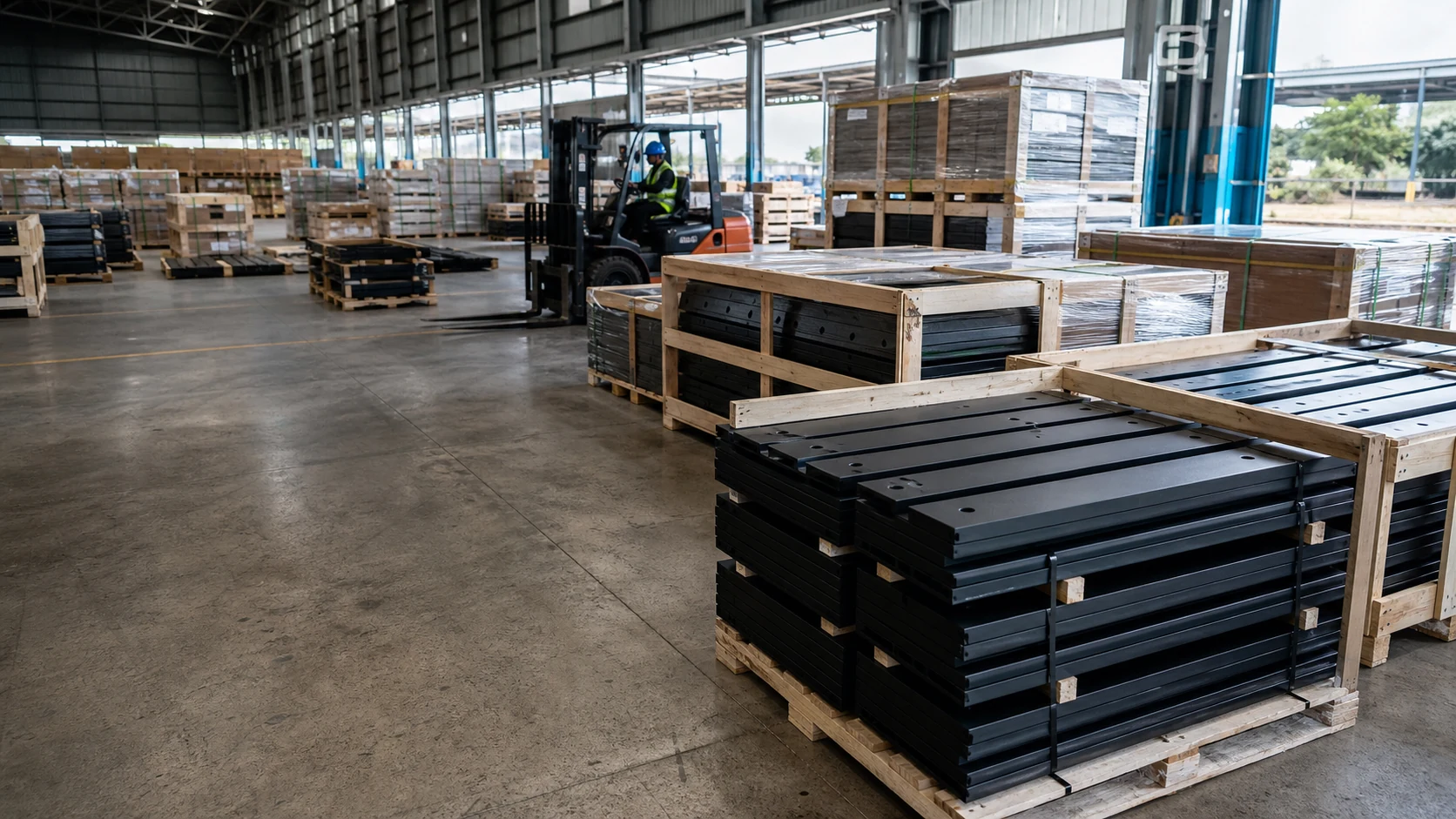 Wholesale, OEM and private labelForecast-based production, private label and export packing.View products
 Snow plow blade selection guideSurface, position, size, geometry, material — in order.Read the guide
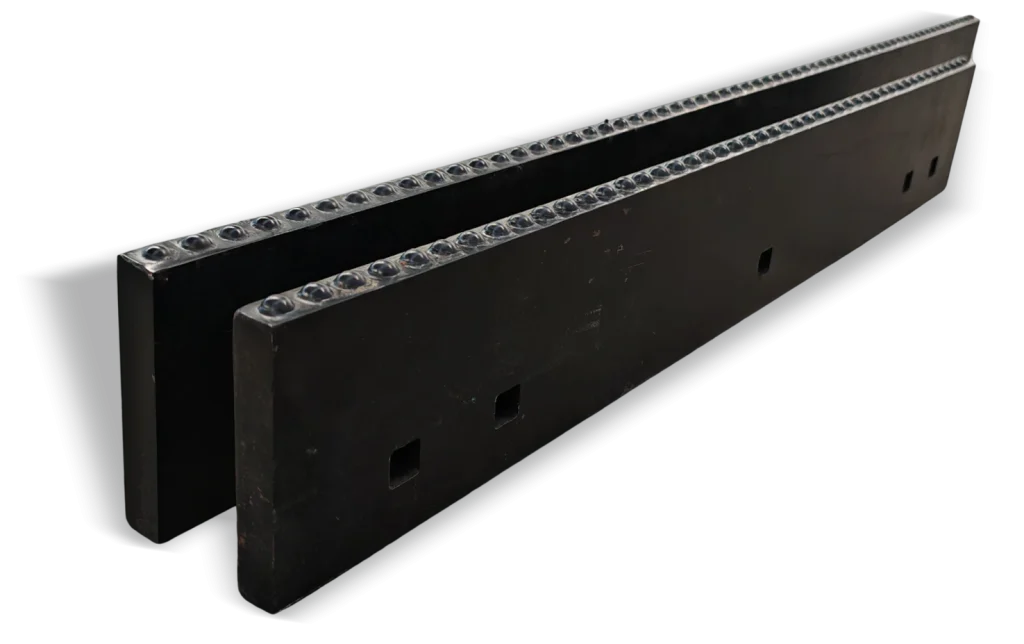 Packed ice edge guideWhy a standard edge skates, and how to make one bite.Read the guide
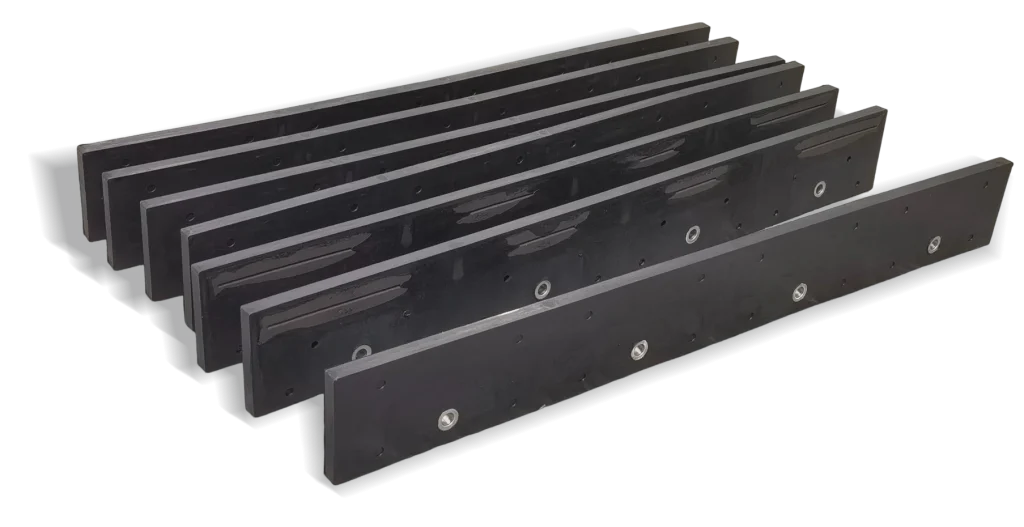 JOMA style rubber-flex blade guideSegments, clamps, insert retention and off-season care.Read the guide
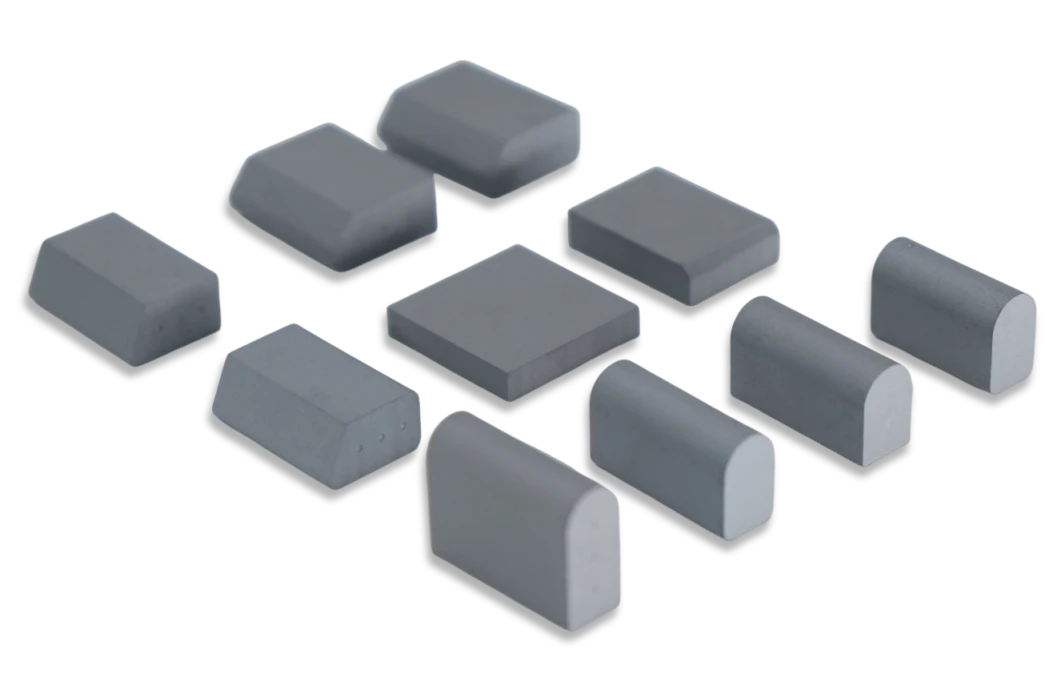 Carbide insert selection and replacement guideGrade, spacing, fitment and the replace-or-re-plate call.Read the guide
 Talk to the quote deskSend the machine, the surface and a rough quantity.Request a quote