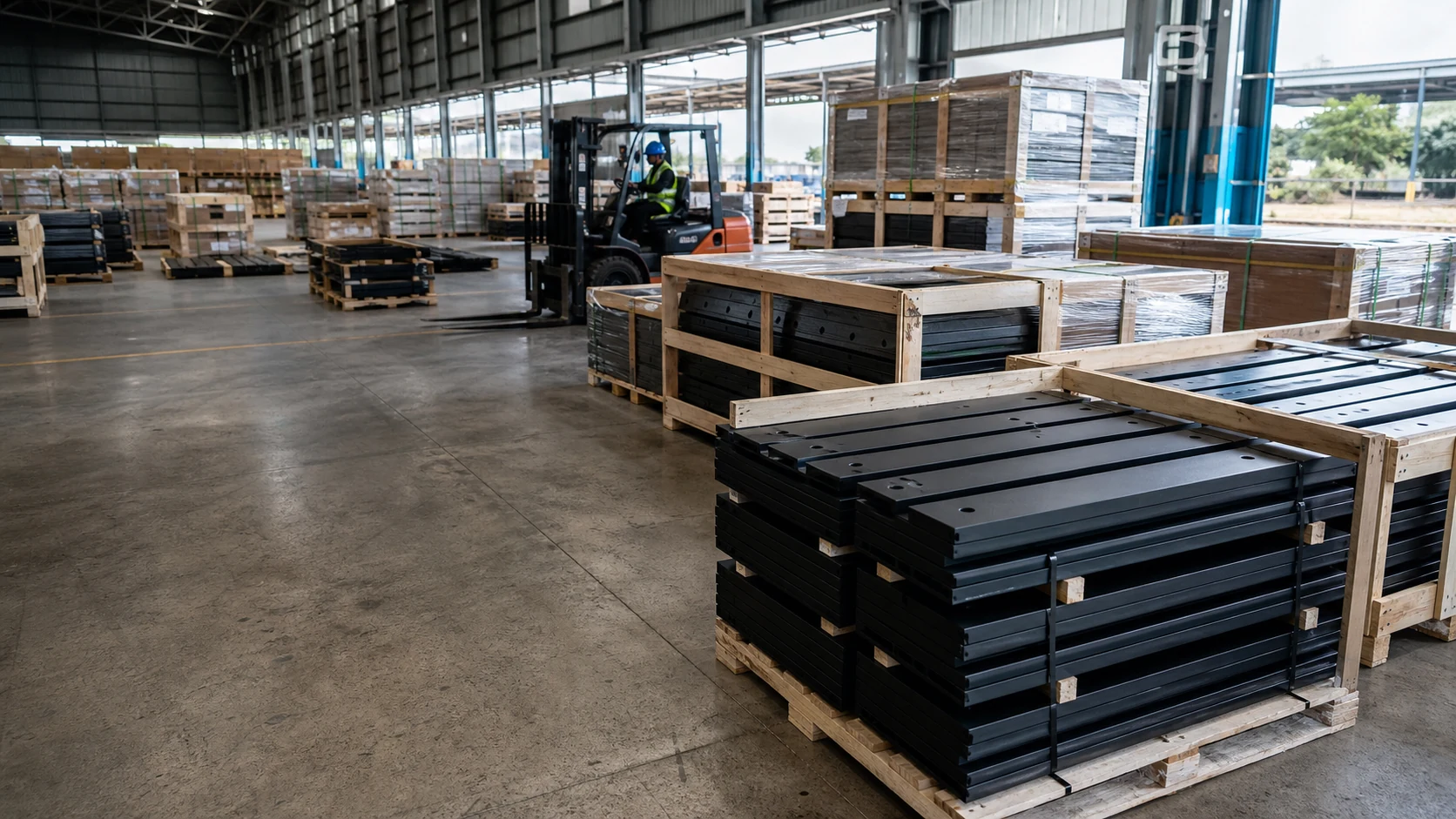
Compare the controlled specifications and approved applications before declaring the codes equivalent. Different local numbers may identify the same supported part, but similar descriptions or photographs do not establish that. Create a reviewed cross-reference with a clear owner, scope and update process, keeping uncertain or conditional matches separate from confirmed equivalents.
Compare controlled drawings, revision and application evidence
Collect the source records behind both depot codes: supplier references, drawing and revision, assembly position, required material or insert specification, and any local restrictions. Ask whether either code has been reused for changed products over time. A current catalogue entry may conceal older stock received under a previous specification. Compare the actual inventory groups as well as the master-data descriptions before deciding that a merge is safe.
Use the fleet-standardisation guide for the wider benefits and trade-offs of reducing variation. This task is narrower: establish whether a particular pair of codes refers to an approved common configuration. Record the evidence for agreement and the fields that remain uncertain. Where a dimension must be checked, use the controlled requirement and agreed measurement method. Do not rely on a side-by-side visual comparison to settle material, revision or application differences.
Separate confirmed equivalents from similar-looking alternatives
Classify the result explicitly. The codes may be confirmed equivalents within a stated scope, conditional alternatives requiring a particular application, or distinct items that happen to look alike. Ask the technical owner to approve that classification. A conditional alternative should not be entered as an unrestricted synonym merely because the warehouse software offers only a simple merge button. Preserve the distinction through separate records or an approved control that users can actually follow.
Check what the proposed cross-reference will affect: new orders, reservations, transfers, workshop issue and historical searches. Keep old references searchable so past service records still resolve to the product that was used. If records are merged, preserve the original lot, revision and receipt histories beneath the shared ordering identity. Administrative simplification should not erase evidence that two earlier deliveries differed or cause an old restricted item to inherit a new unrestricted status.
Create an approved cross-reference with owner and update process
Publish the approved mapping where purchasing, stores and workshops use it, with the review date and responsible owner. State the application scope and any exclusions in plain language. Define what triggers review, such as a supplier part change, drawing revision or new equipment configuration. Without that ownership, an initially correct cross-reference can become misleading when one depot updates its requirement and the other does not.
For a blade reference enquiry, provide both codes and their supporting records rather than asking whether two names sound equivalent. Test the mapping using a real transfer and a proposed reorder before relying on it across stock. The receiving depot should retrieve the same controlled specification and see the same restrictions as the sender. Close the exercise when the relationship is approved and usable, while retaining unresolved stock outside the confirmed equivalence. A shorter catalogue is worthwhile only if it still directs people to the right physical configuration.
Parts references must match the equipment configuration. WESTERN documents ↗



