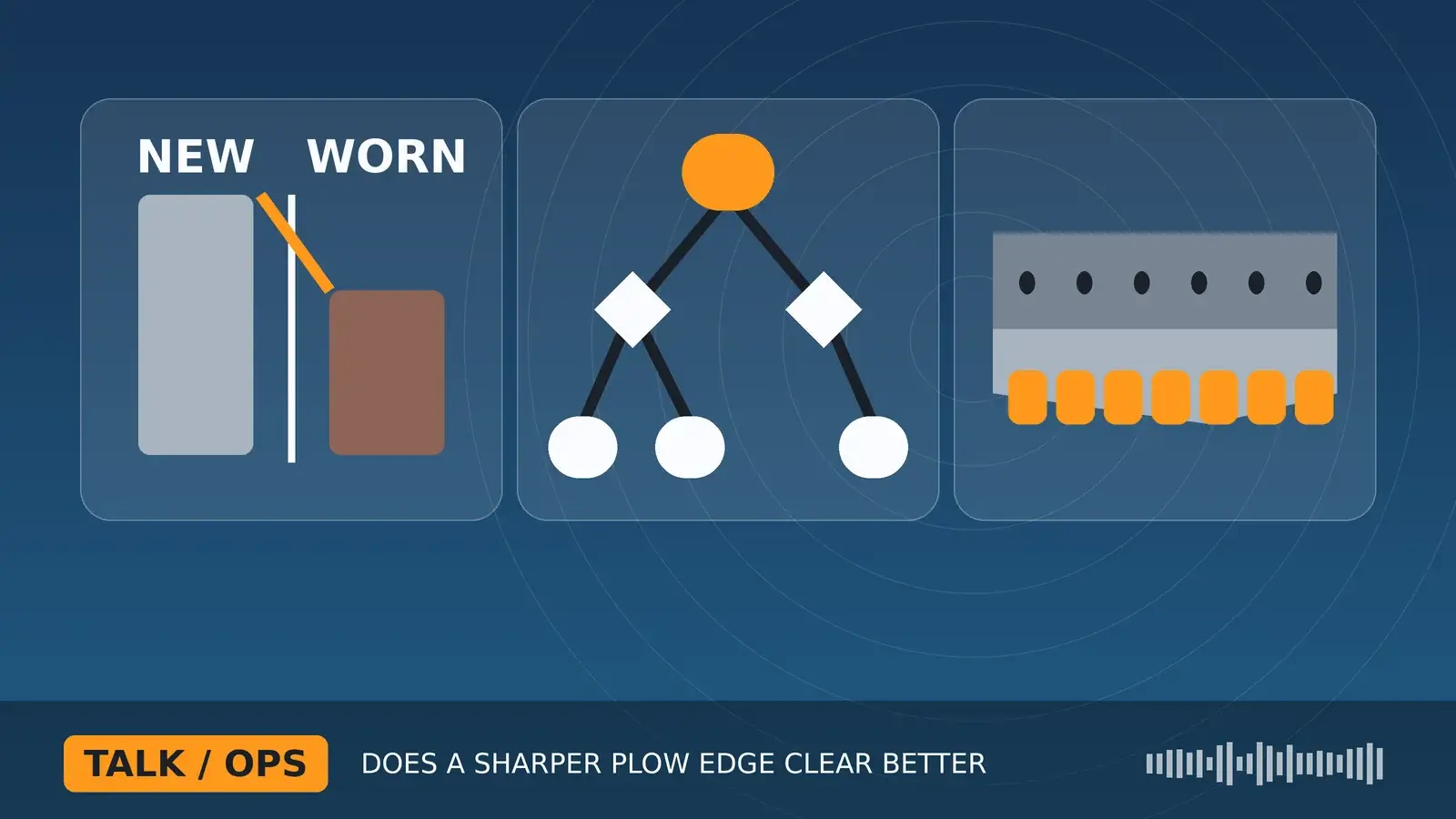
Myth or claim: a sharp edge always scrapes better than a worn one. Verdict: not always; it depends on what you mean by better, and I could not verify a published study that settles it, so I give no numbers. Below are five beliefs you will hear, what is plausible and how to test each cheaply. Sources: none cited; this is a myth-checking piece with test ideas.
Five beliefs, checked
| Belief | What is plausible | What is not known here | How to test |
|---|---|---|---|
| 1. A new edge always scrapes cleanest | A square, intact edge leaves a clean scrape line | Whether a lightly worn edge scrapes noticeably worse | Photograph the scrape line at several wear stages on the same route |
| 2. A worn edge is useless | Past a point, it leaves a layer and may chatter | Where that point is for your edge and roads | Record clearing quality scores against measured wear |
| 3. Sharper means faster wear | A thin edge may chip more easily on impacts | Whether it wears faster in steady scraping | Compare wear per hour on matched trucks |
| 4. A rounded edge rides up and skims | A rounded corner can change how the blade bites | How much, on which surfaces | Watch the scrape line and the residual layer |
| 5. Replacement should be by calendar | Simple to schedule | Whether wear really follows the calendar | Track hours and wear and compare with the calendar rule |
How to run a simple test
The test is one truck and one route, measured the same way each time.
- Pick one truck and route, and measure the edge at three points at the start.
- Photograph the scrape line after the first pass and at each step of wear.
- Score clearing quality after each event on a simple scale, such as 1 to 5, written down.
- Record hours and measure wear at set intervals.
- After a season, plot clearing score against wear and look for the point where it drops.
What to do with the result
The result is only useful if it changes a replacement rule.
- Set a replacement trigger based on your own record, not on a rule of thumb.
- Share the result with drivers, who will recognise it.
- Re-test if you change edge type or surface.
Boundary: No study is cited and no wear point is claimed; the table lists beliefs and ways to test them on your own routes.
Further reading on this site.
Performance-Based vs Prescriptive Blade Specifications: Which Holds Up Better ↗Our trial operators disagree about which blade scrapes better. How can we make the feedback usable? ↗Carbide snow plow blades ↗Reading a Published Blade Trial: Seven Questions to Ask About Method ↗Where Does the Snow Go? Pile Space, Melt Paths and Edge Wear on Gravel Storage Sites ↗Plowing Intersections and Turn Lanes: Pass Order, Windrows and Edge Strike Zones ↗


