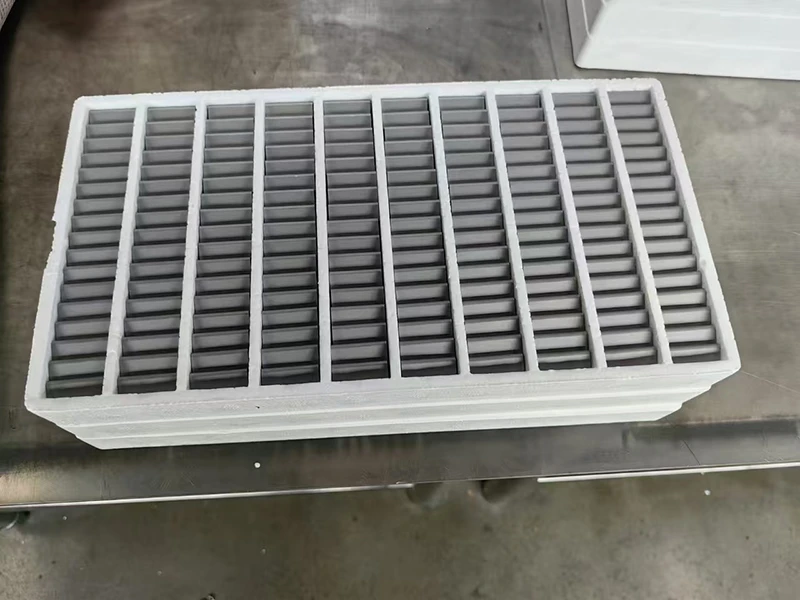
Define what the retained blade is meant to show, label it as a non-service reference, and preserve its orientation, photographs and history. Assign responsibility for access and eventual disposition. A retained damaged part is useful only if its condition and identity remain clear and it cannot be mistaken for an approved spare.
Identify what question the retained sample must answer
Write a short purpose statement: preserving a particular damaged joint, comparing a wear pattern, supporting a supplier investigation or documenting a past revision. Identify the question the physical part can answer better than photographs alone. If only some features matter, ask the responsible reviewer whether the entire blade needs to be retained before any cutting or sampling is considered.
Record the blade's part number, revision, lot, equipment identity and removal reason. Include the date and the maintainer's service disposition. If the cause of the damage was unresolved, preserve that uncertainty in the reference description. A label such as “bad batch example” would embed a conclusion that the retained evidence may never have established.
The end-of-season assessment guide covers broader disposition planning. This decision concerns a specific retained object and how to keep its evidential purpose distinct from inventory available for installation.
Preserve orientation, label, photos and safe storage condition
Photograph the blade before storage, with orientation and a position map for the features of interest. Record its condition and any cleaning, repair or examination already performed. Keep photographs of labels and markings so that the identity can be recovered if a tag is damaged. Ask the investigator for special preservation requirements when an active review is still open.
Use a safe designated location and packaging or support appropriate to the item, following the responsible facility's handling rules. Mark its restricted status in both the physical location and the relevant stock record. A handwritten note on the blade alone may be lost when someone reorganizes the area. Keep loose fragments separately identified and linked to the parent reference.
The equipment documentation remains the authority for any service decision. Retaining a blade for comparison does not restore its serviceability, and a future visual resemblance to the reference does not itself diagnose another blade.
Set access and disposition responsibilities so the reference is not accidentally reissued
Name who can authorize access, sampling, movement and final disposition. Keep a brief record when the reference is used or altered. If a laboratory takes a specimen, document its location and what remains. A future comparison needs to know whether a feature is original damage or the result of examination after removal.
Set a review point based on the investigation or business need, not indefinite storage by default. Confirm whether commercial, contractual or other requirements affect retention before disposing of the item. Historical specification research may help frame what evidence a review needs, but it does not supply a universal retention period for every fleet.
When reviewing replacement edge options, describe the retained blade as a labelled reference with a known history. Do not use it as an undamaged production master or a proof of a proposed new design. Close the retention record when its purpose ends, documenting the authorized disposition so the object cannot later reappear as unidentified stock.
Sources and further reading. The ordered specification and applicable equipment documentation control acceptance and service decisions.
Clear Roads 17-02: Standard Specifications for Plow Blades with Carbide Inserts (historical research; not a universal specification) ↗WESTERN official document library ↗


