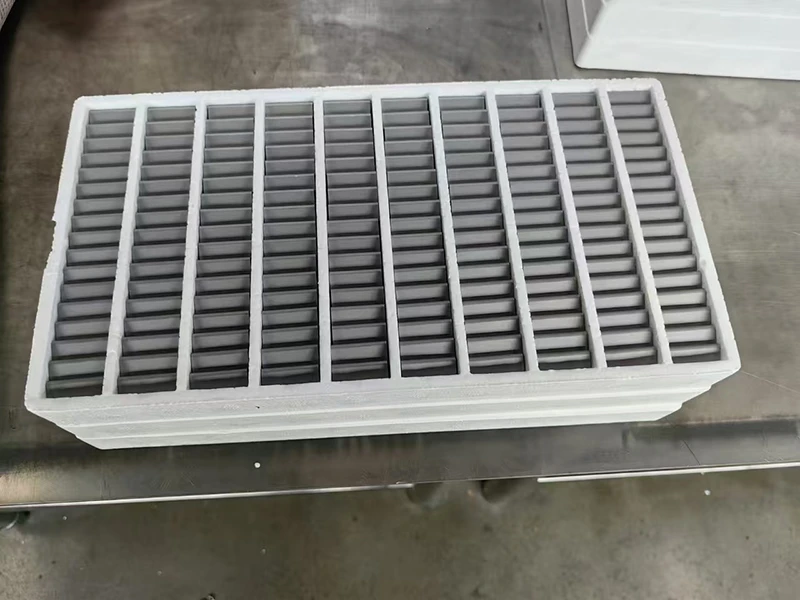
Give each blade a distinct identity, link each recovered piece to its documented origin, and keep uncertain fragments separate. Preserve photographs and a simple handling record. Similar appearance or a plausible physical fit is not enough to assign an unidentified fragment to a particular blade or incident.
Assign distinct equipment, blade and incident references
Start with the machine, attachment, blade and incident references for each case. Mark the blades on an overview photograph and give each its own container or clearly separated storage area as appropriate for safe handling. Keep the part number and lot marking in the record, but do not use a shared lot number as the only identity when two blades must remain distinct.
Record who recovered each piece, where it was found and when. If fragments were collected together before identification, document that fact. Do not retroactively create a more detailed recovery history than the collector can support. The investigation may still use the pieces, but it needs to know their actual evidential limits.
The incident-reporting guide addresses the larger evidence pack. This task is the physical and photographic link between individual pieces and the two separate assemblies, which must survive packing, transport and examination.
Keep fragments and photos linked to their original positions
Give each fragment or confirmed group a unique reference and photograph it beside its label. Keep labels off surfaces the investigator may need to examine. Show size and orientation where meaningful, without forcing pieces together or altering their edges. Obtain the receiving investigator's packaging instructions before choosing how to separate and cushion them.
Link known-origin pieces to the blade's position map. If the position is unknown but the blade is known, record exactly that intermediate level of certainty. If neither is known, use an unidentified-fragment group with its recovery details. Avoid assigning a likely location simply because the shape resembles a missing corner in a photograph.
Keep image filenames or a contents list connected to the labels. A generic folder of close-ups is difficult to interpret after the physical pieces have moved. Measurement records should carry the same identities, so a dimension or examination result cannot drift from one case into the other.
Document custody and unknown origin rather than assigning loose pieces by appearance
Maintain a short record of transfers: who handed over the material, who received it, date, package references and any discrepancy. This is a practical editorial recommendation for preserving the case, not a claim that a particular formal chain-of-custody standard applies. Ask the receiving party if its investigation requires a specific procedure.
If a label detaches or packaging opens, record the event and any resulting uncertainty. Do not silently relabel a piece based on resemblance. NIST's measurement guidance is relevant when results are later reported, but measurement traceability is not the same as proving which blade a loose piece came from. Both identities and measurement methods need appropriate records.
Keep the cases separate when enquiring about replacement carbide components, even if one replacement order covers both. Ask the investigator to preserve the case and fragment references in its report. A finding based on an unidentified fragment must remain qualified rather than being assigned to whichever blade makes the narrative simpler.
Sources and further reading. The ordered specification and applicable equipment documentation control acceptance and service decisions.
Clear Roads 17-02: Standard Specifications for Plow Blades with Carbide Inserts (historical research; not a universal specification) ↗NIST Metrological Traceability: FAQ and Policy ↗


