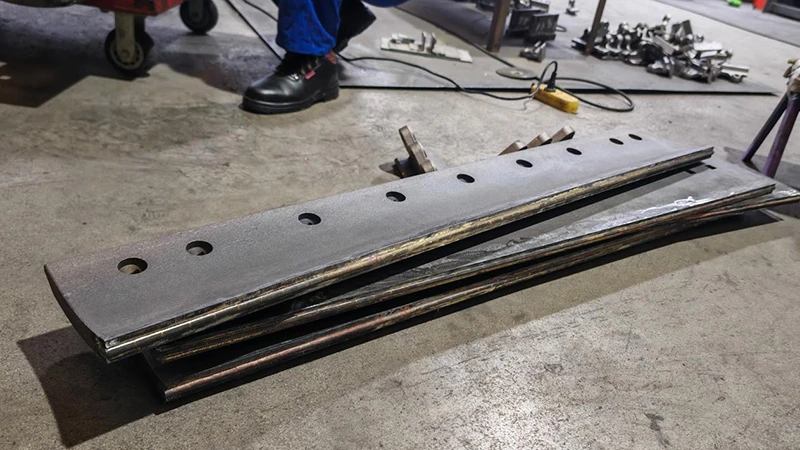
Keep the required service outcome fixed and count the documented effort needed to achieve it. Longer observed blade life is only one result. If additional cleanup is needed, record the associated work and costs without assuming every extra pass was caused by the edge. Compare the whole task at an equivalent acceptable outcome before recommending broader use.
Keep the required service outcome fixed in the comparison
Restate the service requirement used in the trial and check whether both options met it under the recorded conditions. Define what crews mean by cleanup: residual material, a missed area, a follow-on machine or another specific task. A general complaint that one blade scrapes worse is not yet a comparable measure. Keep route, weather, treatment and configuration context attached to each observation so the report can distinguish recurring patterns from isolated events.
Use the whole-life cost discussion as a cost framework, while keeping this decision focused on the extra work needed to complete the same service. If the trial originally measured only wear, record the cleanup issue as an added outcome with a clear review date. Do not rewrite earlier observations as if the new measure had been collected consistently from the start. Preserve both the established wear findings and the limits of the new evidence.
Record additional passes, labor and equipment time attributable to cleanup
Record additional passes, personnel time and equipment use through ordinary job or operational records where available. Distinguish work that can reasonably be linked to the observed finish from unrelated treatment, route changes or later weather events. Where attribution is uncertain, retain the uncertainty instead of assigning all additional activity to the candidate blade. A documented task description is more useful than a universal penalty added to every trial hour.
Use consistent cost boundaries for both options. If cleanup effort is included for the candidate, look for the equivalent records for the baseline rather than assuming its finish required no additional work. Avoid counting the same crew time once as cleanup labor and again as a separate full downtime charge without explaining the method. Include required components and actual changeovers where relevant, but keep speculative future maintenance savings separate from observed spending.
Compare whole-task costs without letting wear life hide a poorer finish
Present wear, service outcome and whole-task cost side by side. If the candidate's longer retention is established but finish quality remains uncertain, say so. A trial can show a useful durability observation without establishing overall value. Where the required outcome is not met, the responsible operational and technical owners should decide the appropriate action under normal procedures; the cost model should not treat a missed service requirement as an acceptable saving.
For a blade application review, provide the specific cleanup observations and configuration rather than only the longer replacement interval. Ask what further approved evaluation would address the finish concern. Continue or narrow the trial only where operationally appropriate, with the added measure defined prospectively. The decision is ready when the team can explain what work each option needed to deliver the required result, what that work cost and which attribution limits remain. Avoid declaring the blade economical solely because it stayed on the machine longer.
Further reading. Clear Roads evaluation ↗



