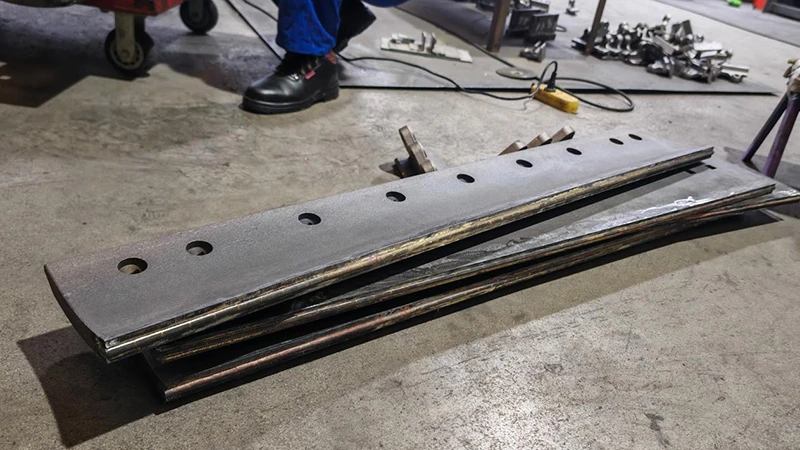
Record the starting condition and approved usable geometry for both designs, then separate observed material loss from the amount available before replacement. A longer service interval may reflect a different starting allowance as well as performance under the duty. Do not attribute the whole result to carbide grade when the designs or initial conditions differ.
Measure and record both initial conditions using the same method
Identify the exact designs, drawing revisions and whether each blade is new or previously used. Have the qualified owner establish the relevant measurement references and replacement criteria from the applicable requirements. Do not assume the full visible height is usable or apply one design's limit to another. Record where measurements were taken and what feature they represent so later observations can be compared meaningfully.
Use the wear-measurement discussion as background for consistent records, while keeping this trial focused on the starting difference. Measure through the agreed method and retain any uncertainty or inaccessible locations. A single nominal catalogue dimension may not describe the actual starting condition of every section. If installation or design makes the measurement reference different, explain that rather than forcing unequal features into identically named spreadsheet columns.
Distinguish material loss rate from total available wear volume
Report the initial allowance and the subsequent observed change as separate quantities. A design that begins with more usable material can remain in service longer even when a simple local loss measure appears similar. Conversely, a local height reading may not represent total material loss across a different geometry. Avoid claiming a volume-normalized comparison unless the geometry and measurement method actually support it. Keep the metric within what was measured.
Document service exposure, finish and configuration changes alongside the measurements. Different starting allowances are one comparison issue, not the only possible source of difference. If the trial changes both design and material, describe it as an evaluation of the identified configurations unless a stronger attribution is justified. This lets the fleet assess the product package honestly without pretending the study isolated a single material property that it did not hold separate.
Report design and starting-condition effects instead of attributing all life difference to carbide grade
Present observed replacement intervals and material-loss measures together, with their definitions. The fleet may legitimately prefer a configuration that delivers a useful service interval, but the explanation should distinguish that application result from a claim about intrinsic material superiority. Where one blade has not reached its replacement condition, keep final life unresolved instead of estimating the endpoint from the remaining height alone.
For a blade design comparison, provide the starting dimensions, approved limits and measurement locations as well as the observed service. Ask what additional evidence would be needed if the decision specifically concerns grade rather than the complete design. Close the review with a comparison that acknowledges starting allowance and uses consistent measurements where possible. Do not discard the trial simply because the designs differ; qualify what it establishes. The strongest supported result may concern whole-configuration suitability and cost, while a material-only ranking remains outside the evidence.
NIST links measurement traceability to documented calibration and uncertainty. NIST Metrological Traceability: FAQ and Policy ↗



