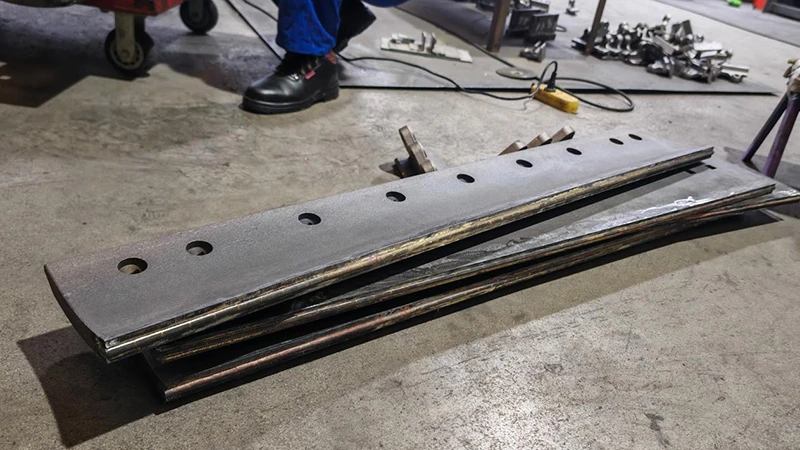
Choose a documented assignment plan that fits safe normal operations and the question being tested. Operator practice is a possible comparison variable, but using the same person does not remove every other difference. Record assignments, relevant training and changes, then interpret the results within that design instead of claiming that one staffing arrangement guarantees a fair test.
Identify operator practice as a possible comparison variable
Identify what the trial is intended to establish: performance under ordinary fleet practice, a comparison within a defined duty or another specific decision. List the practical constraints, including equipment qualification, shift arrangements and route coverage. Do not change assignments outside the fleet's normal authorization or training requirements merely to balance the study. The trial should observe a supported operating arrangement, not create an artificial setup that the fleet cannot safely sustain.
The operator-reporting discussion provides broader context for collecting useful observations. For this design choice, document how operator assignment could affect interpretation and which other variables remain uncontrolled. The same operator may encounter different routes or storm conditions on different days, while separate crews may bring different experience to similar duties. Acknowledge those possibilities without making unsupported judgments about individual skill or treating the study as a staff-performance ranking.
Choose a practical documented assignment plan compatible with normal operations
Agree the assignment approach before seeing the results where practical. It may preserve ordinary crews, use a qualified operator across approved configurations, or employ another feasible plan chosen by the responsible team. State why the arrangement suits the decision and what limitations remain. Avoid changing the plan mid-trial simply because one option appears to be losing. If operational needs require a change, record the reason and timing openly.
Provide consistent information about the trial's service criteria and observation process, while leaving model-specific operation to the applicable instructions and qualified training. Record whether crews had comparable familiarization with the configurations. Do not invent universal operating settings to force uniformity. Keep operator identifiers limited to what is needed for the legitimate evaluation and handle records under the fleet's privacy and labor arrangements, especially when vehicle logs could reveal individual working patterns.
Record training and changes without claiming one arrangement removes every bias
At analysis, connect each observation to the actual assignment and relevant conditions. Look for findings that depend heavily on one operator or one period, but do not interpret that dependence as proof of causation. Preserve individual observations and the reasons for reassignment. If the sample is too limited to separate operator and blade effects, state that the trial evaluates the observed combination rather than a universally transferable product result.
For a blade trial enquiry, describe the available equipment and assignment constraints so the evaluation can address a realistic fleet decision. Decide which additional observation would reduce a consequential uncertainty without disrupting service. The plan is adequate when assignments are authorized, the comparison question is clear and later readers can see how personnel changes were handled. Fairness comes from a transparent, usable design and honest interpretation, not from assuming one operator arrangement eliminates every source of variation.
Further reading. Clear Roads evaluation ↗



