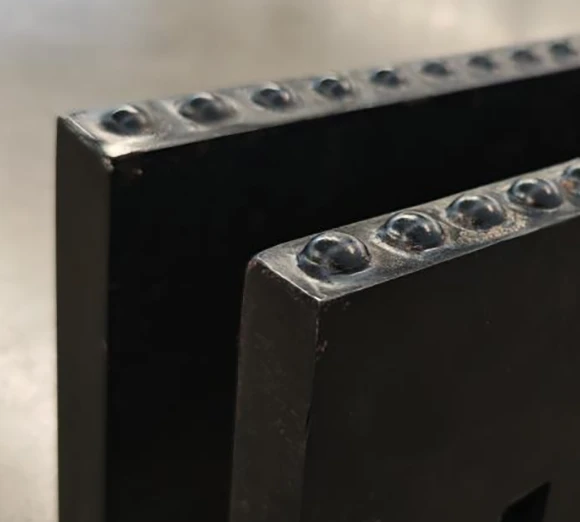
Recheck the scope rather than carrying the finished-blade approval over unchanged. Loose inserts leave assembly work and final verification unfinished. Define what the supplier will deliver, who is qualified to complete the remaining process and who owns the finished assembly’s acceptance before comparing price or releasing the revised order.
Redefine the supplied product and unfinished assembly steps
Describe the supplied inserts precisely: geometry, material designation, surface or supplied condition, identification and packaging requirements. Remove finished-blade features from the supplier’s deliverable only where the revised agreement actually changes them. Identify the carrier or mating component as a separate responsibility.
The OEM and private-label scope guide explains broader manufacturing arrangements. This case is a product-scope change from an assembly to components, not simply a discount for less labour. The original approval may still contain useful evidence, but it should not imply that unperformed joining or assembly inspection has already been accepted.
Assign joining qualification, inspection and final release responsibilities
Assign responsibility for joining qualification, process control, handling and final inspection to the appropriate qualified organizations. Ask what technical information and verification each party needs. Do not provide a generic brazing cycle, repair instruction or assumption that a local workshop can reproduce the original finished assembly.
Have the technical reviewer assess whether the proposed component supply condition suits the intended qualified process. Relevant requirements should be defined before shipment so the receiving team does not discover that further preparation or a different insert condition was assumed by the assembler.
Clarify how material and component lot identities will remain linked to the finished blade. If several organizations contribute to the assembly, specify who retains the relevant records and how a later concern will be investigated. A loose-insert certificate should not be presented as a certificate for the completed blade’s joint or overall performance.
Update acceptance evidence and pricing scope rather than reusing a finished-blade approval
Issue a revised supply and responsibility schedule covering the inserts, remaining manufacturing stages, inspection evidence and final release authority. Update pricing and delivery milestones to match the new scope. Compare a component price with another component offer, or show the separately verified assembly work needed for a finished-blade comparison.
For the snow-plow component enquiry, make the revised order state what the supplier does and does not deliver. Retain the earlier finished-blade approval as background with its limitations, and obtain any new component or assembly approvals required by the changed route.
Close the change when each unfinished stage has a responsible qualified owner and the evidence needed for release is agreed. The buyer should know what arrives at the dock and what must still happen before it becomes an accepted usable assembly. Without that distinction, a lower purchase price can conceal an unassigned technical obligation.
CERATIZIT describes material and joint-stress considerations in carbide joining. CERATIZIT Joining Techniques ↗