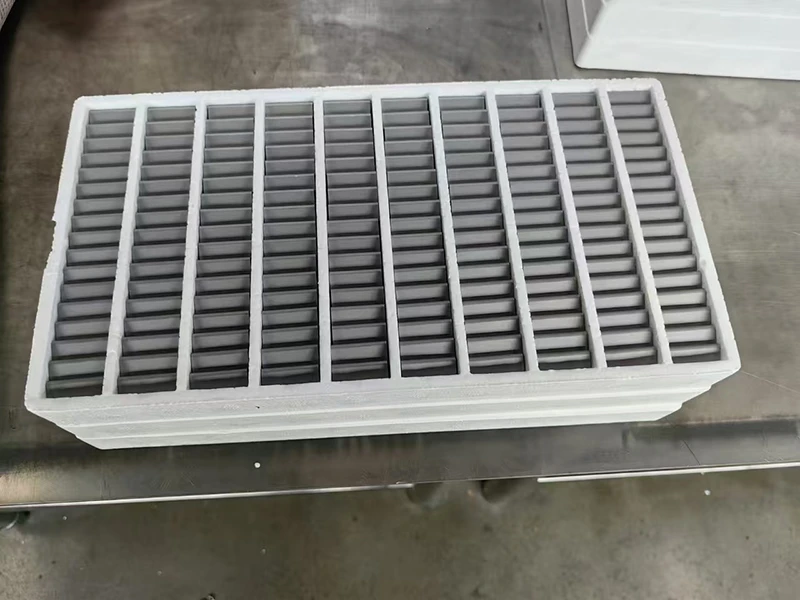
Locate the strip against the actual segment and joint layout, then have qualified personnel inspect the fitted assembly using its approved instructions. Compare repeat observations under similar conditions. A residual strip is a clearing symptom; it cannot identify carbide grade, fitment or movement as the cause on its own.
Map the strip to the exact segment and joint position
Record whether the strip appears behind a segment centre, near a joint, at an end or at a location that changes between passes. Photograph the cleared surface from a safe position and label the direction of travel. Include the observation time and the point on the route so that a later photograph of the blade can be connected to the same event.
Use an installed-layout sketch rather than a catalogue illustration. Segment order, orientation and any replacement history should be visible. If the driver cannot reliably map the strip to a particular piece, keep that uncertainty in the report. It is better to investigate two candidate positions than to mark one confidently from an oblique photograph.
The broader failure-mode guide covers many symptoms. Here the decision is whether a repeatable location exists that warrants a targeted inspection, rather than a fleet-wide change of edge material.
Inspect documented fit, visible damage and approved movement through qualified personnel
Give the maintainer the attachment identification, installed component references and current assembly documentation. Ask for an inspection of the relevant segment, its neighbours and the shared interfaces. Record visible damage, trapped material and discrepancies from the approved arrangement without instructing the operator to force movement or experiment with settings.
Model-specific instructions should determine access, isolation and permitted checks. The official equipment document library illustrates why a generic adjustment recipe is insufficient: the correct document must match the equipment. If the assembly differs from the available parts diagram, resolve the identity problem before treating the diagram as an installation instruction.
Keep the inspection report factual. “A visible gap was photographed at the joint” is a useful observation. “That gap caused the strip” requires a further connection between the assembly condition and the clearing result. Photograph before authorized maintenance where safe, and record what was changed.
Repeat observations under comparable conditions without prescribing adjustment
A second observation is useful only if its conditions are described. Note snow condition, pavement condition, route section, travel direction and available working-exposure information. A strip seen in bonded material on one pass and absent in loose snow on another does not isolate an assembly fault. Clear Roads' field-evaluation work is relevant background for designing comparable observations, rather than a universal operating prescription.
If an approved maintenance intervention is made, record the exact intervention and the next comparable clearing observation. Do not make several discretionary changes solely to produce a clean pass and then assign the improvement to one of them. Safety-related work must proceed when required, but its effect on the comparison should remain visible.
Provide the layout and inspection findings when asking about a replacement edge or segment. The useful outcome is a documented decision: restore an identified assembly requirement, collect better comparison evidence, or review a proposed component change. A change of grade should not be the default answer to an unmapped strip.
Sources and further reading. The ordered specification and applicable equipment documentation control acceptance and service decisions.
WESTERN official document library ↗Clear Roads High Performance Blade Evaluation ↗


