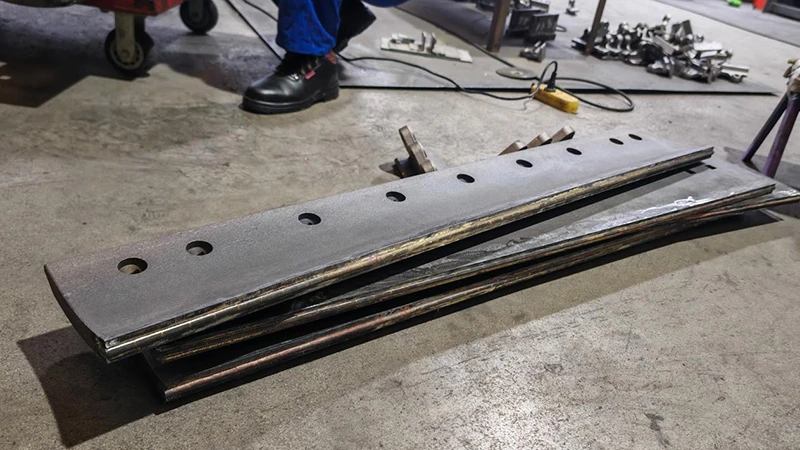
Report the observed reduction under the combined arrangement, but do not credit the blade alone from this comparison. The treatment schedule changed at the same time, so the trial does not isolate the edge's contribution. Preserve the useful operational result and its service context, then decide whether a blade-only claim matters enough to justify a more controlled evaluation.
List the simultaneous changes and measured service outcome
Create a timeline of the blade introduction, treatment-schedule change and any other relevant operational changes. Record the actual periods, routes, equipment and service requirements represented in the data. Confirm what the material-use figures measure and whether reporting methods remained consistent. A fall in recorded use is an observation to validate, not yet an explanation of why it occurred. Keep missing logs or changes in measurement visible.
The winter-maintenance technology discussion offers broader payback context; this question is specifically about interpreting an already-run trial with simultaneous changes. Retrieve the documented schedule change and the operational rationale without proposing a new treatment prescription. The responsible agency procedures and safety requirements continue to govern treatment decisions. Do not reverse or delay an approved practice merely to create a cleaner comparison without the appropriate operational authorization.
Separate package-level observations from isolated blade effects
Describe the result at the scope actually observed: the identified blade and treatment arrangement, during the recorded duty, used the documented quantity while achieving the stated service outcome. Include the evidence supporting that outcome and any differences from the baseline period. Weather, route demand or other changes may still limit even a package-level comparison, so avoid assuming that two simultaneous changes are the only possible explanation.
Keep material use, clearing outcome, blade condition and operating effort as distinct findings. A lower salt total is not automatically a whole-task saving if other resources or service consequences changed. Use consistent accounting boundaries and identify what was actually measured. Do not allocate a convenient share of the reduction to the blade and the remainder to scheduling without evidence. An arbitrary split would make the attribution appear more precise while leaving the original confounding unresolved.
Report the attribution limit and plan a controlled evaluation if the edge-only claim matters
State the attribution limit plainly in the report and any purchasing summary. The trial can support further interest in the combined operating arrangement without establishing that the same blade would reduce material use under the previous schedule. Preserve the original data and analysis choices so a later evaluation can build on them. Do not relabel a combined result as a blade property when presenting it to another depot with different practices.
For a blade evaluation enquiry, explain the simultaneous change and the exact decision still open. If an isolated edge effect is important, have the responsible technical and operational team plan an authorized comparison with suitable controls and a defined service outcome. If the fleet only needs to evaluate the combined arrangement, say that explicitly and assess its transfer limits. Close the current trial with a supported package-level observation and an unresolved blade-only attribution, rather than forcing a causal claim the design cannot establish.
FHWA's archived 1996 guidance treats treatment timing and conditions as operational context; it is not a current prescription for this trial. FHWA Manual of Practice for an Effective Anti-Icing Program, recommended practices ↗



