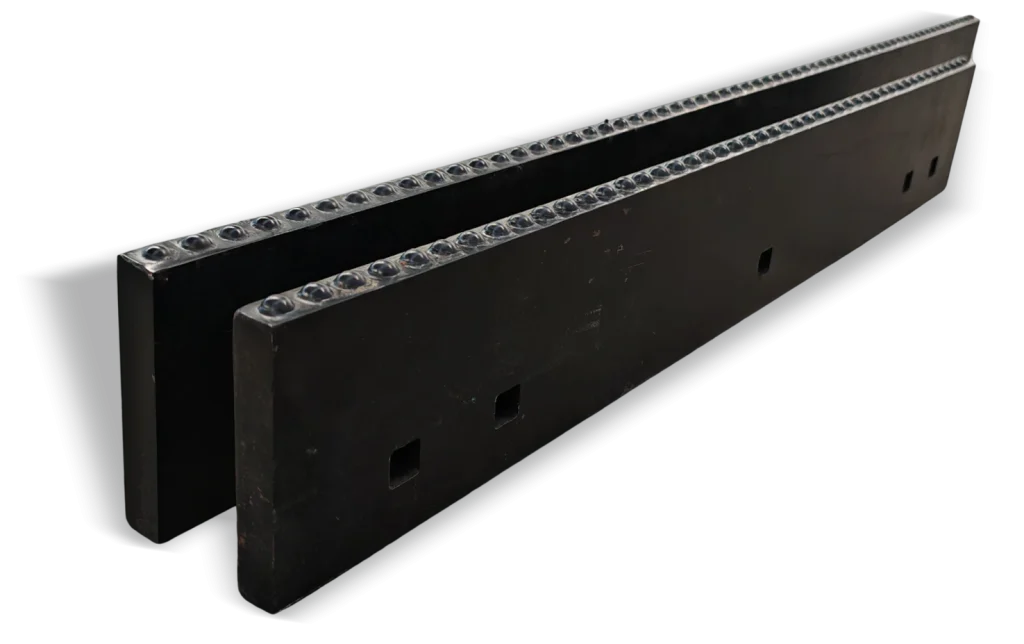
Collect a location-specific record of the remaining layer, the current edge and machine setup, and what happened during clearing. Poor removal alone does not identify the cause. The information should help the responsible technician distinguish an unsuitable contact geometry from a setup, condition or operating-sequence problem before recommending a different edge.
Record the road and packed-ice conditions
Record where material remains and whether it is continuous, isolated or concentrated in wheel tracks. Note when the area was last cleared, traffic since the snowfall, any treatment already applied, and available weather or pavement-temperature observations. Include the surface type and known vulnerable features. “The road is still white” is too broad: photographs of the same marked section before and after a pass provide a more useful description of what changed. The Minnesota Snow and Ice Control Field Handbook distinguishes pavement temperature from air temperature and recommends tracking storm conditions, treatment use and observations. Label the temperature type and source in your record.
Document the installed edge and machine setup
Identify the machine, attachment and installed edge, including its part number or drawing reference if available. Have a qualified person inspect condition and record the relevant setup according to the equipment instructions. Include shoe position, edge contact and any available angle or loading information; distinguish measured values from estimates. Never infer contact load directly from a cab control setting unless the equipment documentation supports that interpretation.
Describe whether the edge appears to ride over the layer, leave strips, bounce or lose contact. Record operating speed where available and the number and direction of passes. SENTHAI’s packed-ice guide discusses contact geometry and setup together, which makes this context important. Send the record with the question you need answered: whether the existing configuration needs review or whether a different edge system should be considered.
Build comparable evidence for the next decision
Keep the record tied to a specific event rather than combining observations from different storms into one apparent sequence. A photograph taken after traffic has passed is not directly comparable with one taken immediately behind the plow. Note that difference. If the condition cannot be measured safely, describe what is visible and mark the missing value as unknown. An honest gap is more useful than a number estimated without a reliable basis.
| Field | How to record | Why it matters |
|---|---|---|
| Location and time | Identify the route section, observation time, surface type and required clearing outcome. | Keeps the record tied to one place and event. |
| Remaining layer | Describe continuous ice, isolated patches or wheel tracks; photograph safely. | Shows the pattern that the reviewer needs to assess. |
| Weather and temperature | Record available weather observations; label air or pavement temperature, time and source. | Keeps different temperature readings distinguishable. |
| Clearing, traffic and treatment | Note the last clearing, intervening traffic and any treatment already applied. | Makes the sequence behind the remaining layer visible. |
| Machine and edge identity | List the attachment, edge part or drawing reference and observed condition. | Connects the evidence to the configuration being reviewed. |
| Setup and contact | Record verified shoe, angle and contact information; distinguish settings, measurements and unknowns. | Avoids treating a control setting as a measured edge load. |
| Passes and behaviour | Record available speed, pass count and direction; note strips, bouncing or lost contact. | Describes what happened during clearing without assigning a cause. |
| Comparable photos and concerns | Match before-and-after views; note intervening traffic, unusual vibration, damage or loose components and action taken under the equipment procedure. | Helps the reviewer compare the outcome and identify safety limitations. |
It also helps to state the boundary of the requested advice. Ask whether the evidence is sufficient to assess edge suitability, what further observation is needed and who should review any proposed setup change. Avoid presenting a preferred purchase as the conclusion before those questions are answered. The purpose of the pack is to support a diagnosis and a controlled next step, not to prove that a particular product must be installed.
Collect observations from a safe position; do not ask an operator to photograph or measure while driving. If damage or abnormal behaviour suggests unsafe operation, follow the equipment’s stop-and-inspect procedure. More down-pressure, a sharper contact pattern or another pass is not a universal remedy and should not be prescribed from a photograph alone.
Sources and further reading. This is an editorial information checklist, not a setup procedure or a promise of bare-pavement performance. Approved operating limits, surface restrictions and local winter-maintenance procedures take precedence. A specific recommendation requires review of the actual machine and conditions.
Packed ice edge guide ↗Packed ice carbide kit ↗Snow plow blade selection guide ↗Minnesota Snow and Ice Control Field Handbook: pavement temperature and event records (pp. 1, 13; Appendix A-4–A-5) ↗


