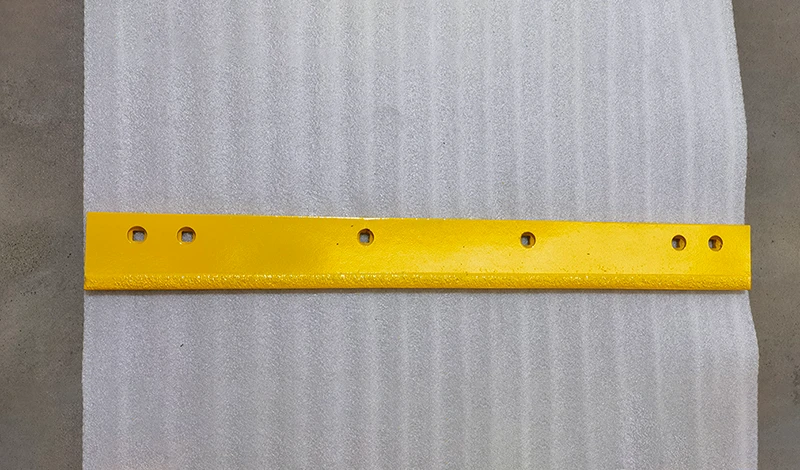
Ask the supplier to define the claimed saving, its comparison basis and the service outcome held constant. Require evidence relevant to the proposed route and identify other process changes before treating an edge-only saving as credible.
Define the claimed saving and the service outcome held constant
Request the exact claim in measurable terms. Does it concern total seasonal material, application per unit of work, fewer treatments or another outcome? Ask which product, assembly and baseline it refers to, and whether the figure is a measured result, an estimate or an illustrative scenario. A percentage without its denominator is not a usable purchasing assumption.
The winter-maintenance payback guide covers the broader investment question. This discussion is a pre-purchase substantiation check for a supplier’s marketing claim. It is not an attempt to attribute a saving already observed in the buyer’s trial. Keep the proposed benefit outside the confirmed business case until its scope and evidence can be assessed.
Separate edge contribution from weather, treatment timing and operator practice
Ask what remained comparable in the supporting study or service record: required road condition, weather context, route work and treatment approach. Identify whether the edge was introduced with other equipment, changed scheduling or different operator practice. FHWA’s historical guidance discusses treatment in relation to conditions; it does not establish a chemical-saving amount for a particular blade.
Request enough information to distinguish a complete maintenance-package result from a claim about the edge alone. If the supplier’s evidence involves several changes, it may still describe a useful proposal, but the claim should say so. Do not let a package-level outcome be relabelled as a guaranteed component saving for a different fleet.
Request controlled route evidence and avoid promising a salt reduction from the edge alone
Ask for the underlying comparison method, relevant route description and limitations, rather than only a testimonial or a chart with no context. Clear Roads’ evaluation resources provide a comparison framework, not proof of this advertised benefit. Check whether the evidence addresses the buyer’s intended service and whether costs or extra passes were omitted from the claimed saving.
For a carbide blade enquiry, request a qualified statement of the benefit the supplier can support and the conditions attached to it. If evidence is weak, treat the saving as an unverified hypothesis and consider an authorized future evaluation separately. Do not change the agency’s treatment plan to meet a supplier’s promised reduction. The immediate deliverable is a claim dossier with a clear supported scope, evidence gaps and assumptions for purchasing, not a guaranteed salt-reduction target.
Primary references support the specific points linked above; equipment documentation applies to its stated models.
Clear Roads High Performance Blade Evaluation ↗FHWA Manual of Practice for an Effective Anti-Icing Program, recommended practices ↗


