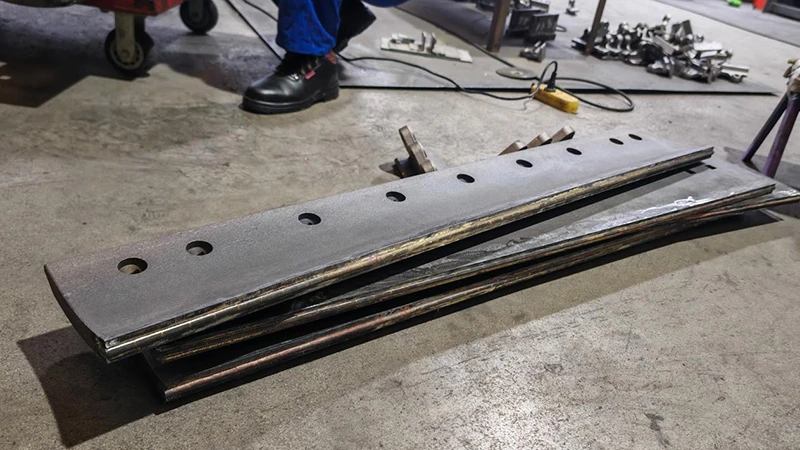
Use the photos as supporting material, not as a complete qualification for your fleet. Establish what product, conditions and service interval they actually document, then ask for the comparison evidence relevant to your application. An image can show visible condition at a moment; it cannot alone establish complete service history, cost or suitability across your fleet.
Identify what conditions and time period the photos actually document
Ask for the blade reference and configuration, the date or stage represented, and a clear explanation of what the supplier intends the images to demonstrate. Distinguish representative product photography from a documented field observation. If the images come from another fleet, request appropriately shareable context without assuming the supplier can disclose customer details. Do not present an unidentified photograph as a verified event simply because it arrived with a performance claim.
Review framing and coverage. Is the whole relevant section visible, or only a selected area? Are starting condition and subsequent observations available? The supplier-qualification discussion covers the broader evidence request; this question concerns how far the photographs themselves can support a decision. Keep their limits explicit. A clean-looking edge does not identify every hidden interface, establish a measured remaining dimension or demonstrate the acceptable finish produced on the route.
Request comparable baseline, exposure and product identity
Request the recorded working exposure, removal or inspection dates, service requirement and important configuration changes. Ask for the baseline used in any comparison and whether it was observed under a sufficiently comparable duty. A phrase such as after one season is incomplete without the work that season involved. If no baseline exists, the photographs may document the candidate's condition without establishing an advantage over the product currently used by your fleet.
Keep images connected to the underlying records rather than copying them into a presentation without their qualifications. If measurements are offered, ask how and where they were made and what product they identify. Separate supplier interpretation from directly documented facts. Where evidence is missing, record the gap and decide whether it matters to the proposed purchase. Do not fill the gap by borrowing performance expectations from a similar-looking product or an unrelated reference case.
Use photos as supporting evidence and qualify the fleet's own application before a broad change
Compare the documented application with your fleet's equipment, routes and required outcomes. Identify where the evidence transfers only as a reason to investigate, not as a qualification. A targeted local evaluation may be appropriate for unresolved fit, service or cost questions, with approval and safety controls suited to the equipment. The scale of a proposed change should reflect the strength and relevance of the evidence rather than the visual impact of the photographs.
For a blade trial enquiry, state which claim the images raised and what your fleet still needs to establish. Preserve the supplier material as background and define the decision criteria for any further evaluation. Close the review with a clear evidence classification: documented condition observation, supported comparison or unverified promotional example. Fleet-wide adoption should follow the approved technical and purchasing process, with the photographs playing only the role their documented context supports.
Further reading. Clear Roads evaluation ↗



