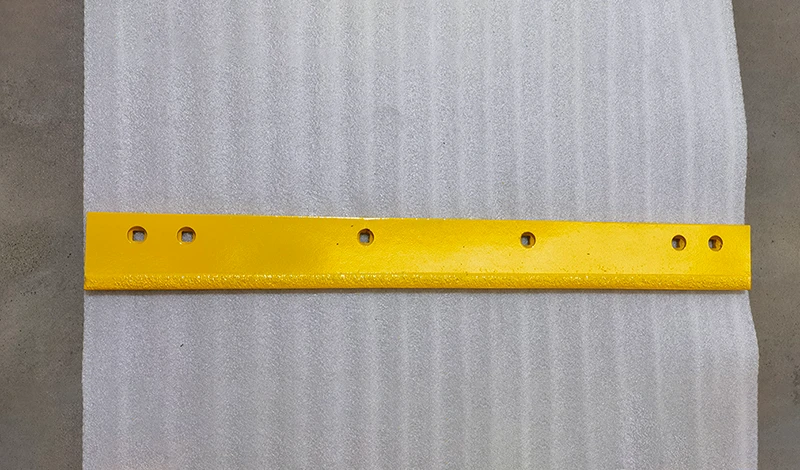
Do not assume thickness addresses the cause. First document the concentrated contact and have alignment, surface contour and approved setup reviewed. Any thicker section also needs a complete fitment and equipment assessment before ordering.
Record where contact and wear are concentrated
Map the wear across the blade using consistent positions and references. Record whether the narrow strip is near an end, centre or another repeatable location, and whether the pattern changes between routes. Keep the observation distinct from a diagnosis. Uneven wear may justify a system review, but a photograph alone should not be used to declare a specific setup fault.
The blade wear measurement guide provides the wider inspection framework. Here the decision is whether additional thickness is a justified remedy for concentrated contact. WESTERN’s edge guide identifies contact pressure and uneven surfaces as wear factors. That supports examining the contact condition; it does not prescribe a thicker SENTHAI part for this machine.
Review alignment, surface contour and approved setup before changing thickness
Have qualified personnel review the attachment condition, alignment and setup against the equipment instructions. Include the actual route contour and any repeated operating context in the enquiry. Do not use extra downforce, altered speed or improvised adjustments as diagnostic experiments. If the existing edge is at its applicable replacement limit or the assembly has a safety concern, follow the equipment’s service requirements before pursuing a comparison.
Ask what evidence would distinguish a section-size problem from a contact-distribution problem. A supplier should explain the basis for recommending thickness rather than simply offering more material. Where the cause remains unresolved, a larger section may change the symptom without answering why only a small part of the edge is doing the observed work.
Assess the full fit and load implications of a proposed thicker section
Review a proposed thicker section through a revised drawing. Check its mounting land, hardware arrangement, working position and surrounding interfaces with the responsible equipment authority. Do not assume added thickness leaves the installation unchanged or use longer bolts without an approved fastening specification. Keep the proposed change separate from any necessary repair or setup correction.
For a carbide blade quotation, send the wear map and ask for a bounded recommendation with its assumptions. If an approved alternative is evaluated, compare the same positions and service exposure rather than only total material remaining. A useful result establishes whether the concentrated wear is reduced, whether clearing remains acceptable and whether the complete assembly is suitable. Thickness is a design variable to justify, not a universal cure for an unexplained narrow contact strip.
Primary references support the specific points linked above; equipment documentation applies to its stated models.


