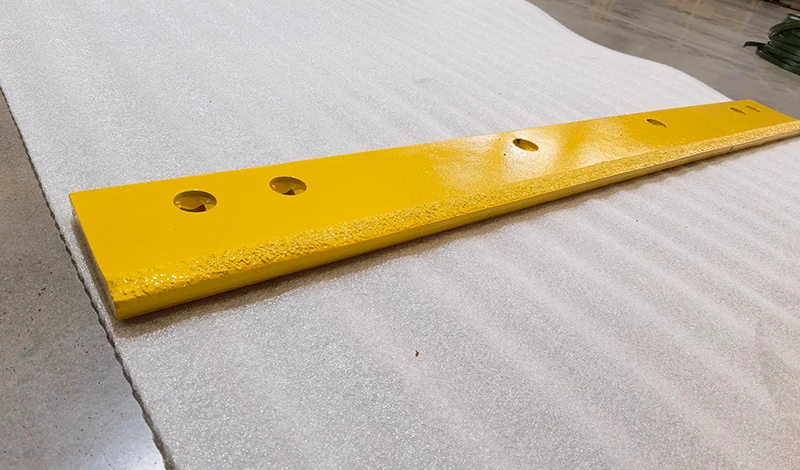
Treat the shorter segment as a design change. Review its holes, neighbouring segment, curb protection and insert-end arrangement in the assembly. Similar overall coverage does not establish that the changed end interface is acceptable.
Map the changed end to adjacent segment, curb protection and mounting holes
Ask for a marked before-and-after drawing identifying the exact end being shortened. Show the installed position and whether material is removed beside a joint, a guard or a free end. Keep the original dimensions visible in the comparison. ‘Slightly shorter’ is not enough information for a fitment or purchasing decision.
The segment fitment guide covers the broader replacement review. This proposal specifically changes where the segment ends relative to surrounding parts. Compare the distance from the affected end to its nearest hole and the relationship to the neighbouring working edge. Do not approve the change merely because the remaining holes still line up.
Ask for the revised assembly view and insert-end geometry
Require an assembly view containing the adjacent segment, mounting member and end protection. Ask the supplier to show whether the proposed insert arrangement also changes near the new end. A shortened steel body and a revised insert termination are not necessarily the same alteration. Any additional change should be identified rather than bundled into a single revised length.
The FISHER HC accessory list illustrates that some replacement configurations depend on companion curb-guard parts. That example does not establish requirements for another plow, but it reinforces why the complete assembly belongs in this review. Check the actual equipment’s approved configuration, including any companion parts the supplier assumes will remain in place.
Approve only the documented design change, with no assumed equivalence from total length
Have the equipment authority or responsible engineer assess the proposed interface and record a disposition against the revised drawing. The supplier may offer the change, but manufacturing convenience does not establish its suitability for the machine. If evidence is incomplete, retain the original specification or keep the deviation open; do not let the proposal become the default through an informal email acceptance.
For a carbide blade order, state whether the quotation covers the original segment or the approved shortened variant. If the change is accepted, preserve its revision and applicability in the replacement record so it is not later substituted across other assemblies. Receiving inspection should check the changed end features specifically. The decision is complete only when the assembly consequence and the purchased configuration are both clear, rather than when the nominal total width seems close enough.
Primary references support the specific points linked above; equipment documentation applies to its stated models.


