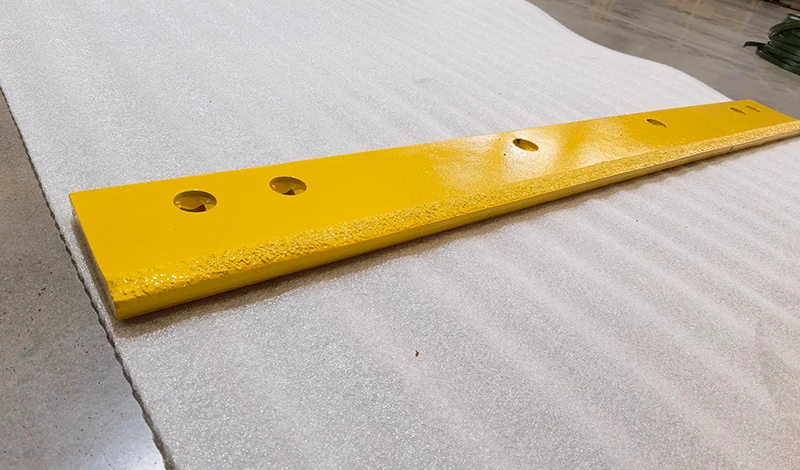
No. Treat the continuous blade as a proposed conversion until the equipment authority approves it. Overall width alone does not preserve the functions, joints and installation constraints of a two-piece assembly.
Explain that overall width alone does not preserve the assembly design
Identify why the current assembly has two sections before evaluating a replacement. Show the centre interface, each mounting region and any separate movement or trip arrangement in the approved equipment design. Do not assume the split exists only for shipping convenience. If its purpose is unclear, that is an engineering question to resolve before requesting an interchangeable part.
The blade profile and assembly geometry guide provides the wider context. This enquiry is narrower than selecting a blade length: it changes how the edge spans the assembly. Compare the proposed continuous part with the actual installed positions, not with the two removed sections laid end to end on a floor.
Review articulation, trip sections, centre interfaces and installation constraints
Use the applicable equipment documentation to identify the assembly and its permitted components. Ask the responsible reviewer whether a continuous member would cross a joint or independent section that must remain free to function. Review centre geometry, mounting pattern and any adjacent components together. Do not infer permissible movement or clearances from photographs.
Also consider the installation and handling route as a review item. A single longer component may require a different approved handling arrangement or access than two sections. The buyer should ask how the proposed part will be installed and serviced without prescribing an improvised lifting method. This is part of evaluating the conversion, not proof that the alternative is unsuitable in every case.
Ask the OEM or responsible engineer to approve a conversion before quoting it as interchangeable
Request a conversion proposal with an assembly drawing, identified differences and the approval authority. A supplier quote should label the part as proposed rather than interchangeable until the review is complete. If the equipment manufacturer does not permit the change, retain the approved segmented arrangement instead of trying to establish approval through a successful bolt-up alone.
When discussing carbide blade options, keep the original two-piece specification available for comparison and procurement continuity. If a conversion is authorized, give it a controlled identifier and restrict its use to the reviewed configuration. Record the installation and inspection requirements supplied by the responsible authority. The final decision should explain why the complete assembly remains acceptable; matching overall width and holes is only a small part of that decision.
Primary references support the specific points linked above; equipment documentation applies to its stated models.


