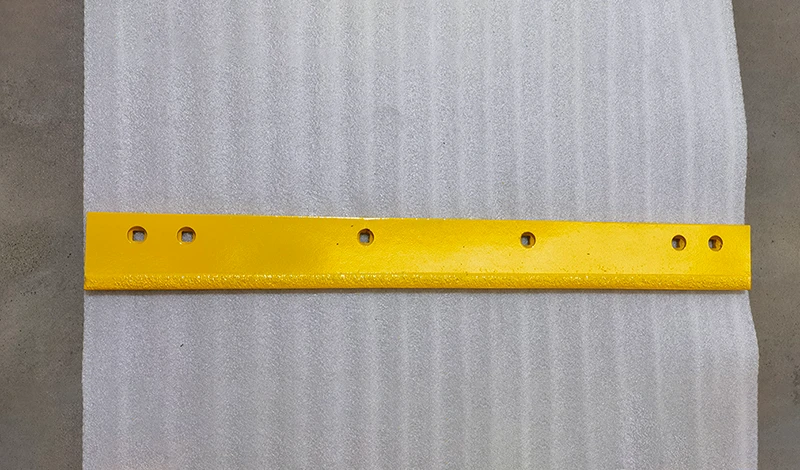
Obtain the surface owner’s restrictions and acceptance criteria before choosing a trial edge. Desired snow removal and acceptable surface change are separate requirements; no material label alone establishes that an edge will leave this paving undamaged.
Identify pavement owner restrictions and vulnerable joints or finishes
Identify the paving system and the features the owner wants protected: finish, joints, inlays, raised edges or repairs. Ask for the site’s maintenance instructions and any restrictions on mechanical clearing. Do not assume that approval for a neighbouring asphalt area extends onto the decorative section. Mark the transition and the area excluded from any proposed trial.
The road-class selection guide helps organize the larger route enquiry. This narrow decision is about permission and evidence for one sensitive surface. Give the supplier the actual acceptance requirement, not simply the phrase decorative paving. An owner who accepts removable residue may have a different concern from one who prohibits visible marking or disturbed joints.
Separate surface-damage tolerance from desired snow removal
Describe the required clearing outcome separately: what residue is acceptable, who assesses it and how the site remains serviceable under its winter plan. Do not trade away a surface restriction to obtain a visually cleaner result without the owner’s decision. The equipment configuration also needs review using the relevant model-specific instructions. Surface permission cannot establish machine compatibility, and machine approval cannot establish finish compatibility.
Request evidence applicable to the proposed edge and the identified surface, with its limitations stated. A supplier photograph of another installation may explain the product but is not a damage assessment for this site. If no directly applicable evidence is available, say so and decide whether an authorized limited trial is appropriate rather than presenting a non-marking guarantee.
Define a supervised approved trial and stop criteria without promising a non-marking edge
Agree the trial area, baseline photographs and inspection conditions with the facility representative. Specify who can stop the trial and which observed changes trigger that response, such as newly visible scoring or displaced joint material requiring assessment. Those examples are review prompts, not universal damage limits. Do not improvise operating settings to make the trial more aggressive.
For a carbide blade enquiry, attach the owner-approved conditions and request a proposal within them. Assess snow removal and surface condition as separate results. If the test is stopped or conditions change, retain that outcome instead of deleting it from the comparison. A small satisfactory trial can support a bounded decision for the tested arrangement; it does not prove safety on every decorative pavement or authorize unrestricted use across the property.
Primary references support the specific points linked above; equipment documentation applies to its stated models.


