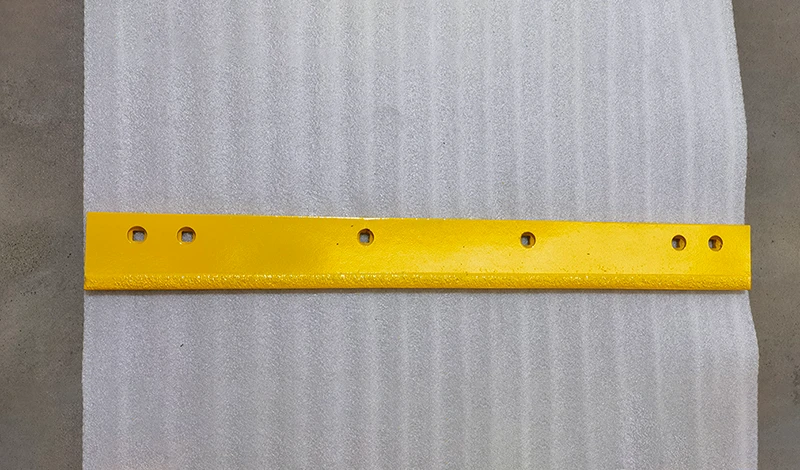
Do not decide from edge material or truck identity alone. Map the fixed hazards and review the complete plow’s approved obstacle-response arrangement. A harder or flexible edge is not a substitute for route hazard controls.
Map fixed obstacles and known pavement irregularities
Identify the locations and known condition of the raised covers through the road owner’s records and safe route observations. Distinguish confirmed obstacles from suspected ones hidden by snow. The purpose is to establish a route constraint, not to determine an acceptable impact from a photograph. Bring maintenance or hazard-management concerns to the responsible road authority.
The rough-surface flex-blade guide addresses broader behaviour. This enquiry is specifically about fixed protrusions and the consequences of using a specification selected for a different route. Describe the hazard distribution and service requirement to the equipment reviewer without assuming that the material choice can make those hazards harmless.
Evaluate the entire trip or compliant system rather than carbide hardness alone
Review the complete attachment, mount and any trip or compliant arrangement against the applicable equipment instructions. Confirm the actual configuration on each unit, including condition and approved accessories. A component described as flexible does not establish how the assembled machine responds to every obstacle, and identical truck models do not resolve that question.
Ask the supplier which aspects of its proposal are documented for the intended equipment and which remain to be reviewed. Do not accept a hardness value or general impact-resistant claim as proof of safe obstacle interaction. The equipment authority should determine whether the route requires a different approved arrangement, operating restriction or hazard treatment.
Seek equipment approval and route hazard controls before considering a material change
Any evaluation should occur only within the road owner’s and equipment authority’s approved plan. Do not deliberately strike a raised cover to compare materials or discover a trip threshold. Define acceptable observations around ordinary authorized service, including reports of contact, new damage or abnormal behaviour that require stopping and inspection. Avoid interpreting the absence of one visible fracture as proof that the system is unaffected.
For a carbide blade enquiry, provide the hazard context and ask for a bounded configuration proposal. Keep the smooth-road specification as a separate reference rather than the presumed default. The final purchasing decision should explain which machine-and-route combination is approved and what restrictions remain. If the route hazard itself needs correction, a new cutting edge should not be presented as having closed that open safety issue.
Primary references support the specific points linked above; equipment documentation applies to its stated models.


