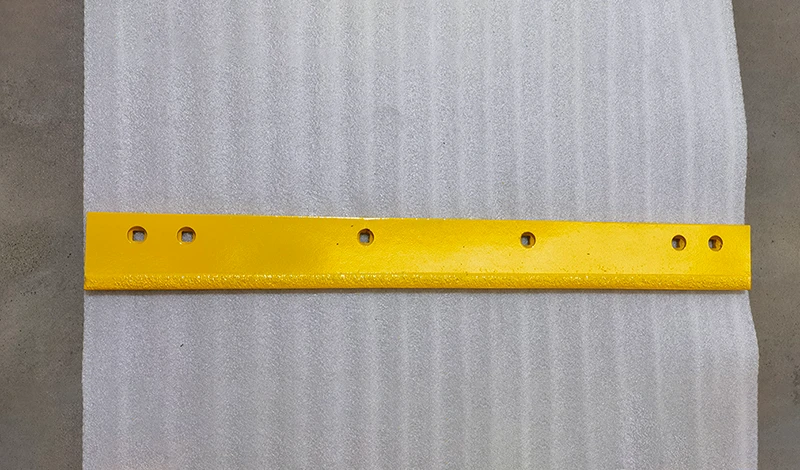
Describe the cross-section and the observed contact result across the width. Ask about the proposed complete system’s approved movement and fit, rather than assuming that a flexible or segmented label guarantees conformity to the crown.
Capture route cross-section and actual uneven contact evidence
Identify the route sections where the crowned profile matters and provide safe, representative views or available road cross-section information. Show which parts of the cleared width retain material and where wear is concentrated. Keep the actual observation separate from the interpretation that the edge is too rigid; another equipment or condition issue may require review.
The rough-road flex-blade guide covers general behaviour. This discussion concerns one surface profile and its effect on the enquiry. State the required clearing outcome across the lane rather than requesting flexibility as an end in itself. That gives suppliers a result to address instead of rewarding a product description.
Distinguish rigid-edge fit from a compliant system's approved motion
Ask the supplier to identify the proposed assembly, its documented movement and the conditions needed for that movement to function. A segmented construction does not by itself specify independent travel, and a flexible material does not define unlimited conformity. Have the equipment authority review the mounting, permitted arrangement and maintenance requirements for the actual machine.
WESTERN’s selection guide recognizes uneven contact as a wear consideration. That supports investigating the observed contact pattern, not predicting that a particular alternative will solve this crown. Compare the existing setup with its approved configuration before treating a new edge as the remedy. Do not introduce unsupported pressure or clearance adjustments into the enquiry.
Compare finish and wear across the width under authorized conditions
Agree observation positions across the width and revisit them consistently during an authorized comparison. Record remaining material, edge condition and any change in route or weather context. A single centre measurement can miss the result at the ends, while an overall finish impression can conceal a persistent strip. Keep those locations visible in the report.
For a carbide blade enquiry, explain whether the request is for a fixed edge or for review of a complete alternative system. Ask for evidence that matches the crowned-route task and identify what still needs local evaluation. The decision should balance acceptable finish, surface protection and service condition under the approved arrangement. It should not assume that more movement is always better or that a satisfactory result on flat pavement settles the crowned-road requirement.
Primary references support the specific points linked above; equipment documentation applies to its stated models.


