
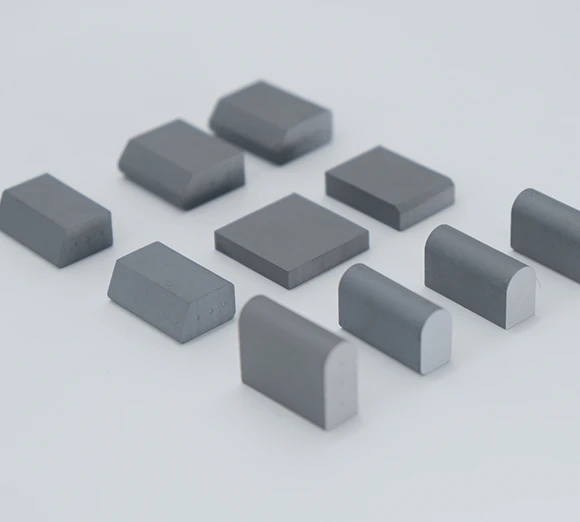
 The supplier offers more carbide per metre. What geometry should we compare before accepting the claim?
Clarify carbide quantity per metre using insert count, section, spacing and support geometry without assuming that more material guarantees longer life.
Read the guide
Can we use a carbide grade developed for machining as a snowplow insert grade?
Assess a machining carbide grade against the plow insert’s duty, geometry and joining requirements before approving its use in a different application.
Read the guide
What is missing when a braze test report gives a load but no specimen drawing?
Request specimen geometry, fixtures and the agreed method before comparing braze test loads or treating a reported load as joint-strength evidence.
Read the guide
An insert report lists an average hardness. Do we also need the individual results?
Check whether a carbide hardness average satisfies the ordered reporting rule, with specimen identities and individual results where required.
Read the guide
Should we accept a polished carbide sample as representative of an as-sintered order?
Compare a polished carbide sample with an as-sintered order, clarify which surfaces differ and approve the actual delivered condition and inspection basis.
Read the guide
What evidence helps when a carbide insert is straight before brazing but the assembly is not?
Compare insert and assembly geometry before and after brazing with matched measurement supports and traceable joining records for specialist review.
Read the guide
Can an insert’s color or surface shine identify its carbide grade?
Keep unidentified carbide stock separate and verify its grade through traceable documentation and agreed tests rather than colour or surface shine.
Read the guide
A supplier changed the binder content but kept the same grade name. What should we request?
Review a binder-content change despite an unchanged grade name by comparing controlled specifications, affected lots and engineering approval.
Read the guide
What should an insert drawing say about the surface that will be brazed?
Define the insert joining face and supplied surface condition with the joining specialist, then capture inspection and approval requirements on the drawing.
Read the guide
The insert dimensions are correct, but the edge radius changed. Does it need approval?
Review a changed insert edge radius against the controlled profile, assess its assembly implications and document approval before accepting equivalence.
Read the guide