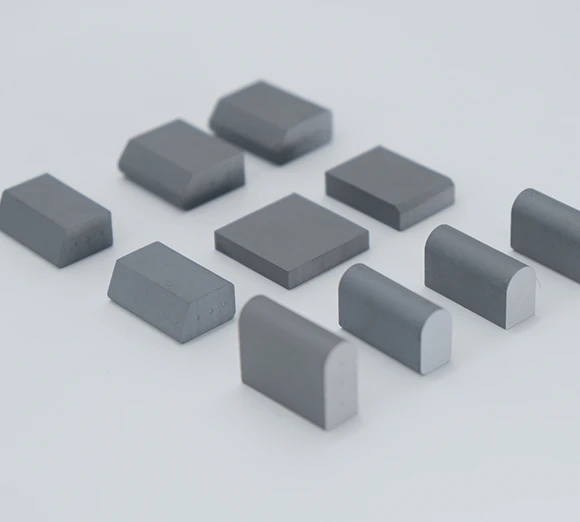
Ask what “more carbide” measures, then compare the full insert layout, cross-section, exposed geometry and support. Quantity alone is not a performance result. Keep material content, assembly requirements and application evidence separate so the claim can be evaluated without assuming that extra carbide guarantees longer service.
Distinguish insert count, cross-section and continuous coverage
Request the basis of the claim: insert count, carbide mass, calculated volume, covered length or another defined measure. Establish whether the figure applies to the complete edge, an average metre or a particular section. Two suppliers can use the same phrase while describing different quantities, making an apparent comparison misleading from the start.
Obtain the layout and insert section drawing for both designs. Identify pitch, gaps, end arrangements and any different insert sizes. Do not infer continuous coverage from a high count, or equal quantity from matching covered length. Ask the supplier to show the calculation behind its stated amount, with the drawing revision used.
The spacing and coverage guide covers the broader design choice. This discussion is specifically about interpreting a quantity claim and deciding what additional geometry and evidence are needed before it influences purchasing.
Compare exposed and supported geometry on the approved drawing
Compare where the carbide sits in the approved section, including what is exposed and what is supported by the assembly. Mark the working profile and interfaces that must remain compatible. A change in carbide quantity may accompany a change in geometry; the reviewer should see both rather than evaluating an isolated material total.
Ask the design authority which differences affect fit, joining, inspection and the permitted wear condition. Do not choose a new support or exposure dimension from a generic rule. Historical Clear Roads specification research treats geometry as part of the specification framework, but its examples are not approval of either proposed construction or universal current acceptance values.
Keep material grade identity visible. If grade and geometry change together, any later performance difference cannot automatically be attributed to quantity. The proposal should state the entire changed specification so the comparison does not give credit to one attractive marketing figure while overlooking other differences.
Assess the whole edge without assuming material quantity guarantees longer life
Request application evidence relevant to the proposed design and the intended duty, with the conditions and endpoints explained. Clear Roads' field-evaluation work offers context for comparison, not a general claim that increasing material content produces a particular life extension. If no comparable evidence exists, describe the benefit as unverified rather than inventing a payback estimate.
Compare cost on a consistent scope: complete edge, required associated components and approved installation arrangement. A cost-per-unit-of-carbide figure may be informative for one question but cannot replace the cost of an accepted working assembly. The buyer should know whether the offer changes what must be purchased or maintained as well as what material is present.
For carbide insert enquiries, attach the two layouts and the supplier's quantity basis. Close the review with the accepted geometry, material and evidence requirements. “More carbide” can remain a factual description once defined, without being promoted to a guarantee of longer life or better clearing on every route.
Sources and further reading. The ordered specification and applicable equipment documentation control acceptance and service decisions.
Clear Roads 17-02: Standard Specifications for Plow Blades with Carbide Inserts (historical research; not a universal specification) ↗Clear Roads High Performance Blade Evaluation ↗


