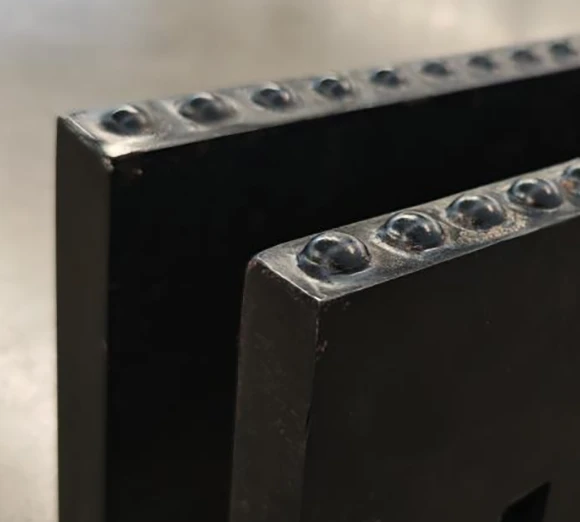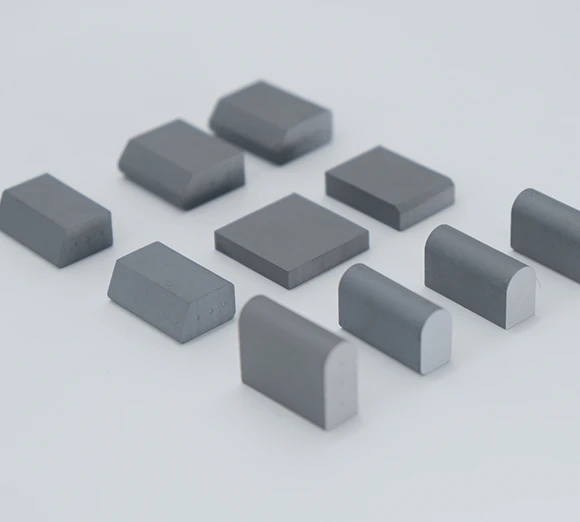
Identify the joining face and its required supplied condition, then have the joining specialist define the relevant surface and compatibility requirements. Put the approved requirement and inspection basis on the controlled drawing or referenced specification. Keep process settings with the qualified process owner rather than improvising them in the purchase note.
Identify the joining face and required supplied condition
Mark the face that will participate in the joint and establish an orientation that cannot be confused with the working edge. Identify any different requirements for nearby faces, edges or transitions. A note saying “finish as required” leaves the supplier to guess which features matter and may make an apparently acceptable sample unrepresentative of the ordered condition.
State whether the requirement concerns the insert as delivered or after a separately controlled preparation step. If the assembler performs that preparation, identify the handover condition and responsibility. Do not describe an unfinished insert as ready for joining unless the responsible specialist has confirmed what that phrase means for the actual process.
The dimensional-tolerance guide covers the wider drawing package. This question is limited to communicating the joining surface clearly, so a supplier and receiving inspector can identify the same face and the same stage of its preparation.
Ask the joining specialist to define preparation and compatibility requirements
Give the specialist the proposed carbide material, mating component, geometry and supplied finish. Ask which surface characteristics and preparation controls need to be specified or referenced, and which evidence is required to accept them. Do not choose a roughness value, coating or cleaning process simply because another supplier uses it for a different assembly.
CERATIZIT's joining guidance identifies surface cleanliness and material interaction as relevant considerations. It supports specialist review, not a universal buyer-authored heat cycle or joint-clearance instruction. The drawing should record an approved interface requirement without pretending that a short note replaces a qualified joining procedure.
Resolve responsibility for any protective treatment or packaging that affects the delivered surface. Ask how the receiving party will recognize the specified condition and what it should do if a surface appears different. A photograph can illustrate orientation, but it should not be the sole definition of an appearance-dependent acceptance requirement.
Keep buyer approval focused on the drawing and evidence, not a DIY brazing recipe
Have the design and process owners review the proposed note together. Specify which document controls if the drawing, quotation and sample differ. Preserve the approved sample's identity and supplied condition, particularly if one face was prepared specially for evaluation. A polished demonstration face should not silently establish a requirement for every delivered surface.
Agree inspection and reporting at a level appropriate to the requirement. If the condition cannot be verified at receipt by the proposed method, resolve that limitation before production. Historical Clear Roads specification research provides background on separating material and geometric requirements; it does not define a joining face for this assembly or authorize an improvised production procedure.
When requesting carbide inserts, send the controlled face identification and referenced surface requirement with the order. Treat later changes to that condition as a reviewable proposal. The practical deliverable is an unambiguous supplied-state specification and an agreed handover to the joining process, not a set of shop-floor instructions written without the process owner's approval.
Sources and further reading. The ordered specification and applicable equipment documentation control acceptance and service decisions.
CERATIZIT Joining Techniques ↗Clear Roads 17-02: Standard Specifications for Plow Blades with Carbide Inserts (historical research; not a universal specification) ↗